

News
Legal basis to be laid for weaning children away from digital addiction
View(s):By Nidarshani Wickramasinghe
A proposal to ban social media for children under the age of 16 has been handed to the Ministry of Women and Child Affairs by the National Child Protection Authority and is being studied.
National Child Protection Authority Chairman and retired High Court Judge Inoka Ranasinghe told the Sunday Times that it will take some time to implement this because legal provisions need to be prepared.
Decisions and ideas are needed from three institutions—the Department of Probation and Child Care Services, the National Secretariat for Early Childhood Development and the National Child Protection Authority—to implement this ban.
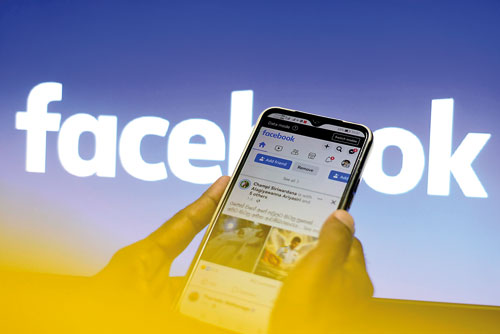
Social media use negatively affects children’s health and development, warn experts
These institutions are under the Ministry of Women and Child Affairs.
Women and Child Affairs Deputy Minister Namal Sudarshana told the Sunday Times that further discussions will be held with these institutions regarding the proposals.
“There is a social problem in the country, and there is evidence and information about it. We have already identified the need to regulate social media for children and are preparing for broad discussions,’’ he said.
The College of Community Physicians
of Sri Lanka (CCPSL) last year highlighted that social media use among children in Sri Lanka is increasing rapidly and mostly without control. They pointed out that there is strong evidence that it negatively affects children’s health and development.
The physicians explain that international and local research shows that excessive and uncontrolled social media use among children and youth causes stress, depression, sleep problems, cyberbullying, reduced physical activity, body image dissatisfaction, poor social interaction, and long-term mental health problems.
Also, children aged 8–12 years spend nearly five hours a day in front of screens, while teenagers spend more than seven hours per day on screens for non-educational purposes.
Consultant physician Kapila Jayaratne, former president of CCPSL, explained that during the 2024/25 council period, a programme called ‘Child Wellbeing in the Digital Environment’ was carried out with the support of Professor Dulani Samaranayake and Doctor Ruwanika Seneviratne.
“Studies in Sri Lanka show that more than 96% of preschool children are exposed to electronic devices, and more than half exceed the recommended screen time. Many children start using devices before the age of two years. Among teenagers and youth, social media platforms are the main form of digital activity, increasing exposure to cyber violence, harmful content, privacy problems, and addictive digital behaviour.’’
Around the world, there is a fast policy change recognising excessive social media exposure as a child health and wellbeing issue that needs government action.
Australia passed a national ban in December 2025 restricting social media access for children under 16 years, covering major platforms such as Instagram, TikTok and YouTube and making companies responsible for age verification. France requires parental consent for users under 15 years and is considering a complete ban for that age group. Norway has introduced a law setting the minimum age for social media use at 15 years.
In Asia-Pacific, Malaysia plans to introduce a social media ban for children under 16 years by July 2026. Denmark is planning restrictions for children under 15 years with limited parental permission for ages 13–14 years.
The United Kingdom is introducing strict online safety rules with fines for companies that fail to protect children. In the United States, although there is no national ban, some states are taking action. Florida has banned social media accounts for children under 14 years, while Virginia has limited children’s social media use to one hour per day.
These developments show that voluntary self-regulation by digital platforms is not enough and that governments must take strong action to protect children in the digital environment, the College of Community Physicians of Sri Lanka said.
They strongly request the Sri Lankan government and policymakers to urgently consider age-appropriate limits for children’s social media use.
“These limits should include enforceable laws, strong age verification systems, parental protection measures, and clear responsibility for digital service providers.
“These steps should work together with
Sri Lanka’s digital governance systems and child protection laws, especially the Personal Data Protection Act. They should also support efforts to improve digital literacy among children, parents, and teachers.”
The organisation explains that the purpose of these measures is not to take away the benefits of digital technology from children; rather, it is to ensure that digital use is safe, suitable for children’s development and supportive of healthy physical, mental and social growth.
The best way to say that you found the home of your dreams is by finding it on Hitad.lk. We have listings for apartments for sale or rent in Sri Lanka, no matter what locale you're looking for! Whether you live in Colombo, Galle, Kandy, Matara, Jaffna and more - we've got them all!