

News
Conflicting claims compound coal crisis
View(s):- Operational data continue to show below‑par gross calorific value; plant output drops from 810 MW to 750 MW
- Govt. appoints probe team, but questions remain over holding supplier to account
By Namini Wijedasa
Operational data from Lakvijaya in Norochcholai continued to show this week that South African coal imported under the ongoing 2025-26 tender does not allow the plant to generate the required amount of energy.
However, both load port and discharge port reports from two separate accredited foreign laboratories also still indicate that every coal consignment—except for the first one, for which a hefty penalty was charged—under the Lanka Coal Company (Pvt) Ltd (LCC) contract with India’s Trident Chemphar meets the minimum specifications of the tender.
Report in a month
Amidst considerable pressure to find answers, the Energy Ministry appointed a seven-member committee comprising a ministry official and academics from the Moratuwa and Sri Jayewardenepura Universities to provide recommendations within a month.
“There is a drop in performance [at Lakvijaya],” Energy Ministry Secretary K.T.M. Hemapala told the Sunday Times. “We have to acknowledge it. The energy the plant usually supplies the grid is 810 MW out of the 900 MW generated. Now it is something like 750 to 760 MW. There is a difference of 50 to 60 MW, sometimes 75 MW, when we use this coal.”
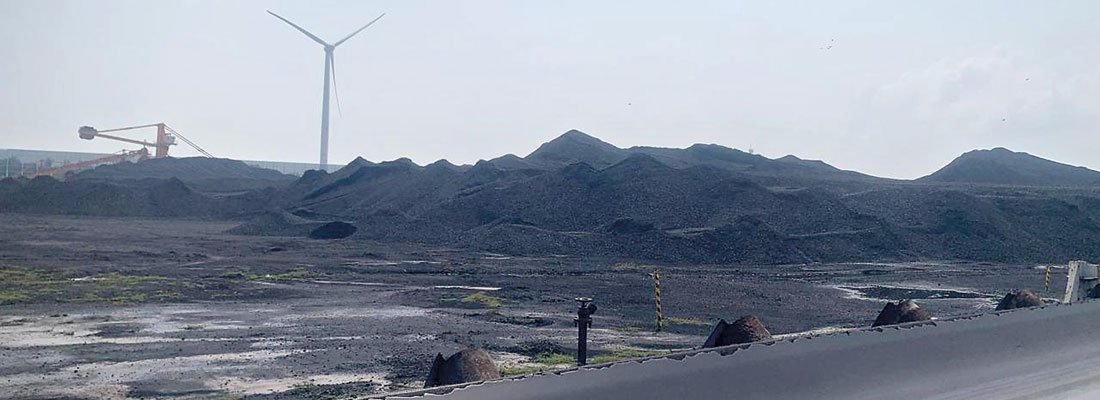
Lakvijaya power plant: No end to controversies—this time over low‑grade coal
Prof. Hemapala agreed with the plant data that Russian coal, of which there is a remaining stock, produces the requisite amount of energy when burnt. The committee must therefore determine where the problem lies. For instance, is the gross calorific value (GCV) of the South African coal below the minimum 5,900 value that was mandated by the tender? While Lakvijaya data conveys as much, its lab is not accredited.
The team will also discuss the possibility of fraud—including whether the two laboratories colluded to produce falsified test reports—warranting a criminal inquiry, even litigation. However, such an investigation will face limitations as it will be done beyond the scope of the LCC-Trident Chemphar contract (auditing of the labs by Sri Lankan parties will likely be impossible).
The committee must calculate, too, the actual cost to the Ceylon Electricity Board (CEB) of having to cover the obvious energy shortfall through alternative sources, including diesel, Prof. Hemapala said; and whether a technical trait in Lakvijaya simply prevented it from producing 900 MW from coal of 5,900 GCV.
Officials confessed that they were perplexed by the contradiction between independent test results and Lakvijaya performance data. If the fault didn’t lie in the plant, they said, the lab reports have to be called into question.
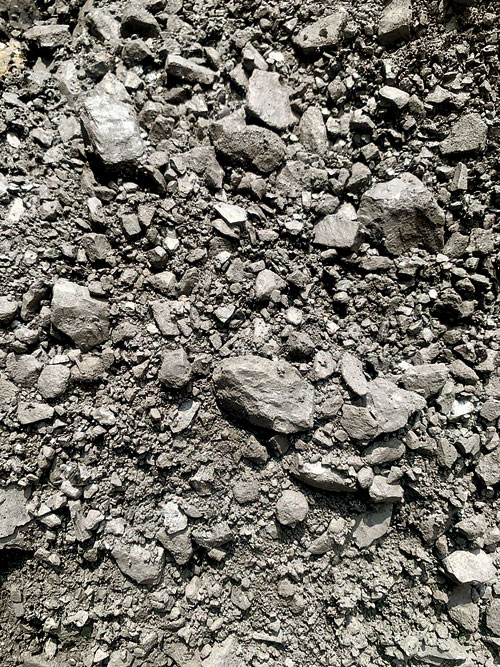
LCC has now enlisted another independent, accredited foreign laboratory called Bureau Veritas (BV) to test the coal at the load port
Another independent laboratory appointed
LCC has now enlisted another independent, accredited foreign laboratory called Bureau Veritas (BV) to test the coal at the load port, the Richards Bay Coal Terminal in South Africa.
According to a document seen by the Sunday Times, BV has been hired for two shipments—that is, the 13th and 14th vessels (a total of 25 are due by the end of April)—to supervise loading and sample preparation, to analyse the buyer’s sample, to certify the cargo covering specific parameters, and to issue two sets of documents.
As the buyer’s independent surveyor at the load port, BV has been instructed to ensure “full transparency, accuracy, and impartiality in all sampling and testing activities”. Two Sri Lankan nominees, including an official from Lakvijaya, are due to fly to South Africa in this regard.
These tests will not cover samples from previous shipments. But the government hopes the heightened vigilance will force coal of the mandated standard to be shipped to Sri Lanka “at least from the 13th shipment onwards”. The results have not come in yet.
Meanwhile, the Attorney General has advised officials to follow the agreement with Trident Chemphar, sources said. As pointed out by the Sunday Times last week, it allows the buyer, LCC, to check the samples visually at the load port and to also have them tested at a third lab.
At present, LCC cannot terminate the contract, as the discharge port reports—produced by a company called Cotecna that Lavkijaya selected through a competitive bidding process—do not prove the coal to be below specification.
But termination throws up more challenges. While LCC floated an emergency tender this week for 300,000 MT of coal (five shipments), it will take several weeks for the first shipment to arrive. And there will be no coal to cover a gap of about 500,000 MT if the contract is broken at present. The impending monsoons further complicate matters.
There are new questions now whether Trident Chemphar will be able to supply its total 25 shipments at the current rate of arrival. And even if there is no shortage of coal, there most certainly is an energy shortfall—and this will continue to be the case if the same quality coal continues to be imported. There is a high cost to that.
Tougher conditions in future
Insofar as the ongoing problem is concerned, the government is in a bind. Should BV return negative results, a whole host of new obstacles will arise. It can only be hoped that “good coal” will herewith be conveyed to Sri Lanka.
On a positive note, officials say that this fiasco is likely to give rise to “a much more streamlined process” in the future. For instance, it is likely that the required GCV level will be raised in future tenders. The prequalification criteria for suppliers, including financial requirements and previously supplied quantities of coal, will be tightened.
There is also a proposal for the local agents to provide a police report, their business registration and related information. Available records show that Trident Chemphar is represented in Sri Lanka by Sanath Jayasundara. He has provided the local agent as “Panaurora” with the contact number +94 112 864 477. The email address—to which all communication with Trident Chemphar was copied—is stated as information@panaurora.net. While the telephone number matches the one published on the Panaurora website, the email address does not (the website states it to be info@panaurora.net).
The Sunday Times checked the Panaurora registration documents with the Registrar of Companies. Its date of registration is given as May 16, 2025. Its directors Hakmana Nandaloka Thero—a Buddhist monk who, according to his Facebook profile, has multiple other business interests—and two entities called Sayaara Holdings and Invest LK (Pvt) Ltd. The directors of Sayaara (formed on June 14, 2024) are Herath Bandaralage Anuradha Oshade Herath and Wijayasekarage Shanika Kumari.
Hakmana Nandaloka Thero is also a director of Invest LK, alongside Jayasundara Mudiyanselage Sanath Bandara Jayasundara and Rakitha Nirmala Rajapakshe. Invest LK was set up on January 9, 2025.
When questioned about his role in Invest LK, Mr Rajapakshe said he was a director and that Invest LK holds shares in Panaurora. He also said they have “no connection or any agency arrangement with trident [sic] Chemphar” and claimed any information to the contrary is false.
While admitting that Sanath Jayasundara was also a director at Panaurora, he reiterated that Panaurora had no connection “whatsoever” with Trident Chemphar and that Mr Jayasundara’s involvement with Trident was “apart from Panaurora’s business”, which is fertiliser. He could not say why Mr Jayasundara had provided Panaurora’s name as the local agent for Trident Chemphar, advising us to obtain that information from LCC.
The best way to say that you found the home of your dreams is by finding it on Hitad.lk. We have listings for apartments for sale or rent in Sri Lanka, no matter what locale you're looking for! Whether you live in Colombo, Galle, Kandy, Matara, Jaffna and more - we've got them all!