

News
Labour laws to catch up with employment changes
View(s):By Kasun Warakapitiya
The Labour Ministry has begun discussions to amend the labour law to update it in line with new trends in employment as well as the prevailing situation.
The Labour Department is also fixed on digitalising activities to maintain one digital system where they could monitor the resolution of disputes such as Employees Provident Fund (EPF)-related issues, salary payments, occupational health-related matters, and leave of workers.
Labour Commissioner General Nadeeka Wataliyadda told the Sunday Timesthat companies have been told to register for EPF online.
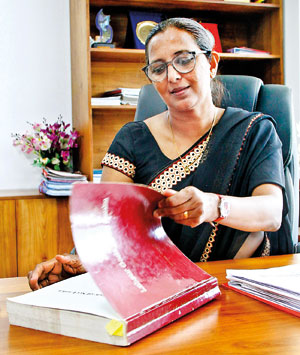
Labour Commissioner General Nadeeka Wataliyadda. Pic by Indika Handuwala
Labour laws are being amended. But since it is a herculean task, she was unable to specify a time frame.
There are laws to be included, amended, and nullified, while contradictions need to be rectified.
Ms Wataliyadda said the department mostly receives complaints regarding EPF, not being paid, payment delays, and even EPF deductions not credited to workers’ accounts.
“We see that people are reluctant to bring up their work-related issues while they are working due to the concern of job security. They wait until they quit or retire, and they rarely check their EPF. Whenever there is an issue, they turn up at the Labour Department offices.
A digital system will allow people to file complaints and inquire about the progress of the action taken and allow the Labour Ministry to maintain data records.
She had witnessed gaps in compliance by employers who look into matters of outsourced employees, such as workers recruited through manpower agencies.
She also explained difficulties related to matters of workers who have a vague employer and employer relationship.
“The platform workers, gig workers and online workers are new trends of work; therefore, it is difficult to outline such labour-related work or businesses. We plan to address this matter by amending the code,’’ she said.
Ms Wataliyadda said that this year, the minimum daily wage was raised to Rs 1,200 and the minimum monthly salary to Rs 30,000.
However, she pointed out that improving the living conditions of estate workers should be handled by the relevant ministry, as the department only handles payment-related issues.
She said that within the estate sector, some workers are given land where the worker cultivates, and an amount is paid to estate owners. Such workers do not fall under the employee category.
The Labour Department statistics reveal that the female employee rate has dropped slightly. The commissioner explained that the nuclear family system, where there are fewer people to look after children, and male-orientated work, as well as restrictions on women working at night, have led to the drop. She added that social norms as well as cultural beliefs are also contributory factors.
The best way to say that you found the home of your dreams is by finding it on Hitad.lk. We have listings for apartments for sale or rent in Sri Lanka, no matter what locale you're looking for! Whether you live in Colombo, Galle, Kandy, Matara, Jaffna and more - we've got them all!