

News
“It’s like being home”: Tales from safety centres in Colombo
View(s):By Tharushi Weerasinghe
As hundreds of safety centres were set up across the island for those displaced by the landslides and floods from Cyclone Ditwah, thousands arrived in droves to seek refuge.
In one such camp in the Wellampitiya–Kolonnawa belt, families arrived through the night and early morning, with some centres so crowded that people were redirected elsewhere to ensure resources could stretch.
For many, these scenes were painfully familiar. “This is an annual occurrence,” said 33-year-old Wasanthi Subasinghe from Kolonnawa to The Sunday Times on Saturday. “The houses of about 200 of us go under, and we lose our furniture every time. I am a daily wage earner, so progress is slow. Every time our household gets flooded away.”
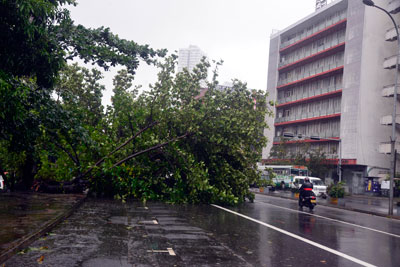
One of the many trees fallen in Colombo
She said temples and schools had become their common refuge. “We have asked for homes so we can be relocated, but there has been no response from the government. We were informed of the floods through the WhatsApp group, but this time, around 1 a.m., I woke up to floods up to my bed.” Despite repeated losses, she said the safety centres and her Grama Sevaka Niladhari ensured they were taken care of.
Others described a night where water levels rose with little warning. “There wasn’t a drop of water on the road when I went to sleep around 11 p.m., but by 1 a.m. the houses were going under,” said Thilina Madushanka, a 33-year-old father of two from Wellampitiya. “We left with our kids and the clothes on our backs. I couldn’t even grab my kids’ schoolbooks. Despite the river rising, there was nothing in the drains, so we didn’t expect it.”
At Somadevi Vidyalaya in Angoda, pregnant mother Sahana Maduwanthi, 30, from Maha Buthgamuwa, had moved into the centre on Friday afternoon after her Grama Sevaka alerted the community. “We have had to do this before, especially in 2016,” she said. “Usually, if it rains at a stretch for three weeks, there is knee-length water at home, but we don’t really move when that happens.” She said she felt protected at the centre, noting that a doctor and a midwife had checked on her pregnancy, dry rations were available, and the police provided security.

Thotalanga
Some residents moved early after seeing warnings on television. Sixty-five-year-old Seela Indrani arrived at a centre on Thursday. “There was no water anywhere near me at that time, but I cleaned everything up and gave my sewing machine to a two-storeyed house neighbour and came here,” she said. “I have come here a few times before, but we are well taken care of — it is like being home.”
Wasanthi Subasinghe
Kavindi Methmini from Kolonnawa said, “This is the worst flood in a long time. We were notified when the news coverage about the cyclone happened. We prepared in whatever way we could. We left home on Thursday morning — there wasn’t a lot of water, but it increased suddenly.” She sought shelter at a mosque but faced difficulties because her cat had just given birth.

Seela Indrani
Others, however, said the lack of coordination left them scrambling, while some officials were more responsive than others. But in Gothatuwa, a 48-year-old mother said there had been no communication. “When I called to ask if the road I live on was at risk, she said she does not know and that if there was a risk, she would let us know on the WhatsApp group — I am not on this WhatsApp group,” she said. When she asked again, she was told she would “probably hear it through the grapevine or through [her] neighbours.”
At a mosque in Singhapura, 68-year-old tuk driver Mohammed Fairoos said he had been staying there for three days. “Around 6 a.m., water started to come, and I came out with my wife and kids. We returned to grab our clothes, but the water was chest-deep then,” he said. “No messages came — if any came, we would’ve gotten some of our stuff out.”
Thilina Madushanka

Mohammed Fairoos
He recalled only one similar disaster in his 24 years in the area — when the Meethotamulla dump collapsed. “We lost our house in that and were not compensated fairly. Now we live on rent in various places.” He said food and water were being provided, and while his children were staying with relatives, he was at the mosque. “The Grama Sevaka has not been in touch,” he added.
The Sunday Times also observed countless mutual aid groups and individuals who had organised themselves to visit these centres, providing hot meals, supplies, and dry rations. From churches to youth civic groups, fundraising and dissemination for shelters kept flowing in from all parts of the country and the world. In some places, young people were driving from shelter to shelter until the supplies they had ran out, while others mobilised social media to direct manpower and resources to places that were receiving less attention. Many also brought their boats out to help transport more vulnerable people out of flooded neighbourhoods.

Angoda. Pix by M.A. Pushpa Kumara, Indika Handuwala and Nilan Maligaspe
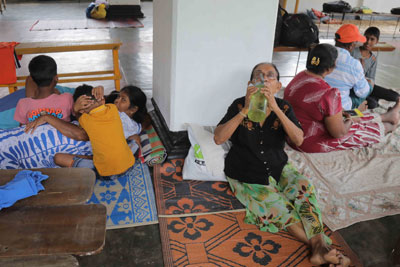
Safety centre in Angoda
The best way to say that you found the home of your dreams is by finding it on Hitad.lk. We have listings for apartments for sale or rent in Sri Lanka, no matter what locale you're looking for! Whether you live in Colombo, Galle, Kandy, Matara, Jaffna and more - we've got them all!