

News
The coal may not be perfect but the procurement is, says Govt.
View(s):- But why did it take seven months to close?
By Namini Wijedasa
When it comes to the controversial 2025-26 coal tender, the government’s position is now clear: something may be wrong with the coal, but there was no fraud in the procurement. Guidelines were followed to the letter.
The Sunday Times tracked the process, based on documents and interviews with officials, and found that a tender that typically takes a little over three months took seven months to conclude.
The first shipment from the winning bidder, Trident Chemphar, that should have arrived in mid-November only came on December 31, 2025. Between November 9—when the previous supplier Potencia’s last cargo reached Norochcholai—and Trident’s first shipment, no coal was delivered to the Lakvijaya power plant (LVP) at all. That is a gap of one month and three weeks.
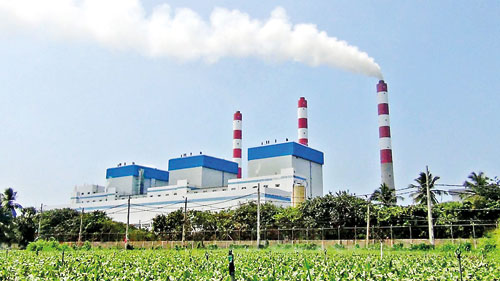
Lakvijaya coal power plant. Pic by Hiran Priyankara
There were other delays. To start the tender process, a Special High Level Procurement Committee (SHLPC) and a Bid Evaluation Committee (BEC) must be nominated, then appointed by the Finance Ministry’s Public Finance Department. This step was only completed on July 28, 2025.
Ordinarily, a Standing Cabinet Appointed Procurement Committee and a Technical Evaluation Committee—as they were earlier named—are speedily appointed and Lanka Coal Company (Pvt) Ltd (LCC) is ready to launch the bid by March. In April, the tender is advertised. The contract is awarded at the end of July or at the beginning of August.
By contrast, Trident Chemphar received its contract on October 29, 2025, nearly three months later than usual. And the tender had only been advertised on August 18.
This week—even as the controversy of substandard coal continued—LCC returned to its normal procurement timetable, proving that things can be done correctly. On Wednesday, it advertised a term tender for 2.28mn MT of coal for 2026-27.
This means the SHLPC and BEC were appointed on time, as LCC calls the tender on behalf of the SHLPC; and that the Ceylon Electricity Board (CEB) had also submitted its coal requirement for the upcoming season on schedule. The deadline for submitting bids is May 14, 2026.
Potencia LLC
So, what happened? A series of events.
When the NPP administration took over in September 2024, a company named Potencia was supplying Russian coal to LCC. This deal had history.
An entity called Black Sand Commodities LLC was selected for the 2023-24, and 2024-25 seasons. It had provided 914,495 metric tons across 16 shipments for the 2023-24 season when US sanctions imposed on its ultimate shareholder, JSC Suek (Russia), caused the company to transfer the remainder of its contract (1,390,342 MT) to Potencia LLC FZ in early 2024. Potencia is registered in Dubai but has Sri Lankan owners.
This was facilitated by LCC based on line ministry directives, guidance from Sri Lanka’s Attorney General’s Department and recommendations by a special Cabinet Subcommittee. Cabinet subsequently approved the novation of responsibility to Potencia LLC on March 18, 2024.
Novation is a legal mechanism that replaces an existing contract or obligation with a new one, often substituting a new party for an old one with the consent of all parties involved.
Because of how the transfer was carried out, Potencia was not registered with LCC as a supplier. And when it was time to start procurement for 2025-26 season, Potencia still did not meet the criteria.
LCC registers suppliers for 3-year periods to supply coal to the LVP. Key criteria include demonstrated financial capacity (audited reports for 3 years) and proven experience in supplying coal (roughly 500,000+ MT within 3 years). It had neither. The new company had only ever sold coal to LCC.
Procurement schedule
Every year, in January, LCC starts planning to float tenders for the upcoming coal season (unloading can only take place from September to April, before the monsoon sets in).
Dates are always in April/May—as LCC proved this week by advertising the 2026-27 term tender—as there must be sufficient time in April for selection, followed by Cabinet approvals, then ship positioning. Loading starts at the end of August, beginning of September.
This is a standard procedure, with specified timelines. For the process to kick off, the CEB must send to LCC their coal requirement. And this was routinely done at the beginning of the year.
So, what happened in 2025? On April 8 that year, LCC submitted its procurement schedule along with a request to the Energy Ministry to appoint committees (SHLPC and BEC).
The plan was to buy some more coal from Potencia using an option in the ongoing contract to get an additional 10 percent from the existing supplier; float some from spot tenders; and secure the bulk of the coal via long-term tender.
Then, Energy Minister Kumara Jayakody took a policy decision that there will be no spot tenders, saying they encouraged corruption. This caused a problem because now there was no way of getting coal quickly. Adjustments were made to increase the quantity in the long-term tender. This was the first delay.
That Russia visit
Meanwhile, Energy Ministry Secretary K.M.T. Udayanga Hemapala exercised his authority and on July 18, 2025, awarded an additional four shipments—or 225,000MT—to Potencia under that buyer’s option. The letter was issued under his signature.
Potencia was already contracted to provide nine cargoes as a supplement to the previous tender (this expanded to 11 because not all the promised coal could be supplied through nine ships). They delivered the last of these cargoes on November 9, 2025.
Potencia gets its coal from Russia’s Suek JSC. In October 2025, Minister Jayakody travelled to Russia for the Russian Energy Week, which was being held from 15 to 17 that month. During that visit, he held a closed-door meeting with Potencia’s supplier, Suek. Back in Sri Lanka, the long-term tender hadn’t yet been awarded and Potencia had also submitted a bid. The impropriety of the Minister’s actions was brought up in Parliament.
It is not known what he discussed at the meeting. But upon his return, he instructed Prof. Hemapala to withdraw his decision. On October 24, Potencia was notified that the order for 225,000MT was suspended. It sued. And the court decision is pending.
More delays
LCC’s original request to appoint the two committees (made on April  was only received by the Energy Ministry on 21 April.
On April 25, a letter was sent to the National Procurement Commission (NPC) asking permission to appoint a single SHLPC for both term and spot tenders, as requested by LCC. (By then, the Minister had not yet stopped spot tenders). Usually, there are two committees, one for long-term tenders and one for spot tenders. But the Ministry wanted NPC clearance for a single committee to handle two spot tenders of 300,000MT each and one long-term tender.
The NPC’s reply was dated June 2—a considerable delay—and received by the Ministry on June 5. The same day, the Ministry asked LCC to nominate members to the BEC. It was on June 16 that LCC complied.
LCC forwarded CEB’s requirements for coal for 2025-26, along with the procurement time schedule as late as June 19 (as previously noted, this usually happens in the first quarter of the year). Also on June 19, the first draft of the Cabinet memorandum for coal procurement was produced. It was finalised and conveyed for the Minister’s signature on 4 July, and on July 21, Cabinet approved the floating of the tender.
The Cabinet decision was received by the Ministry on July 24. Subsequently (also on July 24), the Energy Ministry requested the Public Finance Department to appoint the SHLPC and BEC, as per the Cabinet decision. Appointments were received on July 28 and conveyed to LCC.
Those last-minute
registrations
The Ministry got the bidding document from LCC on August 12. Interestingly, the very next day, on August 13, LCC registered around six new companies. One was Trident Chemphar. Another was Potencia, which by now—with the passage of some months and more coal sold to LCC—suddenly qualified. (The financials they submitted comprised two years’ audited accounts and one year’s management accounts)
Industry observers say this move was “very late in the process” and raised questions about whether delays were orchestrated to allow the two parties to enter the fray. The Sunday Times could not find documentary evidence to support that contention.
With time running out, the Ministry asks NPC permission to reduce the bidding period from the standard 42 days to 21. Approval was granted on August 14. The next day, SHLPC approved the bidding document and the tender was advertised on August 18. Bids were closed on September 15. The BEC report was received the same day.
The top four bidders were Trident (UUS$ 98.5 per MT), Potencia (US$ 100 per MT), Aditya Birla (US$ 103.009 per MT) and A to A Trading (US$ 103.809 per MT).
(Official sources said the decision to cancel Potencia’s five extra shipments was because Cabinet found that Trident had bid much lower—and that Potencia’s price was US$ 7 higher than Trident’s. Therefore, they claimed, Cabinet had instructed the Secretary to cancel the Potencia deal. We could not confirm this through a paper trail.)
The SHLPC decision on the bids was received on 18 September, while the appeals period, where bidders can petition the Procurement Appeals Board, ended on 1 October with no complaints. Seven days later, LCC wrote to the Ceylon Shipping Corporation, giving them time to match the prices. On October 13, a Cabinet memorandum was presented which reveals the bid prices.
On 24 October, the five cargoes to Potencia were cancelled and five days later—on 29 October—Trident, the lowest responsive bidder, secured the contract for 1.1mn MT of coal for the 2025-26 season.
Prof. Hemapala, when asked how long the procurement process usually takes, said it changes according to the requirement. “This year, we wanted 1.5mn MT,” he maintained. “But to buy 2.5mn MT, we need to start in January. Last year, we started in April. They fix the dates according to what is needed.”
There was no favouritism, he also said: “There are 26 registered parties and all of them were given the chance to bid. The lowest bidder gets the contract. We cannot give it for a higher price and there is no way of cutting anyone.”
The best way to say that you found the home of your dreams is by finding it on Hitad.lk. We have listings for apartments for sale or rent in Sri Lanka, no matter what locale you're looking for! Whether you live in Colombo, Galle, Kandy, Matara, Jaffna and more - we've got them all!