

News
Enter third independent accredited lab to test coal samples from the Trident Chemphar shipments
View(s):By Namini Wijedasa
Energy officials this week received a strong directive from an all-party Parliamentary committee to commission “without further delay” a third independent accredited lab to test coal samples from the Trident Chemphar shipments.
On Tuesday, the Lakvijaya coal power plant (LVP) switched completely to South African coal imported via India’s Trident Chemphar. This is after the better-quality Russian coal purchased through the previous supplier ran out. Lakvijaya continues to produce much less electricity than the required 300MW from each of its three units.
However, reports from two accredited laboratories—Mitra SK South Africa (Pty) Ltd, selected by Trident; and India-based Cotechna, selected by LVP and LCC—consistently report that coal samples they test from every shipment meets all the specifications of the tender.
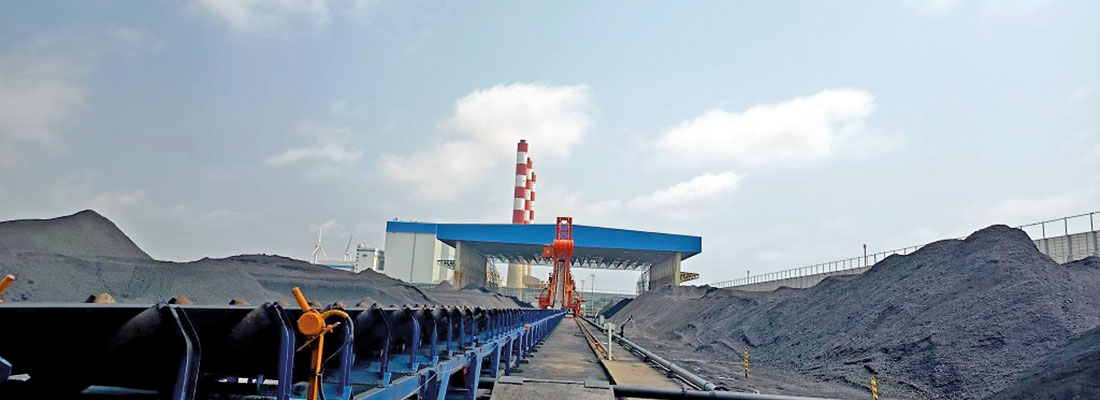
The Lakvijaya coal power plant
Consequently, members of Parliament’s Special Oversight Committee (SOC) on Infrastructure and Strategic Development on Wednesday decided it must now be determined whether there had been fraud in the collection, transport or testing of the samples by either or both of the two accredited laboratories.
Was there fraud?
“Can you confidently say these (Cotechna) reports are correct?” Asitha Niroshana Egoda Vithana, SOC member from the ruling National People’s Power (NPP), asked the LVP, LCC and Energy Ministry officials present. “How are these reports made, how are the samples collected, who is responsible, who goes to the Indian lab with the reports, what alterations might occur in between?”
Sri Lanka is prevented from charging penalties for low-standard coal owing to the independent lab reports giving the all-clear, he said, speculating that “anything can happen” from the time the samples are collected from LVP.
Only coal from the first shipment was found by Cotechna to be below prescribed specifications (related to gross calorific value and ash content), thereby allowing LCC to collect a penalty of US$ 2mn from the supplier.
“But from the second shipment onwards, despite it being the same coal as before, we are unable to recover our losses because the Indian lab gives then the all-clear,” Mr. Vithana continued, saying there was “no way it can pass” if the samples reaching Cotechna were the right ones.
“This is where there is suspicion, and the question of corruption arises,” agreed S.M. Marrikar, opposition Samagi Jana Balawegaya (SJB) MP, who chairs the SOC.
Mr. Marikkar also questioned why LCC had agreed to Mitra SK sending the load port samples to its lab in Indonesia for testing. LCC General Manager Namal Hewage admitted they had no way of guaranteeing that the correct samples—that is, those drawn from the consignments being sent to Sri Lanka—were conveyed to Indonesia.
LCC has already hired an independent accredited lab called Bureau Veritas at Richards Bay Coal Terminal in South Africa to test samples from the 13th and 14th shipment onwards. However, LVP also has in custody its own samples from shipments unloaded at Norochcholai. It is these “umpire samples” that are ordered to be tested.
Meanwhile, LVP has now taken additional measures to ensure the integrity of samples collected at Norochcholai, which is the discharge port. “We have bought coal for 15 seasons but never before has such an issue arisen in the country,” a senior LVP official who oversees discharge port sample collection told the SOC.
LVP representatives are now present at all stages of the collection process up to the transfer of samples to Cotechna agents on the ground (they are sent to India via courier). Additionally, CCTV has been installed in the sample collection room. “Everything is done jointly,” he said.
Problems from the start
LCC also revealed this week that not a single shipment from Trident Chemphar had arrived at Norochcholai on time—starting from the first one, which was due in mid-December but arrived at the end.
Of the 25 shipments ordered, the final was due to dock on April 22, 2026. But persistent delays have now forced LCC to reschedule, and to extend the deadline to April 30 (a difference of eight days).
Energy Ministry sources said that Trident has now asked for additional time to send the next shipment, citing the war in West Asia and related complications. Given that ships arrive at intervals of five days, it is now uncertain whether the full order can be completed by April 30.
If this deadline is not met, Mr. Hewage told the SOC, LCC will seek total liquidated damages from the supplier. However, penalties have not been levied on the supplier for not having met the delivery timeline.
The Public Utilities Commission of Sri Lanka (PUCSL), the regulator, also pointed to a lag of approximately three weeks in the shipment schedule. “Therefore, if the remaining 15 shipments arrive without further delay, all shipments can be unloaded by mid-May,” it said, in a report to SOC. “However, if the upcoming 15 shipments also experience delays similar to the previous shipments, there is a risk that 2-3 shipments may not be unloaded within this season.” That is a shortfall of 180,000MT (at 60,000MT per ship).
The PUCSL report concluded that if all 25 shipments from the current supplier could be unloaded within this season (before mid-May), the available coal stock at LVP would be sufficient to sustain operations till October 2 this year. However, if three shipments are not unloaded, the available coal would be adequate for operations only until September 10, 2026.
Furthermore, if five shipments are not unloaded, the coal would run out by August 27 this year. PUCSL warned that, under normal conditions, there is a potential capacity shortage—that is, electricity shortfall—risk in April, June and July, if the demand reaches 3,030MW, 3,070MW and 3,000MW, respectively (the recorded maximum night peak demand in 2026 is 2,949MW, recorded on February 25 this year).
Additionally, if one coal unit or one major power plant becomes unavailable, “there is a high risk of generation capacity shortage for catering the night peak demand, specially in April, June and July,” it says.
If the generation capacity of LVP needs to be further reduced to maintain a stable and safe operational level, the risk of generation capacity shortage is further increased, it add, hinting at a danger of power cuts.
Local agent unmasked
Citing available records, the Sunday Times reported last week that Trident Chemphar is represented in Sri Lanka by Sanath Jayasundara. He has provided the local agent as “Panaurora” with the contact number +94 112 864 477. The email address—to which all communication with Trident Chemphar was copied—is stated as information@panaurora.net. While the telephone number matches the one published on the Panaurora website, the email address does not (the website states it to be info@panaurora.net).
The Sunday Times checked the Panaurora registration documents with the Registrar of Companies. Its date of registration is given as May 16, 2025. Its directors Hakmana Nandaloka Thero—a Buddhist monk who, according to his Facebook profile, has multiple other business interests—and two entities called Sayaara Holdings and Invest LK (Pvt) Ltd. The directors of Sayaara (formed on June 14, 2024) are Herath Bandaralage Anuradha Oshade Herath and Wijayasekarage Shanika Kumari.
Hakmana Nandaloka Thero is also a director of Invest LK, alongside Jayasundara Mudiyanselage Sanath Bandara Jayasundara and Rakitha Nirmala Rajapakshe. Invest LK was set up on January 9, 2025.
While Mr. Rajapakshe denied to The Sunday Times that Panaurora was involved in the coal tender with Trident Chemphar, LCC officials—when questioned by SJB MP Ajith P. Perera—confirmed all of the above details in the SOC.
We also obtained a copy of the contract between Trident Chemphar and LCC. One of the two witnesses who signed the document on behalf of Trident is H.B.A.O. Herath or Herath Bandaralage Anuradha Oshade Herath, one of the directors of Sayaara.
| PUCSL’s report Electricity sector regulator, the Public Utilities Commission of Sri Lanka (PUCSL), has presented a report to the SOC on LVP generator performance and financial impact “due to use of coal supplied by Trident Chemphar Limited at Lakvijaya Power Station”. It was compiled using primary data from the instruments at LVP and official documents submitted by LCC, confined to the first nine shipments. PUCSL confirmed that the power plant cannot produce at its full generation capacity using the nine shipments of coal supplied by the current supplier. While each of the three units of LVP has to generate 300MW, the output ranges from shipment to shipment between a minimum of 257MW to a maximum of 292MW. The report contained a graph showing how output rises to 300MW when Russian coal from the previous supplier is used and how it drops when the South African coal from Trident is fed into the units. Secondly, the report found that significantly more coal had to be used per hour when it came to the Trident consignments. With the Russian coal, it was 109.25MT per hour (on average) to produce 300MW. With the Trident coal, this rose to 115MT per hour—and even then, it did not produce 300MW. It is also not possible to use more coal per hour as the limit is set by the plant manufacturer at 110MT per hour. Using LVP generation logs and coal feeding records, PUCSL determined that while earlier 365g of coal was used to produced one kilowatt hour of electricity, the Trident coal required 391 to 452g of coal to reach the same result. The PUCSL said that the prescribed steam temperature limits were exceeded several times while operating the LVP units using coal supplied by Trident. It was revealed in the SOC that the coal had a high ash quantity and less volatile matter, thereby making it difficult for the plant operators to manage the heat. If this manifests consistently over time—with steam temperature exceeding prescribed limits—it could damage the turbine, officials said. The report observed that the fly ash discharge (measured from stack emissions) was approximately 0.093kg/kWh when operating with Trident coal, compared to 0.046 kg/kWh with the Russian coal. This was an increase of 102 percent. “As observed, the high ash content and the exceedance of steam temperature limits could result in excessive corrosive wear and overheating of the equipment in the boiler system,” it concludes. | |
The best way to say that you found the home of your dreams is by finding it on Hitad.lk. We have listings for apartments for sale or rent in Sri Lanka, no matter what locale you're looking for! Whether you live in Colombo, Galle, Kandy, Matara, Jaffna and more - we've got them all!