

News
‘One Health’, only way to protect humans, animals & environment from super bugs
View(s):- Health Secretary Dr. Anil Jasinghe looks at SL’s achievements and challenges including the need for a dedicated budget to fight silent pandemic of AMR
By Kumudini Hettiarachchi
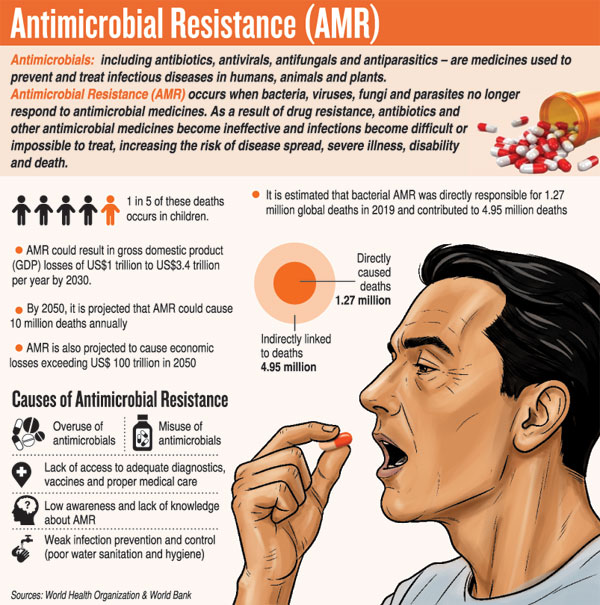
Super bugs, the bane not just of humans but also animals and the environment – much has been done in the fight against them, but much more also needs to be done.
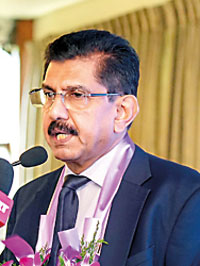
Dr. Anil Jasinghe
This was the all-important topic discussed recently at a ‘Forum on Antimicrobial Resistance (AMR): Building a Collective Response’.
Describing AMR as a “silent pandemic” representing a global health challenge of “unprecedented” magnitude, Health Ministry Secretary Dr. Anil Jasinghe who was the Chief Guest, looked at it from all angles.
“AMR threatens the very foundations of modern medicine and the safety of our ecosystems. This is not only a health issue but a development, food security and national security concern,” he reiterated.
Dr. Jasinghe said that AMR affects humans, animals and the environment alike, creating a complex, interconnected crisis that extends beyond the health sector. In humans, AMR makes common infections harder to treat and increases the risk of complications during surgeries and medical treatment. In animals, it compromises animal health and productivity, impacting livelihoods and the food supply chain. In the environment, antimicrobial residues and resistant microbes spread through water, soil and waste, further accelerating resistance.
With regard to the environment and biodiversity loss through human actions, he said this compelled wild animals to encroach into human settlements, bringing with them diseases humans are usually not exposed to.
Turning his sights on AMR and food security, Dr. Jasinghe said that the misuse of antimicrobials in animal production contributes to the spread of resistant bacteria, threatening human and animal health. Sri Lanka’s transition toward sustainable, safe food systems is vital to protect consumers, farmers, ecosystems and exports.

Dr. Momoe Takeuchi
“This growing threat of AMR endangers food safety and food security, as resistant bacteria can enter the food chain from ‘farm to table’. Therefore, addressing AMR requires a coordinated ‘One Health’ approach – uniting human, animal and environmental health efforts,” he said.
Urging that AMR requires strong leadership and coordinated action across government, industry, veterinary services, farmers and consumers, he underscored “our” responsibility.
These responsibilities include:
- Ensuring that antibiotics remain effective for future generations.
- Stewardship becomes standard in healthcare and agriculture.
- Transparency and accountability should guide antimicrobial use.
Expressing similar sentiments, the Officer-in-Charge of WHO Sri Lanka, Dr. Momoe Takeuchi, who was the Guest of Honour, said AMR continues to be one of the “most pressing” global health threats of our time.
Revealing the chilling statistic of 1 in 5 deaths linked to AMR globally being of a child, she said the rise of resistant infections undermines our ability to treat diseases caused by bacteria, parasites, viruses and fungi and threatens progress toward the 2030 Sustainable Development Goals, particularly those relating to communicable diseases and food security.
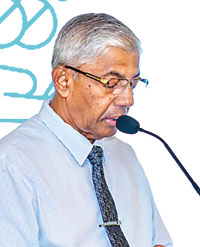
Chairman/Managing Director of New Anthoney’s Farms Emil Stanley
She said that in the WHO South-East Asia Region (SEAR), the challenge is particularly serious. The region, meanwhile, has demonstrated strong political commitment. However, progress remains uneven due to resource constraints, gaps in regulatory enforcement and limited coordination across the human, animal, food production and environmental sectors.
This year marks an important milestone with the launch of the WHO SEAR Roadmap to Accelerate Actions on AMR in the Human Health Sector (2025–2030). The roadmap reinforces AMR as a core health-system priority and emphasizes its integration into primary health care, universal health coverage and pandemic preparedness, according to this expert.
“Sri Lanka has contributed to regional research and policy discussions, including the 2024 special AMR issue of the Ceylon Medical Journal presented at the United Nations General Assembly,” explained Dr. Takeuchi, pointing out that the Memorandum of Understanding with the United Kingdom under the Fleming Fund Programme has enhanced AMR and Antimicrobial-Use (AMU) surveillance, advancing the One Health agenda.
Calling on the poultry sector to play a “transformative” role in combating AMR, she said it could adopt good farming and biosecurity practices; reduce unnecessary AMU; strengthen disease prevention strategies; support surveillance and data reporting; promote responsible supply-chain practices; and work collaboratively with veterinary authorities and regulators.
Combating AMR is a “shared” responsibility and no single sector can do it alone, underscored Dr. Takeuchi.
The panel discussion that followed featured the Additional Secretary (Livestock Development) of the Agriculture Ministry, Dr. Palika S. Fernando; SAARC Food Association President, Dr. Renuka Jayatissa; U.S. Soybean Export Council’s Regional Head of Animal Utilization, Dr. Susil Silva: and Sri Jayewardenepura General Hospital’s Consultant Microbiologist, Dr. Kushlani Jayatillake. It was moderated by the President of the Sri Lankan Society for Microbiology, Dr. Vindya Perera.
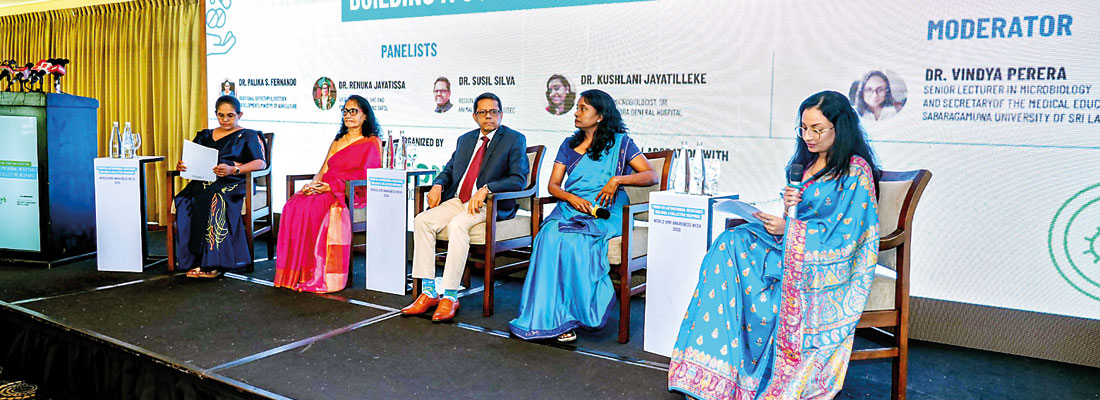
Panel discussion (from the left): Dr. Palika S. Fernando; Dr. Renuka Jayatissa; Dr. Susil Silva; Dr. Kushlani Jayatillake; and moderator Dr. Vindya Perera
The forum was organized in view of World AMR Awareness Week by New Anthoney’s Farms in collaboration with the Health Ministry. Some speakers appreciated the fact that this company is into antibiotic-free chicken production.
| Achievements & challenges Looking at the commitment to combating the AMR threat, Dr. Anil Jasinghe said that since 2017, Sri Lanka has been enrolled in the vital Global AMR and Use Surveillance System (GLASS). The country submits data to the digital platform ANIMUSE (antimicrobial usage data in animals) of the World Organization for Animal Health (WOAH). He said that the country has also proactively addressed AMR. The National Strategic Plan (NSP) 2023-2028 includes:
A recent scoping visit to Sri Lanka under the Fleming Fund’s AMROH (AMR-One Health) South Asia Regional Grant, according to him, had recorded both achievements and challenges. Some of the ‘key’ challenges include the absence of a dedicated government budget – with most AMR-related activities being dependent on external support; limited sharing of AMR and AMU data across sectors; and inadequate on-farm and clinical surveillance. The assessment had revealed:
| |
The best way to say that you found the home of your dreams is by finding it on Hitad.lk. We have listings for apartments for sale or rent in Sri Lanka, no matter what locale you're looking for! Whether you live in Colombo, Galle, Kandy, Matara, Jaffna and more - we've got them all!