

News
Devastated farmers fazed by thought of recovery and the ‘next season’
View(s):By Dilushi Wijesinghe
Amid mounting public concern over the agricultural impact of Cyclone Ditwah and fluctuating market prices of paddy and field crops, experts insist that Sri Lanka will not face an imminent food shortage.
Despite an estimated loss of more than 100,000 hectares of paddy and over 11,000 hectares of other field crops following the cyclone, Chief Executive Officer and Director of the Hector Kobbekaduwa Agrarian Research and Training Institute (HARTI) Professor A. L. Sandika said food security was not under threat.
“We have adequate stocks of rice and vegetables. At present, there is no risk to the supply of vegetables or fruits. Even with rice, we do not foresee a significant threat. The only commodity showing an unusual price increase is eggs, and that appears to be due to market manipulation,” Prof. Sandika told the Sunday Times.
-
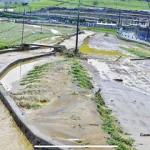
- after the water receded

-

- flooded out

-
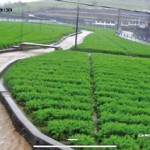
- Sampath Perera’s carrot cultivation: The day before the deluge

“According to the latest cultivation results, both the last Maha and Yala seasons were successful,” he added. “Because of that, we have sufficient rice stocks for about 13 months (from January 2025 to 2026). So even looking ahead to 2026, there is no food security risk suggested, provided cultivation continues on schedule.”
However, the UN-backed Joint Rapid Needs Assessment by the Disaster Management Centre highlighted the scale of the damage. Based on statistics from the Department of Agrarian Development, it noted that, “Prior to the cyclone, an estimated 563,950 ha of paddy (of which 108,000 was destroyed) cultivated by 774,996 farmers were at critical growth stages.”
“In addition, approximately 95,799 ha of other field crops (11,000 destroyed) and 13,463 ha of vegetables, such as maize, pulses, bananas, and various vegetable crops, have suffered extensive damage due to flooding, prolonged inundation, and wind impact,” it stated.
The cyclone also caused extensive damage to irrigation infrastructure. Commissioner General of Agrarian Development Dhammika Ranatunga said 197 minor irrigation tanks were fully damaged, while 507 sustained partial damage. Another 230 minor tanks were affected, along with 835 anicuts and 2,511 damaged canals across cyclone-hit regions.
For farmers, the losses have been devastating. Nagamuththu Naguleshwary (49), who cultivates two plots in the Uva Province, said recovery would be difficult: “It was a severe loss from the agricultural side. I have two fields, and the workers told me the damage is so extensive that we cannot work on the land again. Most farms were completely destroyed, even the dams. The question we have now is how we are supposed to rebuild them.”
Following the devastation, President Anura Kumara Dissanayake convened a meeting with officials from the Ministries of Agriculture and Finance to review losses across agriculture, livestock, and irrigation sectors on December 4. He directed authorities to expedite compensation payments and restore damaged irrigation systems.
Mr. Ranatunga said farmers have been issued request forms to claim relief. Compensation has been fixed at Rs. 150,000 per hectare for paddy and Rs. 200,000 per hectare for other field crops.
However, farmers argue the compensation is insufficient. Sampath Perera (46) from Nuwara Eliya said floods destroyed his carrot cultivation just days before harvest. “It had only been three and a half months since I started cultivating carrots for the Maha season. Nearly three-quarters of my three-acre farm went completely under water. We were due to harvest within a week, but the fields were submerged under almost three feet of water.
“A Govijana Seva official asked us to submit an application for relief. We are supposed to receive Rs. 200,000 per hectare, but we have already spent over Rs. 1 million to bring the crop to this stage, so we feel that it is not sufficient. The other challenge is that the next season’s harvest will be substandard because the fertile topsoil has been washed away,” he said.
Anura Tennakoon (50), a farmer from Dambawinna, Welimada, said cultivation costs had left farmers financially exposed. “Our sole income depends on vegetable cultivation. Vegetable prices usually rise in December, so farmers cultivate crops with the hope of getting a higher price. I cultivated tomatoes this time. I spent Rs. 7,000 on 7 grams of tomato seeds, Rs. 11,000 on chemical and organic fertilisers, Rs. 25,000 on 2,500 tomato stakes, and more, including insecticides and fungicides.
“The tomato crop, which was close to harvest, was inundated by the heavy rain that began on the 26th,” he explained. “Due to the excessive water stagnation in the farmlands, the root systems of the tomato plants have started to rot. This is causing the premature destruction. In this situation, I won’t even be able to recover the money I spent on the cultivation. I won’t have the funds to start the next cultivation.”
K.M. Chamara Prasad (45), Chairman of the Farmer Organisation in Borallanda, said farmers also faced falling prices. “This month, anticipating high prices during the festive season, I cultivated bean seeds at Rs. 5,000 per kilo. Due to heavy rains, the roots of bean crops have started to rot. In addition, the bean pods have been affected by a disease.
“Before the rain, beans were selling between Rs. 500–600 per kilo, but after the rain, the price at the Keppetipola Economic Centre is only Rs. 300–350 per kilo. In such a situation, we may not even recover the money spent on bean cultivation.”
Smallholder farmers have also been severely affected. K. P. Somalatha (63) from Moneragala works with nearly 300 families cultivating home gardens. “The recent heavy rains completely flooded many of these houses, and the crops that were submerged quickly yellowed and died. This has placed a financial burden on these families, and recovery will take time,” she said, adding that “The fertile topsoil has been washed away, families need to source new seeds. This directly undermines household-level food security.”
The Food and Agriculture Organisation (FAO) of the United Nations on Friday acknowledged the urgency of targeted support, stating that “FAO urges that smallholder farmers and small-scale fishers remain at the centre of all Cyclone Ditwah recovery efforts. Most of the farmers affected by Cyclone Ditwah are smallholders cultivating modest plots of land, and for them the timing of support is as critical as the support itself.”
It warned that “If these farmers are unable to replant during the current season or rehabilitate their fields, making them fit for agriculture again, before the upcoming Yala season, national paddy production is likely to face disruptions that may extend beyond 2025.”
Director General of the Department of Agriculture Dr. Thushara Wickramaarachchi clarified that smallholder farmers engaged in commercial agriculture would be eligible for compensation provided that they are “occupational farmers.”
“If a smallholder farmer’s livelihood depends on farming, they will be covered. But if someone is cultivating only for personal consumption, even on a small plot, they will not qualify,” he said.
He added that, “Home gardens, where people grow a few plants for their own use, are not covered. The relief is meant for commercial farmers whose livelihoods depend on cultivation.”
“If a farmer does not have a full hectare, the compensation will be reduced accordingly. For example, if a quarter acre is affected, the payment will be calculated based on the proportion of damage.”
He explained that damage assessments would be carried out by field officers, with payments made directly to farmers’ bank accounts.
“Applications are collected by field officers, who carry out damage assessments and record the extent of loss. Once the details are verified and entered into the system, payments are credited directly to the farmer’s bank account. Cash payments will not be made,” he said.
Additional reporting by
K.R. Rajamanthree
The best way to say that you found the home of your dreams is by finding it on Hitad.lk. We have listings for apartments for sale or rent in Sri Lanka, no matter what locale you're looking for! Whether you live in Colombo, Galle, Kandy, Matara, Jaffna and more - we've got them all!