

News
Debate pulls camps further apart
View(s):Fishing has not only helped people in Negombo to maintain their main livelihood but also changed their lifestyles physically, spiritually and socially while attracting tourists with ma-del (purse seine) fishing.
Ma-del fishing, with its own set of problems such as bycatch, has triggered protests over the use of winches and tractors to pull nets ashore.
Fishers and environmentalists are at loggerheads.
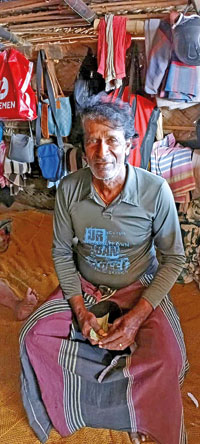
Liyanage Ranjan Fernando: owner of Maha Paduwa Palangathure
Parish Priest of St Anne’s Church, Palangarhure, Negombo, said, “The ma-del is not only limited to Negombo, but it’s an industry; different communities are adopting this method in other parts of the country too. There are a large number of families depending on it. But at present we see there are some obstacles to continuing this, specifically regarding the labour, as it has been very difficult to find people to pull ashore the ma-dela (fishing net) when it’s heavy with the harvest of fish.’’
“There is a lack of labour due to the migration of our people for lucrative jobs overseas, and interest shown by youths is decreasing day by day. That’s why the present-day fishermen are trying to use machinery (tractors),’’ he said.
“When we look at both sides, we see certain valid reasons. On the one hand, there is not enough labour. And on the other, we can’t do away with the ideas of environmentalists either. Maybe it’s easy to implement the laws coming from the higher seats, but it’s up to the Minister of Fisheries to get all the concerned parties to have discussions for a practical solution if our country is going to progress,” he said.
Liyanage Ranjan Fernando, 74, owner of Maha Paduwa Palangathure, said: “We lay our fishing nets only up to a distance of about one and a half miles from shore. On certain days we don’t have a catch at all. We have to spend at least Rs 40,000 to get a catch. We don’t have a place of our own to buy fuel or fishing gear at subsidised prices.
“We buy all these at the market. We do our fishing six days a week, but when the sea is rough, we have to stay away for about two or three days. We have no problem selling our fish. Now the main problem is finding enough manpower. We too like to use tractors or machinery.
“Now we have to bring people from far away places like Thoduwawa in the Puttalam District. There are no experienced people to pull a fishing net.
“Another problem is with those who come in canoes or boats here and fish everywhere. They lay nets whenever they see fish and catch them (caging). They too are our own villagers, but they should do so in the given time and in their area. We start setting off only after 7:00 am.’’
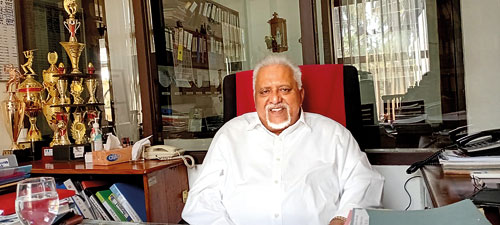
Lal Disanaike: Manager of Goldi Sands Hotel
Lal Disanaike, manager of the Goldi Sands Hotel, said, “We have to look at this from two angles. First, the fishermen have difficulties in getting enough people to pull nets. When there is a big catch, they can’t pull it with only a few people. That’s why they need tractors or machines. From our tourism angle, it mars the natural beauty of our beaches, and also they damage it. Using tractors, they deprive our tourists of their golden chance of seeing our traditional method of fishing accompanied by age-old folk songs.
“Here we have to find a compromise. That means we should have a particular area for them. The Tourism Board and fishermen should sit together and discuss it.’’
Pix and text by KL Richard Walter Perera
The best way to say that you found the home of your dreams is by finding it on Hitad.lk. We have listings for apartments for sale or rent in Sri Lanka, no matter what locale you're looking for! Whether you live in Colombo, Galle, Kandy, Matara, Jaffna and more - we've got them all!