

News
No Lankan left unaffected by US-Israeli war on Iran
View(s):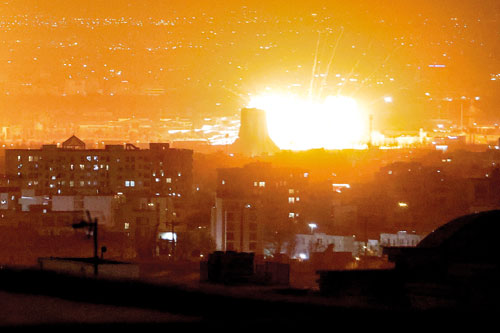
An explosion erupts following strikes near Azadi Tower close to Mehrabad International Airport in Tehran. The United States and Israel launched strikes against Iran on February 28, sparking swift retaliation by the Islamic republic which responded with missile attacks across the region. The war has dragged in global powers, upended the world's energy and transport sectors, and brought chaos to even usually peaceful areas of the volatile region. AFP
With the United States and Iran holding talks in Islamabad amidst a shaky truce that came into effect on Wednesday after 40 days of attacks and counterattacks, the US-Israeli war on Iran has devastated lives not only in the region but across the world, including Sri Lanka.
As the war raged, with Iran imposing a blockade on the Strait of Hormuz—a key choke point through which 20 percent of the world’s oil supplies flow, along with fertiliser that ensures global food security—prices of fuel, gas, electricity, and food items rose significantly in Sri Lanka, a country which had suffered a major economic blow only three months ago due to a devastating cyclone, while still in the process of overcoming the 2022 economic crisis.
The conflict affected many people in many ways. While some struggled to cope with rising prices, others worried about the safety of their loved ones employed in West Asian nations caught up in the war.
Economists expressed serious concern about a fall in export earnings, tourism revenue, and remittances, while environmentalists pointed to the severe impact on the environment from burning oil wells.
To assess the impact of the war on Sri Lanka, the Sunday Times spoke to a cross-section of the people. Here are their comments.
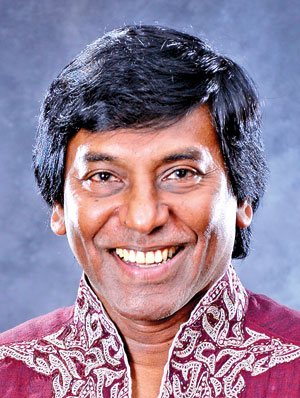 Rukshan Perera -
Musician and composer
The Iran war has had a significant impact on Sri Lanka. Since Sri Lanka imports fuel shipments that pass through the Strait of Hormuz, the prices of petrol, diesel, electricity, and transport services have surged, driving up food prices and the overall cost of living. The rupee has weakened, while the job security of Sri Lankans in West Asia is uncertain. Tourism, which was regaining its momentum, is again faltering, slowing the much-needed economic recovery.
In our lifetime, we have often seen powerful nations manipulate weaker nations in pursuit of narrow, selfish interests. In 2012, the international system threatened Sri Lanka with sanctions for ending a terrorist war while it gave the US the green light to bomb Iraq and kill civilians under the pretext of elminiating Iraq’s weapons of mass destruction. I expressed my protest through the song “Shame On You” on my YouTube channel, pointing out the double standards of the UN and Western powers. Will these selfish world leaders ever learn lessons from the past?

Ruwanthie de Chickera –
Playwright
This ‘situation’ is not about Iran, Palestine, Cuba, Venezuela, Lebanon or Syria. It is about two brutish entities, which have – aided by the frigid opportunism and cowardice of most Western governments – all but destroyed even the illusion of a fragile and sacred world order that we were all expected to uphold.
How does this affect us or anyone else? It’s simple. As long as we are not declared the ‘next conquest’ of the United States or Israel or any such greedy colonial entity, we will only die the slow death of climate suffocation, fuelled by the heat of all the ongoing wars. If we are unfortunate enough to draw the interest of a ruthless coloniser through our beaches, our water, or our strategic locality, our destruction (watched silently by others) will be swifter.
History has shown us that those that wreck such violence ultimately implode. I have no doubt this will happen. The thing is, what and who will they take down with them?
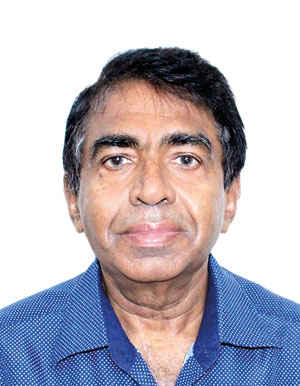
Sarath Amarasinghe -
Emeritus Professor in Sociology, University of Ruhuna
The conflicts in the Middle East have caused serious harm not only to the countries directly involved but also to the entire world. Their impact is more severe on developing countries than on developed ones, making consumer goods and services less affordable due to energy shortages and rising prices.
Global disasters of this nature deal a powerful blow to Sri Lanka, which is still striving to recover from the economic crisis and last year’s Ditwah disaster. In addition to rebuilding the economy, the government is implementing programmes to ensure food security and provide essential services to the needy. There is also a threat of Sri Lankans in the Middle East losing their jobs, and the government must make job security arrangements for them.

Malinda Karunarathne -
Marine Chief Engineer
Sri Lanka’s economy is connected to the global market. If there is a large-scale war, global trade can be disrupted. This can affect exports, tourism, and foreign income. As a result, job opportunities may decrease, and businesses may face losses.
If a conflict like the Iran-US/Israel war becomes worse, sea routes can become dangerous. There is a risk of attacks, piracy, or military actions in important shipping lanes like the Strait of Hormuz.
Safety becomes a major concern. Shipping companies may change routes, delay journeys, or even stop operations in risky areas. This can reduce job opportunities and increase stress for those working at sea. Insurance costs for ships may also rise, affecting the entire shipping industry.
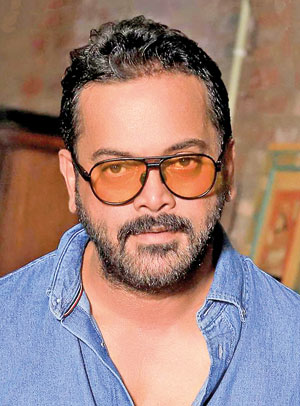
Buddhika Jayaratne -
Actor/Film Director
War or any form of conflict is never good, regardless of the circumstances that lead to it. Most importantly, there are no true winners in war. Reflecting on the impact of the Iran war on Sri Lanka, I see it as a wake-up call for us as a nation. It is almost a slap in the face, showing how dependent we have become on external factors for our survival.
History tells us that Sri Lanka was once largely self-sufficient. While I understand that, in an era of globalisation, it is neither practical nor desirable to be completely self-sufficient. I believe we should still maintain a certain level of national independence. If we are at risk of starvation or a collapse of industries within weeks of a global conflict, that is deeply alarming. It is time to revisit how we arrived here.
In my view, we have also been guided by the idea of being a “generous nation.” For generations, we have been conditioned to give more and expect less in return, and that mindset needs rethinking.
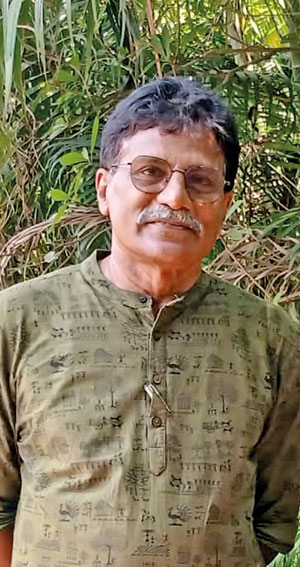
Sydney Marcus Dias -
Author from Puttalam
I have been following the war as a sensitive artist. I have even written song and released them in the internet. The words go as, “Let all people live. Let all living beings survive, Don’t let humanity run dry, Let it thrive soon….”
When leaders declare war, they should understand the suffering the people will undergo. When leaders decide to carry out missile attacks they should realise that there are millions of unarmed civilians and animals. It is a tragedy they do not think of them.
The leaders should also think of the environmental consequences of the war.
We do not see a sufficient intervention of the UN to resolve the conflict as well.
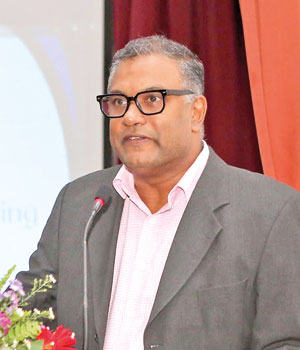
G. Kumar Sithambaram -
Managing director of a travel company
The escalation in the West Asia conflict has had an immediate and multi-layered impact on Sri Lanka’s tourism sector. Rising fuel prices have increased transportation costs by about 15–20%.
As most holiday packages are pre-booked at fixed rates, operators are unable to pass these costs on to clients, forcing the industry to absorb the losses.
With the disruption of the airspace, a key transit route for European travellers have triggered cancellations during the peak March-April season, contributing to a sharp decline in arrivals, particularly among long-stay, high-spending tourists.

Rangari Herath -
Craft and gifts businesswoman
The West Asian conflict had a noticeable impact on Sri Lanka’s small-scale creative industry, particularly for entrepreneurs dependent on imported materials.
The rising global fuel prices and shipping disruptions have increased the cost of key crafting supplies, including pigments, wax, and speciality materials, by about 15–25%, directly affecting production margins.
Many small businesses operate in highly price-sensitive markets, making it difficult to pass these additional costs onto customers. As a result, entrepreneurs are often compelled to absorb the financial impact.
The global economic uncertainty has led to more cautious consumer spending, reducing demand for non-essential items such as handmade crafts and décor.

Dr. Dumindu Soorige –
Senior lecturer, University of Moratuwa
The conflict has rapidly disrupted global energy markets. For Sri Lanka, the most critical impact extends beyond transport to electricity generation.
Although oil-based thermal power contributes less than 10% of the national electricity mix, it remains essential for meeting peak demand, making electricity costs highly sensitive to global oil price fluctuations.
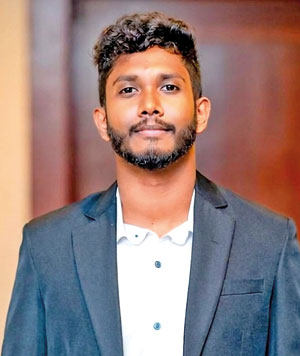
Tharindu Madhusanka –
Undergraduate, University of Moratuwa
The conflict has disrupted global oil supply chains, leading to increased fuel prices in Sri Lanka. This has caused fare hikes in buses and other public transport, which university students rely on daily.
As most students depend on buses and trains, commuting to lectures, labs, and group meetings has become increasingly expensive and sometimes unaffordable, forcing some to reduce travel, miss non-essential academic engagements, or shift toward online alternatives.
Rising fuel and import costs have also driven up the prices of food, canteen meals, groceries, and other essentials around universities. This has directly affected students’ daily living expenses, often forcing them to compromise on food quality and regular consumption.

Mohan Samaranayake –
Senior journalist and international affairs analyst
This war is tied to the ‘Make America Great Again’ policy. ‘Make America Great Again’ is not only Donald Trump’s personal goal but also a long-standing objective of the American state.
It is unjustified, unacceptable, and immoral. It represents a direct violation of international law, including the United Nations Charter. The war should be stopped immediately.
The war is aimed at securing West Asia’s oil resources, weakening China by disrupting energy supply chains, and containing Russia to preserve a unipolar world order.
The war would severely impact countries like Sri Lanka, particularly Gulf migrant workers, as well as fuel costs, food prices, and trade.
Regime change in Iran must be decided by its own people, not imposed by external powers. Such interference sets a dangerous precedent.
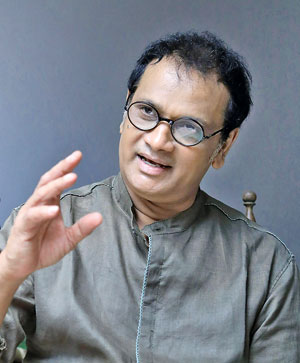
Channa Wijewardena –
Dancer, choreographer, founder of the Channa-Upuli Performing Arts Foundation
The most important thing is for countries to talk and find solutions instead of killing others, destroying cultures, and damaging infrastructure.
Persian culture and its influence on dance, costumes, and makeup traditions constitute an important part of human identity that is now under threat because of the war.
Every country has its own unique culture that should be protected, not destroyed.
If cultures are destroyed, little of true value will remain. People may build anew, but the value of human life is more important than anything else.
Violence should end. Everyone has the right to life.
From a professional perspective, travel costs have already doubled due to the war, making it more difficult for cultural groups to travel and present Sri Lanka’s heritage internationally.
If we truly love humanity, conflicts will not happen. When we lose love, we lose everything.
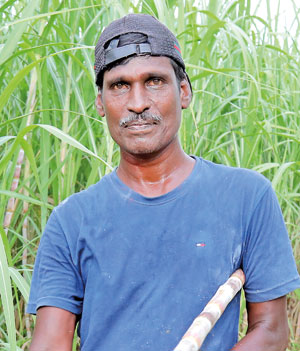
Sinnaiyah Anbalahan –
Farmer in Iranamadu, Kilinochchi
We follow the news to know what is happening in the world. In my neighbourhood, most people are farmers and have been affected by the war. Rising fuel prices, particularly petrol and kerosene, have made farming more difficult, while fertiliser costs have also increased significantly.
I feel that the United States is wrong because its position keeps changing. Still, I believe this conflict should be resolved through peace talks. War is not the solution.
We suffered for a long time due to war, and we no longer believe in it.
My family of seven—my wife, four children, my mother, and I—are struggling with the rising cost of living. It is difficult for us to cope with soaring food prices.
This war is affecting us deeply, and I hope it will end soon.

M. Kalyanasundaram –
Boutique owner in Pussalwa
War is destructive. Sri Lanka suffered a 30-year war that claimed tens of thousands of lives. Parents lost their children, while children lost their parents. Now, the same tragedy is unfolding on a larger scale in Iran and neighbouring countries.
War is not a solution; it is a problem. When conflict erupts in West Asia, it is particularly detrimental to the world, disrupting shipping routes and contributing to fuel and fertiliser shortages, which in turn trigger economic crises. Businesses and the agricultural sector will suffer severely.
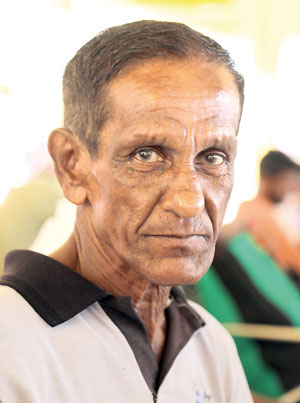
Lenus Herman Ford -
A private company employee
Although the war is happening far from Sri Lanka, we feel its impact strongly as it sends inflation soaring.
Several of my relatives are working in the Gulf region, and I fear for their safety. Their day-to-day lives are affected.
If people working in the Gulf region return, foreign remittances would drop. All countries, particularly developing countries, suffer the consequences of the war.

Ashrof Khan -
Roti maker in a Colombo hotel
The cost of living is soaring due to the war. I live in a rented house, and the sudden rise in the cost of living has disrupted my routine. I cannot blame the government because it is largely due to the war happening elsewhere. I can only hope that the war will end soon.
This war is unnecessary. Powerful countries should be content with what they have. People are dying in several countries in West Asia. Regardless of religion or race, we must live as one humanity and reject violence.
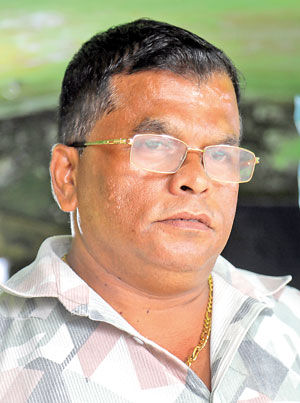
V.P. Anura –
Vegetable trader at Kollupitiya market
High-end customers tend to buy vegetables in large quantities, as they are able to preserve them for weeks. However, most people I speak with are more concerned about the possibility of a lockdown in the coming days. They try to save whatever money they have to face such a situation.
The ongoing war is the main reason for price hikes. Yet, as vegetable sellers, we do not have the luxury of raising our prices in proportion to fuel costs, for fear of losing our customers.
We sincerely hope the war will end soon and that normality will be restored.

Wasana Geekiyanage -
Owner of a transport company in Ekala
The war has led to a sharp increase in fuel prices, which in turn has raised our vehicle maintenance costs. The prices of spare parts and servicing have also risen significantly.
To help my thirty-odd employees cope with rising prices, I gave them a salary increase. The war may be taking place thousands of miles away, but it has affected my business.
As a mother of three sons, it is heartbreaking to see sensitive videos of children being killed or maimed in the conflict. As a parent, I am traumatised by this tragedy.

Sajini Perera Maturata -
Administrator of a private company in Britain
This war is not merely a conflict between two or three countries; it is a global crisis. I believe fossil fuels belong to the entire world, and therefore, destroying refineries is an act that impacts the global economy.
Countries such as Sri Lanka depend heavily on others. Since Sri Lanka is still not stable, any global crisis leaves a long-lasting negative impact.
In Britain, where I live, people are strongly opposed to the war. War is against humanity, and everyone should unite in calling for peace.
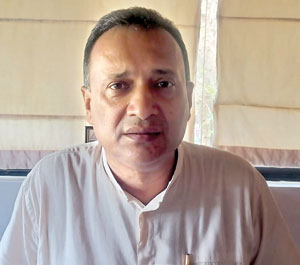
Saliya Dayananda -
Tourism sector businessman in Dambulla
What is happening is a political struggle. Small countries like Sri Lanka are among the worst affected. We are victims of their war. The tourism industry is one of the hardest-hit sectors, with leisure travel being curtailed. Tourists do not want to risk their safety for a holiday.
Everyone faces risk. Each country’s independence should be respected. No nation can impose its will on another. Every country and its people have the right to exist.
The war must end—for the sake of humanity.
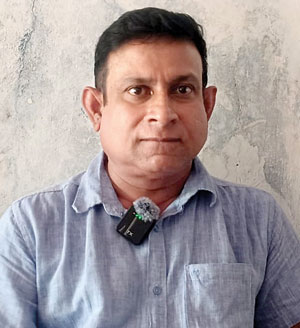
Duminda Banadarnayake –
Public sector employee in Dambulla
The war will not end until the US achieves victory. If theUS fails, the conflict will only be prolonged. The war’s impact on Sri Lanka would be less only if the US wins.
Sri Lanka, however, is adopting double standards in its stance on the war instead of maintaining neutrality.
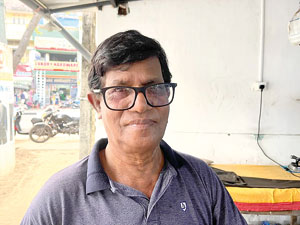
K. Siriskandaraja -
Batticaloa resident
I do not see this as a war between Iran and Israel; it is a global crisis. Economically, the Arab countries are also affected. This war is creating problems across the world. It is both unnecessary and unacceptable, and it has caused immense hardship for people everywhere.
Therefore, the war must be stopped before it escalates into another world war. I hope that Pakistan’s mediatory efforts will lead to lasting peace in the region.
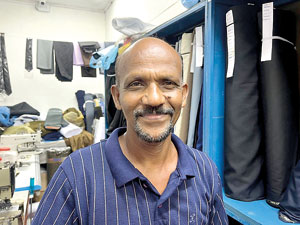
K. Bagirathan –
Political activist in Batticaloa
The truth is that most of us denounce this war against Iran. A new government came into office following a major economic crisis, and the economy was gradually recovering.
It is unfortunate that the government has had to face crisis after crisis: last year we were hit by the Ditwah crisis, and now this war has broken out just as we were trying to recover. The US–Israeli alliance’s war against Iran has affected us deeply, particularly the poor.
As Sri Lankans who have lived through decades of war, we hope peace will prevail across the world and that people everywhere may live happily.
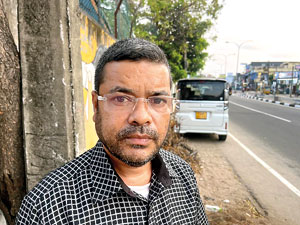
A. Tahir -
Salesperson in Eravur
West Asia has been deeply affected by the war. My relatives working there say they are suffering immensely. In Qatar, Dubai, Saudi Arabia, and Kuwait, people are enduring severe hardships.
Needless to say, Sri Lanka—like all other countries—has also been affected. The world would be a happier place if there was no war. World leaders must bring this conflict to an end. My wish is that everyone responsible will give peace a chance.

H.M.P. Wijetunga –
Businessman from Ella
Developing countries such as Sri Lanka are among the worst affected by this war. The war hit as we were just recovering from the impact of the ‘Ditwah’ cyclone. It has severely affected the tourism industry, on which Ella depends. Unfortunately, the crisis has come just as we are preparing to celebrate Avurudu, and the celebrations will not be as joyful this time.

D.W.M. Umedha Priyadharshani – Resident from Ella
The war has adversely affected us, particularly the people of Ella, which relies heavily on tourism. Many who took bank loans to invest in tourism have suffered losses due to a decline in tourist arrivals. Fuel and gas price hikes have also hit us hard, making it difficult to cope with the rising living costs. Those who returned on leave from West Asian countries are unable to go back, and some have even lost their jobs. This war must come to an end.

Dr Manella Joseph -
Singer and consultant pathologist
West Asia is a vital region for us, as we depend on its fuel for our vehicles, industries and power generation.
I am not entirely sure how much we receive from that region in terms of other goods, but shipping routes are also affected. If transport is disrupted, that becomes another problem for us.
I was concerned about this from the beginning, and I continue to pray for an early end to the war.
I am optimistic that the conflict would be resolved soon, although I cannot say for certain.
However, Sri Lanka is already dealing with its own internal challenges, and the war has become an additional and unnecessary burden. Even so, I believe the government is managing the situation as best as it can under the circumstances.
(Compiled by Kasun Warakapitiya, Dilushi Wijesinghe, Hiran Priyankara Jayasinghe, Deva Athiran, Ishu Bandara, Kevin de Alwis, M.A. Pushpa Kumara Kanchana Kumara Ariyadasa, Deva Adhiran and Prasad Rukmal)
The best way to say that you found the home of your dreams is by finding it on Hitad.lk. We have listings for apartments for sale or rent in Sri Lanka, no matter what locale you're looking for! Whether you live in Colombo, Galle, Kandy, Matara, Jaffna and more - we've got them all!