

News
FRECSL launches home-grown ethics reviews for biomedical research in SL
View(s):By Kumudini Hettiarachchi

Prof. Chandanie Wanigatunge bestows FRECSL’s Honorary Membership on Dr. Malik Fernando. Pix courtesy Amal Ranawaka
Research using human participants in early times has had a scandalous and unethical journey worldwide, until saner counsel prevailed. Now on strong foundations such as the Declaration of Helsinki and the Council for International Organizations of Medical Sciences (CIOMS), ethical research is guided by core values.
These values ensure the protection, dignity and rights of participants while upholding the integrity of scientific inquiry. They are strongly based on informed consent, voluntary participation, privacy & confidentiality and justice, beneficence & non-maleficence (first, do no harm).
While anyone or any institution can conduct research, the responsibility of safeguarding human participants falls on Institutional Review Boards (IRBs) or Research Ethics Committees (RECs) also known as Ethics Review Committees (ERCs).
It was in this context that Sri Lanka’s journey came under the spotlight on March 13 at the ‘Inaugural General Assembly & Update on Research Ethics’ organised by the Forum for Research Ethics Committees in Sri Lanka (FRECSL).
An eminent gathering was taken on ‘From FERCSL to FRECSL:the journey and beyond’ by FRECSL Chairperson Prof. ChandanieWanigatunge who has been at the helm since 2015.
Explaining the name-change, Prof. Wanigatunge said that from 2004 to 2025 (last year), this important body was known as the Forum for Ethics Review Committees in Sri Lanka or FERCSL. It became the Forum for Research Ethics Committees in Sri Lanka or FRECSL just last year.
The birth of FERCSL in 2004 was under the Sri Lanka Medical Association (SLMA), the national professional medical association in Sri Lanka which dates back to 1887. The SLMA is the oldest professional medical association in Asia.
Guided by Founder Chairperson Prof. Anoja Fernando for over a decade (from 2004-2015), FERCSL had been formalised with a Constitution which stated that this forum convened under the SLMA, for an indefinite period of time, shall include all ERCs in Sri Lanka. Its objectives were fostering improved understanding and implementation of ethics review of biomedical research in the country.
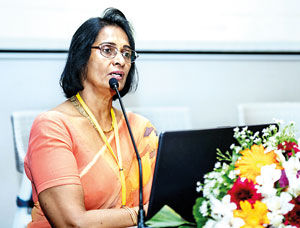
Prof. Chandanie Wanigatunge
Prof. Wanigatunge gave a glimpse of FERCSL activities which through its Management Committee set about improving communication among ERCs reviewing biomedical research; organising meetings and symposia on aspects related to research ethics; stipulating Guidelines and Standard Operating Procedures (SOPs) for member ERCs; and facilitating training and educational opportunities for members of ERCs.
By 2007, FERCSL had developed SOPs and in 2009 also launched ‘Guidelines for Ethics Review of Proposals on Animal Research’.
By 2009, the ERC of the Faculty of Medicine, University of Colombo, had looked beyond the country’s shores and sought and gained recognition from the Strategic Initiative for Developing Capacity in Ethical Review (SIDCER), an international network and collaborative initiative established in the early 2000s. SIDCER worked with the Forum for Ethical Review Committees in Asia and Western Pacific (FERCAP). Following this lead, the ERC of the Faculty of Medical Sciences, University of Sri Jayewardenepura followed suit, gaining similar recognition in 2012, with two Sri Lankans joining the SIDCER team as international surveyors.
By 2016, Prof. Wanigatunge says that the FERCSL Constitution underwent major reform, becoming an ‘independent’ forumconvened under the SLMA, confining itself to overseeing the ERCs that review only biomedical research, while opening up its membership to individuals too.
Whereas earlier the FERCSL Management Committee membership consisted of two nominees per ERC, it was expanded to include three nominees. While FERCSL was also bestowed the responsibility of awarding Honorary Membership to those who had made a significant contribution to biomedical ethics, a new post, that of Editor,had also been created.
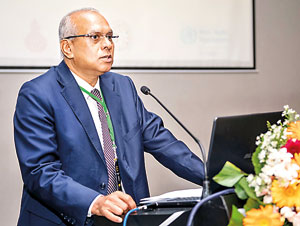
Dr. Rajesh Sambhajirao Pandav
After reaching the milestone of constitutional reform, FERCSL’s Management Committee has set about improving communication among ERCs, says Prof. Wanigatunge, explaining that it had also come up with a common application format in its bid to facilitate more research, so that applicants would find it easier when multiple submissions had to be made.
Numerous have been the robust meetings, symposia and sharing of experiences organized by FERCSL on different aspects including ‘Basic Research Ethics’; ‘Good Clinical Practice’; ‘Dilemmas in Research Ethics’; and ‘Vulnerability in Research’.
Moving forward from the development of SOPs in 2007, in 2018, FERCSL also launched the ‘Operational Guidelines forRECs’.
This is while debating – set in motion by Prof. Panduka Karunanayake – whether FERCSL should shift gears and develop a ‘mechanism’ locally to review ERCs, in the light of the high cost incurred when seeking recognition from SIDCER/FERCAP. This would be a home-grown audit and review of ERCs by FERCSL even as it continued to do what it usually did, facilitating training and educational opportunities for ERC members.
Prof. Wanigatunge looks back at 2019 and says that there was a vibrant research culture, with nine ERCs across the country securing SIDCER recognition. They were at the Faculties of Medicine of the Universities of Colombo, Peradeniya, Kelaniya, Jaffna &Ruhuna; the Faculty of Medical Sciences of the University of Sri Jayewardenepura; the SLMA; the Faculty of Medicine & Allied Sciences of the Rajarata University; and the Postgraduate Institute of Medicine (PGIM), Colombo. There were also eight SIDCER international surveyors from Sri Lanka who performed reviews in India, Thailand and China.
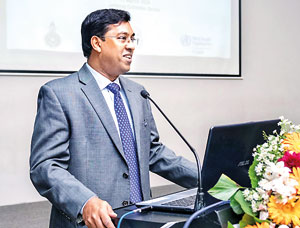
Dr. Manilka Sumanatilleke
Then in 2020, the COVID-19 pandemic hit followed by an economic crisis, says Prof. Wanigatunge, pointing out that in 2023 there were no newly-recognized or re-recognised ERCs by SIDCER since 2019. This brought to the fore once again, the dire need for FERCSL to develop a mechanism to review ERCs.
Forming a strong sub-committee comprising Prof. Wanigatunge; Dr. Prasad Ranatunga (Health Ministry) ; Dr. Janaka Pushpakumara (Rajarata University & Bandaranaike Memorial Ayurveda Research Institute); Prof. Shamini Prathapan (Faculty of Medical Sciences, University of Sri Jayewardenepura); Prof. Harshini Peiris (Faculty of Allied Health Sciences, University of Ruhuna); Dr. Chathurika Dandeniya (Faculty of Medicine, University of Peradeniya); and Dr. Wasanthi Subasinghe (Faculty of Medicine, University of Kelaniya), they had got to work.
Poring over literature including the WHO’s ‘Surveying & Evaluating Ethical Review Practices’ and the draft ‘WHO Tool for Benchmarking Ethics Oversight of Health-related Research with Human Participants’, they have now come up with a mechanism to conduct surveys and give recognition to local ERCs.
From FERCSL to FRECSL, the journey has been fruitful and the launch of ‘FRECSL Surveys’ had been at a simple but vitally important function on June 17, 2025, at the SLMA auditorium.
Standing tall and strong, FRECSL with a membership of 20 ERCs, has already carried out three surveys –for the ERCs of the SLMAin June 2025; the Bandaranaike Memorial Ayurveda Research Institute in October 2025; and the Faculty of Medicine, University of Kelaniya in February 2026 respectively.

Dr. Roli Mathur
Prof. Wanigatunge looks at the challenges for research in Sri Lanka and says that there is a need for harmonization, avoiding multiple duplicativestructures; a need for governance, consistency among ERCs; and a need for national policies such as Clinical Trials Regulations of 2019 of the National Medicines Regulatory Authority (NMRA) and the draft National Health Research Council (NHRC) Act.
The challenges for FRECSL, she adds, are training (a pool of resource persons and funds); surveys (to expand the pool of surveyors and funds); and the membership (to increase membership including hospital ERCs and funds).
However, Prof. Wanigatunge is confident that shared challenges can be overcome by shared solutions.
Slides in her presentation of colourful caricatures show how the FRECSL team is on a rugged, uphill pathway with hurdles such as waterways…….and how, not to be deterred, the members carry and place a heavy log as a bridge and keep going!
While the World Health Organization (WHO) Representative to Sri Lanka, Dr. Rajesh Sambhajirao Pandav assured support to FRECSL, the other speakers included Dr. Roli Mathur, Scientist G & Head of the Bioethics Unit of the Indian Council of Medical Research, who delivered the keynote address and SLMA President Dr. Manilka Sumanatilleke.
Joining online was WHO’s Regional Advisor for Research and Innovation at the Regional Office for South-East Asia, Dr. Manju Rani, who chairs the Global Network of WHO Collaborating Centres in Bioethics.
The function ended on a poignant note with the awarding of Honorary Membership to Dr. Malik Fernando, longest-serving member of FRECSL’s Management Committee.
The best way to say that you found the home of your dreams is by finding it on Hitad.lk. We have listings for apartments for sale or rent in Sri Lanka, no matter what locale you're looking for! Whether you live in Colombo, Galle, Kandy, Matara, Jaffna and more - we've got them all!