


External shocks and internal buffers
View(s):But for a feeble and sick person, the same storm can be exhausting, even dangerous, leaving the person shaken long after the clouds have passed. It is quite possible that this person will have lots of health complications thereafter. The severity of the storm matters, but so does the condition of the person caught in it.
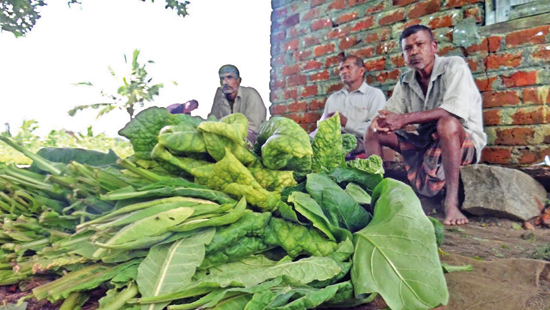
The West Asian crisis would impact everyone including Sri Lankan farmers.
2018 episode
I used this example when I spoke in 2018 at a high-level roundtable on the sharp depreciation of the Sri Lankan rupee against the US dollar. It was a critical moment for both the global economy and Sri Lanka. Rising world oil prices and four consecutive increases in US Federal Reserve interest rates that year had a damaging effect on the rupee-dollar exchange rate.
I was not sure whether many of the non-economists present could follow the discussion in purely technical terms. Why was the rupee falling so sharply? And how could its impact on people and businesses be managed?
Anyone can be caught in a storm, but its impact differs from person to person. In the same way, global oil price hikes and US interest rate increases affect all countries. Yet some manage to navigate through, while others—like Sri Lanka—suffer more severely.
The reason lies in Sri Lanka’s fragile external finance position. With stagnant export growth, the country relied too heavily on short-term and unhealthy sources of foreign exchange, which could reverse quickly and magnify vulnerability to external shocks.
Higher import costs from oil and capital outflows triggered by US interest rates worsened this already weak position. Temporary fixes may offer short relief, but Sri Lanka must prepare for recurring external shocks by reducing vulnerability and strengthening resilience.
During 2018 – 2026
The period from 2018 to 2026 was marked by a series of shocks. Beyond the oil price hike and US interest rate increases, Sri Lanka faced its own political and economic turbulence. The constitutional crisis of October 2018 undermined investor confidence and disrupted policy continuity.
In April 2019, the Easter Sunday terrorist attacks dealt a severe blow to tourism—one of the country’s main sources of foreign exchange. The sharp decline in arrivals and revenue stood in stark contrast to the record tourist numbers achieved just a year earlier.
 At the same time, the emerging US–China trade war weakened global trade flows and reduced demand in Sri Lanka’s key export markets—the US and the EU—further eroding export earnings.
The subsequent two years (2020–2021) brought the COVID-19 pandemic, which plunged the world into lockdown. For Sri Lanka, this meant a collapse in tourism, exports, and remittances, leading to steep declines in foreign exchange earnings. Domestic restrictions disrupted livelihoods and production, intensifying unemployment and poverty while widening fiscal and external imbalances.
By 2022, Sri Lanka faced an unprecedented economic crisis as the country became unable to meet its external debt repayments. Recovery began during 2023–2025 with the support of the IMF’s Extended Fund Facility and debt restructuring programmes.
Yet, even amid recovery, the country was struck in November 2025 by Cyclone Ditwah—one of the worst natural disasters in decades. It destroyed homes and infrastructure, caused massive economic losses, and affected millions of people, multiplying the economic and social challenges already at hand.
Gulf crisis
The US–Israel alliance war with Iran that erupted in February 2026 has rapidly escalated into a regional conflict, destabilising West Asia. Shockwaves are already rippling across global energy markets, supply chains, and international diplomacy. Oil prices have spiked, shipping routes are strained, and geopolitical polarisation has deepened.
For Sri Lanka—already battered by repeated shocks in recent years—the question is clear: what will be the impact of this Gulf war on its economy and people? The concern is not only economic but also social and political, given the country’s fragile recovery path.
Like any global shock, the conflict transmits waves across the world economy. Yet each country feels them differently, depending on its resilience and the depth of its ties to the Gulf region.
Same shock, different outcome
For Sri Lanka, the reverberations are particularly acute. The conflict has unsettled oil production and shipping in the Persian Gulf, which accounts for nearly a fifth of the world’s crude supply. Airspace closures and rerouted flights are driving up costs for airlines and logistics companies, slowing global trade flows.
These disruptions translate into higher import costs, rising transport expenses, and reduced competitiveness for Sri Lanka in global markets.
The Gulf conflict with Iran is shaking the global economy through energy market volatility and trade disruptions. Missile and drone strikes on Gulf States have disrupted oil production and shipping routes, while airspace restrictions have raised costs for international carriers. Together, these factors are straining supply chains and slowing trade worldwide.
Yet the impact is not uniform. Each country experiences the shock differently, depending on its resilience to external pressures and the depth of its economic ties with the Gulf region. For Sri Lanka, both vulnerabilities and exposure are significant, making the consequences of this conflict especially severe.
Vulnerability & connectivity
Sri Lanka’s vulnerability to external shocks is heightened because its long-term domestic economic performance has been weak, leaving little resilience to absorb global disturbances. Persistent fiscal deficits, a narrow export base, and a fragile external finance position mean that global price increases, interest rate hikes, health crises, political tensions, or natural disasters quickly spill over into domestic instability.
Having endured a series of shocks both internal and external since 2018, Sri Lanka is now in a more fragile state than many of its neighbours. That fragility explains why the economy collapsed in 2022.
Today, the country stands in a precarious position where even a moderate external shock could tip the balance towards a renewed crisis. In this context, the unfolding Gulf conflict is particularly alarming. With limited fiscal space and few external financing options, Sri Lanka can hardly afford another shock of this magnitude. It is like a patient still recovering from major surgery—any fresh infection could prove fatal.
Sri Lanka’s economic dependence on the Gulf region runs deep. Oil and gas imports, tea exports, tourism flows, air travel, remittances from migrant workers, and the strategic role of Gulf ports and shipping routes all tie the country closely to the region. This web of connections ensures that a crisis in the Gulf does not remain “external” for long.
It reverberates through Sri Lanka’s balance of payments, energy security, household incomes, and supply chains. In effect, the economy is tethered to a single external anchor, and when that anchor shakes, the entire vessel risks capsizing.
Preparing for future
How severely Sri Lanka’s economy is hit depends not only on its fragile position but also on how long the Gulf war drags on and how deeply it unsettles the global economy. If the conflict is prolonged and energy markets remain volatile, Sri Lanka’s already thin buffers will be overwhelmed, leaving the country with little capacity to absorb the shocks.
The question many ask is how to face this if conditions worsen and the crisis continues. Temporary fixes are not new to Sri Lanka, but the real challenge lies in preparing for the future.
A crisis can open doors, but seizing those opportunities requires more than geography. Sri Lanka’s location at the crossroads of major shipping lanes and its deep connectivity to global markets give it a natural advantage when businesses seek new bases in the region. Yet location alone is insufficient.
Without an enabling business environment that attracts private capital, Sri Lanka risks being seen as a convenient stopover rather than a trusted hub. Geography provides the stage, but strong institutions and sound policies are the actors that make the performance credible. Unless those actors are ready, the stage remains empty, and the opportunity slips away.
[The writer is Emeritus Professor at the University of Colombo and Executive Director of the Centre for Poverty Analysis (CEPA) and can be reached at sirimal@econ.cmb.ac.lk and follow on Twitter @SirimalAshoka)].
Hitad.lk has you covered with quality used or brand new cars for sale that are budget friendly yet reliable! Now is the time to sell your old ride for something more attractive to today's modern automotive market demands. Browse through our selection of affordable options now on Hitad.lk before deciding on what will work best for you!