


SLMANA brings TMS to Sri Lanka
TMS is finally coming to Sri Lanka.
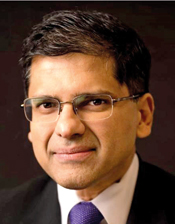
Dr. Tarique Perera
TMS or Transcranial Magnetic Stimulation, a treatment method used globally for depression, OCD, migraines and other conditions, is described as “non-invasive brain stimulation”. Using magnetic fields to activate nerve cells, TMS is a critical treatment method when mental illnesses are unresponsive to medications and psychotherapy.
TMS treatment has eluded Sri Lankans with mental illnesses, because its sheer cost would have made it beyond the reach of most patients. But now, Sri Lanka is receiving two free TMS machines courtesy of the Sri Lanka Medical Association of North America (SLMANA), which will be gifted to the Government at the end of February and launched in March 2026.
One machine will be installed at the National Hospital in Colombo, and the other at the Jaffna Teaching Hospital in Jaffna. Patients who seek treatment at both hospitals will be provided TMS treatment free-of-charge.
Doctors from the SLMANA will provide the necessary training and education to medical and technical personnel at the two hospitals who will be handling the TMS machines. The Government has agreed to provide the personnel and also undertaken the responsibility of maintenance of the machines to ensure long-term continuation of the project.
The project is spearheaded by SLMANA President Dr. Tarique Perera of Connecticut who is Board certified by the American College of Psychiatry and Neurology. Trained at Harvard Medical School, he completed his residency at the New York Psychiatric Institute and Columbia University. An experienced international TMS practitioner, Dr. Perera is associated with early research at Columbia University and Harvard Medical School, on TMS therapy in psychiatric disorders.
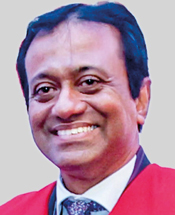
Prof. Shehan Williams
He also led a team of doctors who authored the landmark paper “Consensus Review and Treatment Recommendations for TMS Therapy for Major Depressive Disorder,” outlining best practices for using Repetitive Transcranial Magnetic Stimulation (rTMS) in treating mental illness.
Prof. Shehan Williams, Professor in Psychiatry at the Faculty of Medicine, University of Kelaniya and close collaborator of the project and friend of Dr. Perera, is elated that his dream of introducing TMS in Sri Lanka, is finally coming true. The current standard treatment for mental illness in Sri Lanka is prescription medications and psychotherapy, which are long drawn out and ineffective in some cases. Many young Sri Lankans, have, time and again, approached Prof. Williams for “TMS treatment” and he can finally say “Yes” to them.
Renowned British medical researcher Dr. Anthony Barker, and his medical team at the Royal Hallamshire Hospital in England developed the first TMS device and demonstrated that specific regions of the brain could be stimulated painlessly and non-invasively, through magnetic pulses. Since then, several thousand publications on TMS have been produced across the world and TMS treatment is currently available in over 60 countries.
Dr. Perera and his peers are focusing on treatment of mental disorders through TMS. Dr. Perera explains that through their research at Harvard Medical School, they discovered what they named as “functional brain imaging,” which is like a structure of the mind as opposed to regular brain imaging like an MRI. In the 1990s, they engaged in rTMS to continually activate and stimulate specific parts of the brain to see if magnetic stimulation could lead to effective treatment of psychiatric disorders.
If someone has schizophrenia and is hallucinating about voices or sightings, rTMS allows doctors to observe these incidents in real time through a “functional brain scan” which in reality, is a scan of the mind at work. “We can see which parts of the brain are firing when the patient hears voices,” Dr. Perera explained.
With TMS being a concept of changing brain circuitry and normalizing it through technology, researchers found that by suppressing areas causing hallucination in real time, the voice goes away in real time.
“When the part of the brain that provides the drive and ability to enjoy things is underactive, a person’s ability to enjoy or take pleasure in things is lost.” This condition is described as “anhedonia” which is a core feature of depression.
With this understanding, the researchers realized that if the particular part of the brain connected to this drive could be stimulated and activated, people could recover from depression. What it also showed was that by using rTMS, doctors can precisely stimulate one particular region of the brain, without impacting any other part of the brain or the body.
They realized the overwhelming strength of rTMS is its inherently precise, scientific and non-invasive approach targeting the specific brain sections affecting depression, unlike the imprecise treatment of medications and electro shock therapy. TMS, according to Dr. Perera, is still the only treatment that directly targets the brain circuits involved in depression and anxiety, and even schizophrenia. “All other treatments are imprecise and non-specific.”
Around 10% of Sri Lanka’s population is afflicted with various mental disorders, according to recent Health Ministry statistics. According to Director General of Health Services, Dr. Asela Gunawardena, 2% of the population suffers from severe mental illnesses.
Prof. Williams notes the most tenacious obstacles to medical intervention are social stigma and belief that mental distress lies in supernatural causes like demonic possession that can be cured by black magic, witchcraft, and traditional healers.
However, the generational shift has led to more young people beginning to seek new methods of technology-based treatment.
The soon-to-be-available TMS treatment will, no doubt, be the radiant silver lining around a perpetual dark cloud of lingering mental disorders.
Searching for an ideal partner? Find your soul mate on Hitad.lk, Sri Lanka's favourite marriage proposals page. With Hitad.lk matrimonial advertisements you have access to thousands of ads from potential suitors who are looking for someone just like you.