

News
Pollution chokes Hamilton Canal; environmental disaster looms in Muthurajawela
View(s):- Residents say superficial cleanups won’t solve the problem; Government teams up with church and activists to save the environmentally sensitive marsh
By Tharushi Weerasinghe
Residents living along the Hamilton Canal and fishermen from the Negombo Lagoon say large-scale pollution is destroying fish breeding grounds, worsening floods, and turning a once-lifeline waterway into a serious public health hazard.
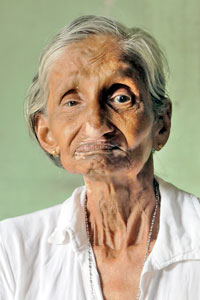
P. Violet: Long-time resident
“I have been fishing in these waters since I was a teenager, but something we see worryingly often now is that large batches of fish die at least three times a year,” said Ranjith Fernando, 61, chairman of the local fishermen’s association.
Water along many parts of the Hamilton Canal is now a thick black from the waste it is exposed to, and mounds of garbage float along many parts of it.
Mr Fernando said fish breeding in the Negombo Lagoon had declined sharply, which he attributed to polluted water flowing in from the Hamilton Canal. He said the canal carried industrial waste and refuse from several upstream areas, including Ja-Ela and Dandugan Oya. “We see large prawns and fish die like this a few times a year,” he said, describing scenes where dead fish float to the surface.
Reminiscing about earlier decades, Mr Fernando said the canal was once clean enough for daily use. “Back then, there were no factories. We used to bathe and drink this water. Now you can’t even dip a foot in it without getting sick,” he said, adding that fishermen’s daily catch has dropped significantly.
Beyond pollution, he pointed to structural problems in the lagoon and canal system. Mr Fernando said fishermen had repeatedly requested the authorities to deepen and clear waterways to improve water flow, pointing out that the lagoon received water from multiple sources in a confined area. “The blocked water doesn’t go down, and that makes flooding worse,” he said, also calling for the river mouth to be widened.
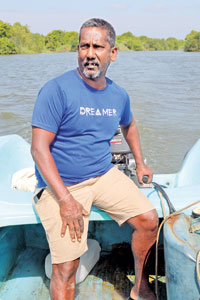
Ranjith Fernando: Chairman of the local fishermen’s association
He criticised what he described as superficial clean-up efforts. “Any cleaning of the Hamilton Canal is done at the surface level, but the pollution runs so deep,” Mr Fernando said. He recalled once taking government ministers and local officials on his fishing boat, at his own expense, to show them the severity of the problem. “Nothing has been done,” he said.
“The water doesn’t flow properly because silt keeps depositing every year and makes the canal shallower and shallower,” said Rohan Suranga, 42, a fisherman from Negombo Lagoon. At the midpoint of the estuary, he stood in waist-deep water and lifted silty mud in his hands to demonstrate how shallow the critical point of water dispersion had become.
Mr Suranga said the gradual loss of depth had directly affected fish breeding. Comparing conditions today with the past, he said fish stocks were healthier and replenished more easily when he began fishing 25 years ago. “Now a lot of fish die and float up the Hamilton Canal when the tide turns,” he said, adding that the rotting fish causes a strong stench that affects residents.
“The canal was quite normal when I moved here 25 years ago because I remember people bathing in it,” said Anusha Dassanayake, 45, a resident living along the canal.
Ms Dassanayake said conditions deteriorated after factories began operating along the canal. “They turn their waste here, and that’s what makes the water so dark and thick,” she said, while also acknowledging that household garbage dumping has compounded the problem.
She noted that cleanup programmes had taken place—like the recent efforts by a police-led committee—but said these measures had little lasting impact. “People still litter, and the factories still turn their garbage this way,” she said. Ms Dassanayake recalled that a proposal to line canal banks with large garbage collection bins was discussed but never implemented.
Describing how residents cope in the absence of regular waste collection, she said families reuse biodegradable waste for plants and burn non-disposable items. During floods, she added, the pollution becomes a direct health risk. “Our neighbours across the canal suffered a lot because the floodwater was so contaminated,” she said.
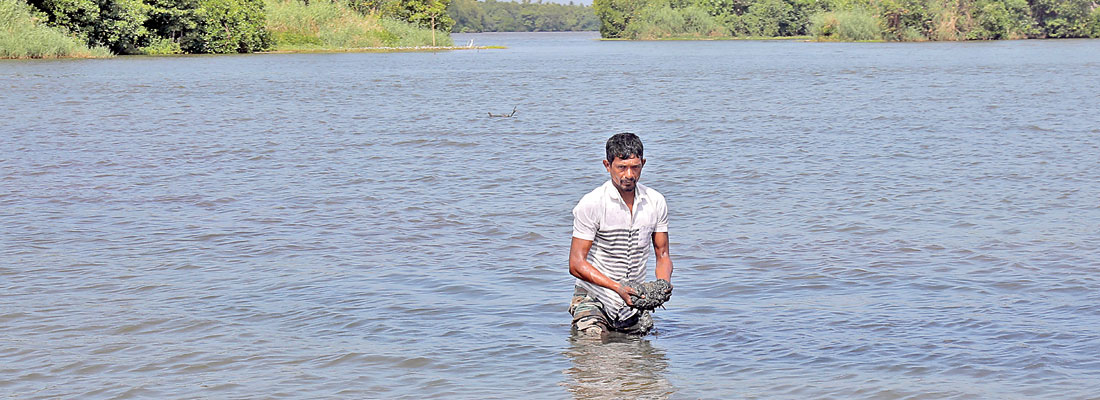
Rohan Suranga: Fisherman from Negombo. Pix by M.A. Pushpa Kumara
“We used to bathe and wash our dishes in the canal,” said P. Violet, 78, a long-time resident who grew up along the canal banks.
Ms Violet said residents stopped using the canal in the 1970s, initially due to fear during the period of unrest when bodies were found floating in the water. “After that, the littering started,” she said. Over time, she believes industrial waste dumping worsened the situation, while the lack of proper garbage collection pushed people to discard waste near the canal. “That’s why it keeps getting dirtier,” she said.
The issue was brought to the spotlight by Cardinal Malcolm Ranjith last Thursday at a media conference, where he, along with other activists, raised concerns about the pollution and its harm to local communities and the Muthurajawela Wildlife Sanctuary.
While anicut structures had protected Muthurajawela marsh from the Hamilton Canal waters since 1950, their removal in the late 2010s now allowed contaminated water to enter the key ecosystem.
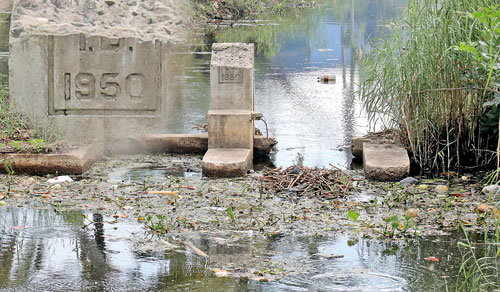
Remains of the old anicut from 1950
“Throughout last year, we raised our concerns through the Environment Committee and the District Coordinating Committee,” Deputy Labour Minister Mahinda Jayasinghe said.
He said a professional committee, appointed in August, submitted its report in January, focusing on the value of the Muthurajawela wetland and measures needed to protect it. The deputy minister said it was then decided to present the report to the Ministry of Environment and form a joint committee comprising the four local councils connected to Muthurajawela.
The committee, appointed on January 30, had its first meeting on February 2 to discuss current destruction and future action, with another meeting scheduled for tomorrow to identify measures for five major damage sites that have been flagged. Mr Jayasinghe said the Cardinal’s representatives had also been invited to participate in the discussions.
The Deputy Minister said hundreds of acres had been damaged in politically corrupt decisions over the years. “Under no circumstances will we be partners in this crime,” he said, adding that bribery and corruption surrounding the development in these areas would not be tolerated.
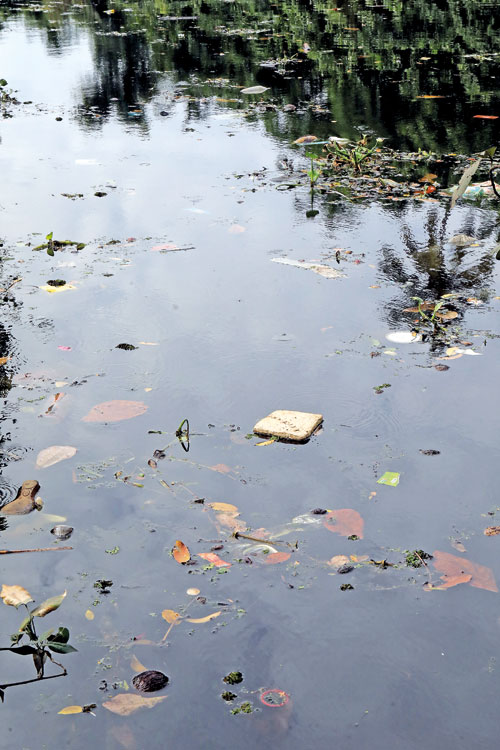
The stretch of black sludge in the Hamilton Canal
The best way to say that you found the home of your dreams is by finding it on Hitad.lk. We have listings for apartments for sale or rent in Sri Lanka, no matter what locale you're looking for! Whether you live in Colombo, Galle, Kandy, Matara, Jaffna and more - we've got them all!