

Sunday Times 2
Tribalism, the bane of all mankind
View(s):- It’s survival-based, with a background in neurobiology
By Dr Channa Ratnatunga
‘Them versus us’, ‘Haves versus have-nots’ are common epithets in popular usage in modern-day society. When traced back to their origins, one becomes aware of their antecedents in antiquity.
During the ‘Hunter-Gatherer Period’ of human evolutionary history, living in small, cohesive groups (tribes) was the most effective strategy for survival against predators or rival groups seeking to steal the spoils of their efforts. In consequence, this instinctual reflex is etched into the human brain and is fundamentally rooted in the need for safety and self-preservation.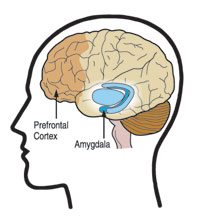
Tribal thoughts have a strong affinity for the social behaviour of modern man, whether in ethnic, political, religious, or interest-based groups, or even in the field of sports. It’s this polarising, competitive nature that gives the group a sense of security, purpose, shared meaning, and emotional support.
Natural selection favoured individuals who trusted their group, coordinated with group members, and were wary of outsiders. Hence, tribal identity becomes an integral part of one’s personal identity and is ingrained in the prefrontal lobes of their brain at the cellular level through neuroplasticity. The amygdala—the ‘emotion centre’ of the brain (see Fig.)—plays a significant role. Such, inherent behaviour is caused by genetically transmitted neuroplastic change in the brain due to the perpetuation of primitive needs.
Though modern-day society has long outlived the hunter-gatherer circumstance, it’s tragic to say, we see this primordial display in most institutions of our society. Evolution of the mindset to go beyond this ‘hunter-gatherer’, instinctual response based on tribalism needs active efforts.
Advances in scientific technology as we grow into the future could augur a frightening scenario of apocalyptic proportions to end civilisation as we know it if tribalism continues to rear its head. History shows that extreme tribalism fuels wars, genocides, and social fragmentation. We too have gone through a near 30-year civil war on account of it, and internationally, we see it, as in the genocide in Gaza. Being pragmatic, I realise it’s going to be as difficult to mount such an action as action on Climate Change. ‘Activists, here is another worthwhile cause in another paradigm!’. A way out of this impasse is meditation.
Meditation, which currently bears a Buddhist label in Sri Lanka, should be recognised as a universal human capacity for introspection and self-realisation that has emerged independently across various cultures long before written records. Archaeologists suggest meditation may date back to at least 5,000 BCE, with seals from the Indus Valley Civilisation (c. 3300 BCE) depicting figures in yogic postures.
Mindful meditation could be a potent tool to avoid such a calamitous future. Functional MRI has shown that mindful meditation can attenuate neuroplastic changes in the brain caused by the primitive needs of the past.
Teaching from a very young age to ‘meditate’ was a concept that encouraged a slot in the curriculum of schools and universities abroad. It has proven successful in the US, Europe, Australia, Asia, and Africa. These were mostly ‘Transcendental Meditation’ in nature. Meditation could be introduced into our school curriculum and must start at an early age. A ‘Sati Pasala’ on Sundays could be added to ours, but it should remain secular. All denominational (ethnic or religious)-based schools should be discouraged.
Hopefully, a global mindset without tribalism could be the next iconic target for man’s evolution.
Some of this information is detailed in my 150-page book ‘Buddhist Philosophy and Neuroscience’, sold at Sarasavi Bookshop outlets and BPS outlets at Rs 800/copy. The monies so accrued are entirely channelled to the Migara Trust Fund that supports needy medical students of the University of Peradeniya.
A companion volume, ‘The Conditioned Self’, is due out soon.