


Art and activism: South Asian women artists to the fore
View(s):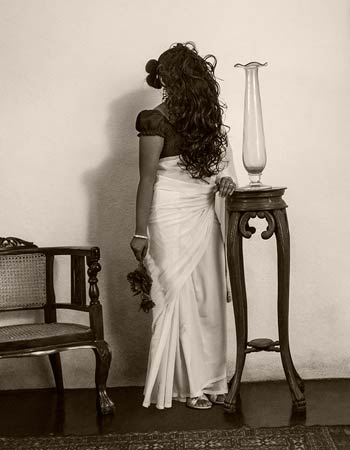
Anoli Perera: Hair as a symbol of protest
The deeply felt works of leading women artists from India, Nepal, Bangladesh, and Sri Lanka are the focus of a new exhibition titled ‘Feminist Futures : Art, Activism and South Asian Womanhood’ currently on at the National Museum in Colombo.
Curated by Dr. Arshiya Lokhandwala, ‘Feminist Futures: Art, Activism, and South Asian Womanhood’ challenges audiences to engage with urgent questions of gender and power, acting as both a call to action and a space for solidarity. The artists’ works critically confront the complex intersections of contemporary feminist thought and the deeply rooted societal structures in the region.
“This exhibition highlights the resilience and strength of South Asian women artists as they navigate, and challenge deeply entrenched hegemonic societal frameworks,” said Dr. Lokhandwala.
The artists present a varied world view through their work. Pushpamala N and Ashmina Ranjit delve into the enduring impact of mythology and tradition on women’s lives. Pushpamala N’s performative photograph Apaharana/Abduction (2012), from the series Avega – The Passion, reimagines Sita’s abduction from the Ramayana, drawing parallels to the violence and treatment of women in contemporary society. Ashmina Ranjit’s performance Sita! The Ideal Wife? (2025) critiques the Hindu tradition of Kanyadan (the giving away of the bride) codified in the Manu Smriti. The work highlights the loss of agency women endure within marriage and caste structures in Nepal.
Tayeba Begum Lipi’s multimedia works critique the performative rituals of marriage and their dualities In I Wed Myself (2010), while Lipi subverts traditional gender roles by embodying both bride and groom, interrogating societal paradoxes around marriage. Uma Bista amplifies the voices of Nepali women, through her ongoing series Stay Home, Sisters (2020-) critiquing menstrual taboos like Chhaupadi, while Devotion (2025) examines the veneration of the virgin goddess. Bidhata KC’s works interrogate the intersection of gender, ritual, and societal expectations in Nepal.
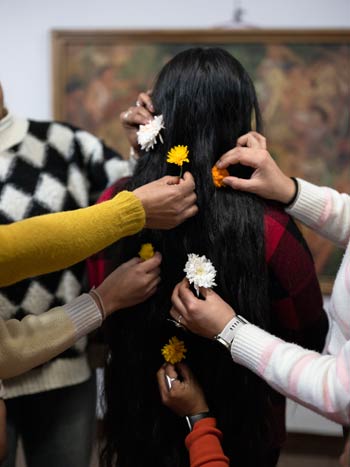
Uma Bista: Tackling taboos in Nepal
In My Left is Right (2022), KC critiques the stigmatization of the left hand in Hindu culture, challenging the validity of rituals performed by women or with the left hand. Her performance installation Chori Manche Bhayera … Keti Manche Bhayera … (2023), invites women to share their aspirations, disrupting restrictive gender roles imposed by phrases like “being a daughter, being a girl.”
Anita Dube, Naiza Khan, and Anoli Perera explore the female body as a political and empowering site. Anita Dube’s Eye Photos (2000-2012), made using votive eyes, confront institutional power, demanding the dismantling of the male-dominated structures and systems. Naiza Khan’s Heavenly Ornaments (2007-2009) and Henna Hands (2002-2022) investigate female subjectivity through sculpture, drawing and installation. Anoli Perera’s I Let My Hair Loose: Protest Series (2010-2011), transforms hair into a defiant symbol of protest.
Sheba Chhachhi’s photographic series From the Barricades reflects her activism within India’s women’s movement during the 1980s and 1990s, while her video work Moving the City (2016) portrays single women navigating patriarchal urban environments, blending movements from yoga and dance.
Mithu Sen transforms vulnerability and emotion into feminist acts of defiance. Her installation Who will write a history of tears? 2025 which comprises two video works For D(e) AD _(2023), and Ephemeral Affair (2006) reframe tears and scars as gestures of resilience.
Feminist Futures will be on until October 8 at the Lotus auditorium of the National Museum.
Searching for an ideal partner? Find your soul mate on Hitad.lk, Sri Lanka's favourite marriage proposals page. With Hitad.lk matrimonial advertisements you have access to thousands of ads from potential suitors who are looking for someone just like you.