


Appreciations
View(s):Sri Lanka’s celestial swan of the stage
Vajira Chitrasena
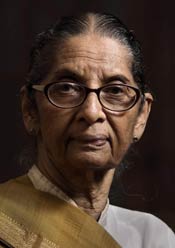 When we look back on the cultural history of Sri Lanka, certain figures emerge not only as artists, but as trailblazers who reshaped what was possible for an entire society. Among them, my grand aunt (my maternal grandmother Devika Fernando’s older sister) Vajira Chitrasena, stands luminous – a dancer who carried the grace of a celestial swan across the stage, and in doing so, redefined womanhood, courage, discipline and art itself.
For me, this story is not distant history. I carry it in my core memories; of standing barefoot on the wooden floors of the Chitrasena Kalayathanaya, (at the time at the Girls’ Friendly Society on Green Path), learning the strength and discipline of Kandyan dance under the watchful guidance of Natana Archchi (as I called her) and her daughters, Upeka and Anjalika. Those classes were my personal doorway into a lineage that transformed Sri Lankan dance and, without fanfare, advanced gender equality long before such terms became part of mainstream vocabulary or trend.
To understand Natana Archchi’s contribution, we must remember the context of her time. In the mid-20th century, Kandyan dance was a male domain. Women could sing and act, but to appear on stage as a professional dancer in this tradition was unthinkable. Dance in its ritual and classical forms was bound to temples and processions. For a young woman to step into that space was to risk censure, misunderstanding, even scandal.
And yet, Natana Archchi did. Guided by her partnership with Chitrasena (Natana Seeya), himself a visionary who believed in freeing traditional dance from ritual confines and reimagining it for the modern stage, Natana Archchi did not just learn the steps. She mastered them. She brought to the male-coded strength of Kandyan technique a lyrical, feminine energy without ever diluting its aura. Her dancing was a revelation of how the female body could embody the Kandyan idiom with authenticity and grace. Her parents and siblings all encouraged this pursuit, exhibiting an understanding and appreciation for dance beyond traditional thinking.
For me, learning from her and from her daughters was as much an education in resilience, in discipline, and in quiet defiance. At the Kalayathanaya, there was no separation of male and female students in terms of expectation. We were all expected to master the rigorous techniques; stamping feet, the leaps and the precision of gestures. In this studio, gender was irrelevant; only dedication mattered.
Pushing her students to be better, being firm of hand to guide their progress, created a generation of students who always strove to be the best they could be. In all these pursuits, she was encouraged and supported by her children, Upeka, Anjalika and Anudatta, and this support further strengthened her resolve to aim higher.
What strikes me now, as I look back, is how far ahead of her time she truly was. Today, we speak of gender equality, women’s empowerment and breaking glass ceilings. Natana Archchi lived with those ideals decades before they had become slogans. She did not call herself a feminist in the modern sense. She did not make speeches about empowerment. Instead, she embodied it; through the disciplined commitment to her art, through the act of simply standing on stage as a woman, commanding the space with strength and grace.
Every time she danced, she expanded the horizon of what was possible for women in Sri Lanka. Every student she trained carried forward that legacy, not only in dance, but in the understanding that art can be an arena of equality, where talent and discipline override gendered expectations.
Why do I call her the celestial swan of the stage? It is more than a metaphor for her grace. A swan moves between water and sky with effortless majesty, bridging elements that seem irreconcilable. Natana Archchi, too, moved between worlds, between tradition and modernity, between male and female domains, between ritual and theatre. She carried the sacred weight of an ancient form and yet gave it wings to soar into the contemporary imagination. She embodied this celestial swan in her performance ‘Nala Damayanthi’, graceful and ethereal.
Her legacy is not only in the choreography she created or the performances she gave, but in the lives she touched, the barriers she dissolved, and the generations of Sri Lankan women she inspired.
As her grand-niece, I cherish not only her public contributions but the quiet, personal moments of learning from her, though at the time I was in total fear and awe of her. She showed me and countless others, that to dance is to claim one’s place in the world.
In celebrating Natana Archchi one year after her passing, we celebrate not only a dancer, but a pioneer of women’s empowerment long before the phrase existed. We celebrate a life that demonstrated, with every performance, that art can dismantle barriers and rewrite the story of what women can do.
To me, and to all who follow in her footsteps, she will always remain the celestial swan – radiant, fearless and eternal in flight.
Janani Wijetunge Palihakkara (grand niece)
For Amanti, who loved beauty in all its forms
Amanti de Soysa
“I will carry you in my heart until there are no more days left to me” – Edward Lee.
My niece, Amanti de Soysa, would have been 30 years old on September 27. She died on August 4 last year. It is a cruel irony that it is she who should have been writing my appreciation and not the other way round.
When I think of Amanti I remember how she loved my dog Simba, whose joyful personality she captured perfectly in a portrait that I treasure. When I think of Amanti I recall the last meal we had alone together where she savoured the cooking skills of a Michelin star Chinese chef. When I think of Amanti I picture her smiling face against the backdrop of Lunuganga and marvel at the fact that she loved, appreciated and cultivated beauty in all its forms.
At the age of five, Amanti was the most beautiful little girl I had ever seen with her heart shaped face, shining brown eyes, luminous skin and raven hair. She was shy and gentle with a sensitive nature that never hardened even with the tribulations of life.
After studying at Ladies’ College and then at various schools in Canberra where she migrated with her family when she was 11, Amanti went on to complete a science degree from the Australian National University and then worked at the Department of Agriculture and at the National Film and Sound Archives. She found purpose and joy in her work. She displayed a real passion for the Australian environment and working to protect it was meaningful for her. She knew the top 20 pests that Australia was trying to keep out by heart, and the occasional pest outbreak was a source of energy and motivation for her.
Following in her mother Aneela’s footsteps, she had participated in Girl Guides since she was 13 years old and volunteered as a Queen’s Guide as well as a junior leader.
She was a caring and empathetic young woman, dedicated to hard work and helping others. Due to her scientific training, Amanti was a meticulous perfectionist who threw her heart into whatever she did. She was always fashionably dressed for special occasions in carefully chosen outfits, jewellery and shoes. She cared deeply about everyone else – her gifts were tailored specially to the recipients, from pregnancy dresses for her sister Ayndri, smart shirts for her father Shiran and a painted dog for her aunt Anoma. Amanti was our Christmas tree and table decorator, whether in Canberra or Colombo, creating innovative and sustainable ornaments from dried fruit and native flowers while using clashing colours that somehow came together perfectly.
Amanti was very sweet. Her name means quintessence of sweetness in Sanskrit. Anyone who met her sensed this. She was a happy child, very attached to her family and grandparents. As an adult, Amanti loved her nieces, cooking with them and when the elder one, Inara, was learning to crawl, Amanti tried to teach her by crawling in front of her. One of my favourite photographs is of Amanti with her fingers covered in blue icing decorating a Bluey birthday cake for Inara. However, she did have a rebellious streak that manifested itself at different times in blue, pink and green hair, much to her father’s consternation.
Amanti lived fully, taking much joy in travel and food. She visited Japan, India, Europe and the US. She wanted to go to Barcelona alone but her father would not allow it so she went to Amsterdam instead. We know who had the last laugh there. She took a gap year and volunteered at World Vision in Sri Lanka.
Amanti loved food and was an excellent cook. Rather than sticking to one cuisine, she enjoyed experimenting in the kitchen. Her favourites were Japanese and Korean. She also appreciated red wine and quality spirits. She was curious and explored anime, krav maga, art, plants, archery, architecture and Sanskrit. On a trip to Japan she took a course in kintsugi, the art of Japanese repair using gold enamel so that cracks and breaks are emphasised rather than disguised. She pursued her passion for art through visiting galleries and enjoying exhibitions; it was one of her favorite ways to spend time, in addition to creating her own paintings.
But ultimately, her family’s love and care could not save Amanti and that is the anguished burden we will carry for the rest of our lives. Since I harbour no unrealistic expectations of seeing Amanti again, all I have are the good memories and a gaping wound in my heart that will never heal; a void left by untaken trips, unshared laughter, unexchanged confidences, unspent love and unfulfilled dreams.
Our dearest Amanti – in the words of Don McLean, this world was never meant for one as beautiful as you.
Minoli de Soysa
‘Unofficial’ monarch of Royal College, yet he served with great humility
VIJITHA (VIJI) WEERASINGHE
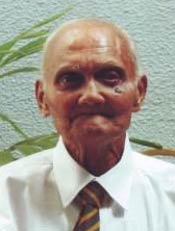 If Royal College ever had a ‘Man of Life’ on its highest pedestal, it was undoubtedly Viji Weerasinghe. Viji’s association with Royal College was a record-breaking 74 years; first as a student, then Master of English and Latin, Deputy Principal and Senior Advisor to the Royal College Union (RCU). Viji would have turned 98 this September.
Viji’s worldliness, wisdom and the vivacity endeared him to all pupils, teachers and parents alike. The remarkable features that made him so unique were numerous but most salient would be his love and loyalty to his alma mater. A Royalist since the age of five, he had ‘learnt of books and men’ among the very trees and classrooms of this hallowed institution. His advice to all teachers was what he himself practised: ‘not to forget that you yourself were once a schoolboy or schoolgirl’ when dealing with children.
Viji’s wisdom was sought by all. He was the ‘unofficial’ monarch of Royal, yet he served with the humility of a guardian. As an advocate of ‘trustful kingship,’ he believed in conscience over rigid rules. I was privileged to be nurtured by him as a young teacher. When introduced by Mr. Edissuriya, Viji’s compassionate eyes saw the potential in me, saying, “I am sure she can.” Those words were a powerful inspiration.
A gentleman of the highest calibre, he was a father figure and role model to all Royalists who had the good fortune of having him in their lives – either as teacher or mentor.
He was an authority within College on matters pertaining to English language as few could match his erudite grasp of literature and none his mastery of Latin. He was able to inspire his students, thus was responsible for moulding statesmen, academics, journalists, legal luminaries, medical men, corporate leaders and more.
Before the internet age, when videos of Shakespeare dramatizations were rare – Viji always ensured that the cast had a video of the relevant play; procured through the many past students who remained in touch with him from overseas. In fact his last wish was to see Julius Caesar as portrayed by Marlon Brando.
The epitome of a great educator, Viji’s memory was renowned – he could not only recall the classics of the Great Masters of literature, but also the names of his students many decades after and even their escapades! He is remembered as a man with a great heart, who cared for the boys like his own.
A Latin scholar he believed in the adage – Homo sum; humani a me nihil alienum put. – ‘I am human. Therefore, I think nothing human alien to me.’ It was this same understanding that helped him to serve a succession of Principals at Royal with equanimity and equal acceptance and to provide them with solid advice, especially at times of impending crisis. I am personally aware of how with characteristic tact he had been able to persuade them onto the right path when required. Whenever he sensed impending disaster to the hallowed well-being of his school such as tinkering with time-tested traditions, he put his institutional memory and persuasive powers to good use to steer them to clearer waters.
His kindness and attention were bestowed on all equally and even extended towards the vendor known to the school community as ‘Kadalay’. Viji fondly recalled how the faithful Kadalay once fell from grace and had to be rescued. He treated everyone who crossed his path with dignity, addressing non-academics and even the support staff with respect.
A remarkable aspect of Viji’s legacy is that those who were associated with him, in whatever capacity rose to the pinnacle of their respective fields. The last three Deputy Principals who were taught by Viji – Mrs. Manel Wimalarathne, Capt. Dharmarathne and myself, all reached higher leadership positions in the administration of Royal College. It was Viji’s training and guided wisdom that shaped us.
Viji’s remarkable ability to adapt to changing times was evident in his discussions on international relations, politics, and social milieu. His knowledge was rooted in extensive reading. A man who would not exercise his influence, honouring high security orders at the last school prizegiving he was invited to, Viji turned back home as he could not present the formal invitation. A man of simplicity, Viji would turn down late evening invitations from students, politely saying, “son, my day ends when yours starts.” Nevertheless, he unconditionally supported all their pursuits.
Beyond the classroom, Viji nurtured a different kind of growth – his love for orchids and horticulture was a testament to his gentle soul; he cultivated wisdom, compassion and kindness.
His dedication to Royal College was unwavering. When he said, “I may fall dead in this chair,” he meant he would serve with utmost dedication, regardless of capacity. True to his words, Viji’s last day arrived when he fell near the Skills Centre, but he rose, never to return, leaving behind a legacy.
Royal College lost a guardian angel, a great educationist, and a silent bearer of wisdom. Though there’s no monument or building named after him, those who knew him have carved VW in their hearts and would proclaim: “His life was gentle, and the elements so mixed in him, that nature might stand up and say to all the world, this was a man.’
Lakshmi Attygalle
He didn’t merely teach Physics, he lived and breathed it
Professor Kandiah Kunaratnam
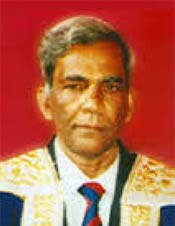 One of the pioneers of the Faculty of Science, University of Jaffna, Prof. Kandiah Kunaratnam was instrumental in developing the Physics Department of the University. It is important to remember him during the golden jubilee celebrations for his tireless contributions to his students, the Science Faculty and the University of Jaffna as a whole.
After graduating from University, he joined the University of Colombo as a lecturer. He studied at Imperial College, University of London from 1960 to 1963, earning a diploma and a doctorate in Physics. When the Jaffna campus of the University of Sri Lanka was established, Prof. Kunaratnam was appointed as the founding head of the Department of Physics in April 1975.
Prof. Kunaratnam served as the Dean of the Faculty of Science from January 1977 to May 1978 and then from January 1985 to March 1988. He also served as the Vice-Chancellor of the University of Jaffna from April 1994 to July 1996. He retired from service in April 2000. In 2001, the University of Jaffna awarded him an honorary doctorate.
Prof. Kunaratnam passed away in Colombo on September 9, 2015.
In the vast tapestry of our educational journey, there are certain figures who stand out like guiding stars, illuminating the path with their wisdom, compassion and dedication. Among them, Prof. Kunaratnam possessed the rare combination of warmth, firmness and simplicity, which instantly created a nurturing environment in his lecture room.
He was not just a teacher; he was a mentor, guide, role model and source of inspiration for all who had the privilege of learning from him.
In those days, teaching was entirely through the chalk and board method. He rarely relied on handwritten notes, either for his explanations or on the board, and often entered the classroom without any prepared notes at all. With infectious enthusiasm, he embodied the essence of a true educator who wholeheartedly loved his subject. While he seldom looked directly at students during lectures – his focus fixed on the board or to the side – it was clear from the moment he stepped into the lecture hall that he didn’t merely teach Physics; he lived and breathed it.
Long after we have left his classroom, his lessons continue, shaping the way we approach challenges, embrace opportunities and interact with the world around us. He instilled in us not just a knowledge of physics, but a passion for learning, thirst for discovery and a belief in our own potential to make a difference. This approach stimulated us to love the subject, and to achieve several milestones.
Beyond his infectious positivity, what truly set Professor Kunaratnam apart was his unwavering belief in his students. He saw potential where others might see limitations and encouraged us to reach beyond what we thought possible. I still remember the countless times he stayed back after class, patiently explaining a concept until every student grasped it, or the encouraging notes he left on our assignments.
He was always punctual, even while serving as Vice Chancellor, and patiently waited for students before beginning his lectures. Beyond the classroom, he went above and beyond to support his students – offering guidance, encouragement and mentorship despite his demanding schedule. He was diligent in writing recommendation letters for higher studies and always followed up to ensure they were received on time.
I still remember his expression of disappointment when I told him I would resign from my academic position at the University of Jaffna after completing my PhD. Yet, he never reacted with anger. Instead, with compassion and understanding, he said: “My children have also migrated, and I cannot insist that you return.”
To me, he was not only one of my finest teachers, but also a mentor, a referee, and the chair of the interview panel for my very first job.
A true gentleman with integrity, ethics, professionalism, and dedication.
Prof. Sarasanandarajah Sivananthan
Searching for an ideal partner? Find your soul mate on Hitad.lk, Sri Lanka's favourite marriage proposals page. With Hitad.lk matrimonial advertisements you have access to thousands of ads from potential suitors who are looking for someone just like you.