

Sunday Times 2
Navigating the crucible: The search for visionary leadership in Sri Lanka’s crucial moments
View(s):By Major General (Retd) Dr Boniface Perera
Sri Lanka, once envisioned as a potential economic powerhouse in South Asia, has navigated a tumultuous path since its independence in 1948. The narrative has shifted from one of high promise being second only to Japan in economic metrics post-independence to one dominated by economic mismanagement, deep-seated corruption, political instability, and catastrophic events.
The recurrent crises, from insurrections and the Easter Sunday attacks to the devastating economic collapse of 2022, underscore the critical need for a stable, visionary, and internationally respected leadership capable of steering the nation back toward sustainable prosperity. The question of who can serve as the “nation’s saviour” hinges not merely on past accomplishments but on an ability to tackle chronic structural issues and emerging mega-crises.
Anatomy of leadership deficit
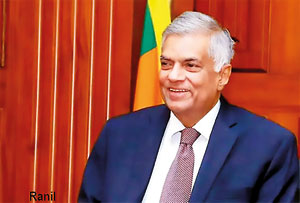
Former President Ranil Wickremesnghe: A leader with crisis-management experience
The nation’s decline is attributed to a confluence of systemic failings, as highlighted in the provided context:
1. Economic mismanagement and corruption: Mass-scale corruption and politically motivated economic policies (like unsustainable tax cuts and poorly managed infrastructure projects) eroded the fiscal foundations established by previous generations.
2. Political instability and family rule: Periods of family-centric politics and the politicisation of state institutions undermined meritocracy, leading to an inefficient and ineffective state sector, judiciary, and police.
3. Social and political fragmentation: Decades of conflict, insurrections, and extremist attacks (like the Easter Sunday disaster) fractured the social fabric, diverting resources from development and hindering long-term policy formulation.
4. Brain drain and youth frustration: The continuous exodus of skilled professionals and the palpable disillusionment among the youth perpetuate a cycle of declining capacity within the country.
These chronic issues created the perfect storm for the 2022 economic recession, characterised by a declaration of bankruptcy, a near-zero foreign reserve, hyperinflation, and severe shortages of essentials. This moment of extreme national peril revealed a profound leadership vacuum, where established politicians were unwilling to inherit the crisis.
A case study in crisis management
The events of mid-2022 offer a crucial case study in crisis leadership. The unprecedented level of public unrest, encapsulated by the ‘Aragalaya’ movement, led to the resignation of the then president, Gotabaya Rajapaksa. At this critical juncture, Ranil Wickremesinghe, a politician with decades of experience and five previous terms as prime minister, but whose party held no parliamentary seats, took on the responsibility first as prime minister, then as president.
A strategist’s response
Wickremesinghe’s subsequent actions, often described as an “economic miracle” by international observers, focused on short-term stabilisation and securing long-term structural support:
- Fiscal stabilisation: He swiftly engaged with the International Monetary Fund (IMF), securing a four-year Extended Fund Facility (EFF). This required implementing unpopular, yet essential, fiscal reforms, including raising utility tariffs and tightening tax collection.
- International confidence: His global stature and experience were leveraged to re-engage the international community, including securing crucial financial assurances from key creditors like India, China, and the Paris Club. This confidence was vital in beginning the restructuring of the nation’s overwhelming debt.
- Restoration of normalcy: Within a relatively short period, the visible signs of the crisis, long queues for fuel and gas, and shortages of essential medicines disappeared. Foreign exchange reserves saw a significant increase, reportedly surpassing USD 6 billion, and the nation’s bankruptcy status was officially revised.
This successful navigation of the immediate economic storm demonstrated that experience, international credibility, and strategic decisiveness are non-negotiable attributes for a leader facing an existential crisis. The ability to depoliticise economic reform and gain the technical trust of global financial institutions (IMF, World Bank) proved paramount.
Paradox of political literacy
and accountability
The argument presented in the context that the man who rescued the nation was subsequently defeated due to a lack of “political literacy” among the electorate highlights a profound paradox in
Sri Lankan politics.
- The reformer vs. the populist: Successful crisis management often requires hard, unpopular reforms that stabilise the economy in the long run but impose immediate burdens on the populace. A politician who enacts these reforms (like increasing taxes and reducing subsidies) may be seen as a technocrat or an elite figure disconnected from the daily struggles of the common person.
- The electorate’s demand: The electorate, often driven by immediate financial relief and a deep-seated desire to punish politicians associated with past corruption (regardless of their recent stabilising role), frequently gravitates toward populist figures promising rapid, often unsustainable, relief.
This dynamic illustrates that a successful leader in Sri Lanka must not only be a skilled strategist but also an effective communicator and consensus-builder who can explain the painful necessity of long-term reform to a weary and often poorly informed public. The short-term memory of a crisis can quickly fade, replaced by the immediate pain of austerity, setting the stage for political rejection.
New national catastrophe: Defining the next saviour
The nation now faces a new and profound challenge: a national catastrophe causing an estimated USD 6-7 billion in damage to infrastructure, livelihoods, and agriculture, alongside a devastating human toll. This crisis demands a leadership profile that goes beyond mere economic management.
Essential qualities of next saviour:
1. Exceptional crisis management and strategic vision: The magnitude of this disaster requires immediate, organised resource deployment, efficient coordination of state and military apparatus, and simultaneous negotiation for emergency international aid. A leader must possess the strategic foresight to integrate disaster recovery into long-term national development plans, including climate resilience and infrastructure modernisation.
2. Unquestioned international credibility: Securing $6-7 billion USD in emergency reconstruction and development aid requires a leader who can command the trust of multilateral institutions, donor nations, and international non-governmental organisations. They must assure the global community that funds will be managed transparently, avoiding the pitfalls of past corruption.
3. Technocratic competence with political will: The leader must be willing to continue and deepen the structural reforms initiated with the IMF while simultaneously reforming the inefficient state sector, the judiciary, and the police to ensure non-partisan, effective governance. Political courage to dismantle institutionalised corruption is paramount.
4. National unifier and moral authority: The leader must be able to unite a fragmented parliament and society behind a common national recovery goal. This requires a moral compass and an ability to rise above partisan politics, focusing solely on the welfare of the 22 million citizens.
The argument that a leader with the proven track record of stabilising the 2022 economic crisis, Ranil Wickremesinghe, is the obvious choice for the current disaster is rooted in the practical reality that experience in managing a major national shock is invaluable. His experience provides a verifiable blueprint for international engagement, fiscal discipline, and swift restoration of national functionality.
However, the democratic process demands that this experience be weighed against other contenders, whose solutions might focus more heavily on social equity, political reform, or addressing the root causes of historical resentment and inequality.
Conclusion: The Path Forward
The narrative of Sri Lanka’s path to recovery is a perpetual search for the right kind of leadership at the right time. The nation requires not just a crisis manager but a transformational leader who can blend technocratic skill with political wisdom. This leader must:
1. Anchor the economic reforms: Lock in the hard-won fiscal stability (low inflation, adequate reserves) to create a predictable investment environment.
2. Lead structural and institutional change: Prioritise non-partisan reforms in state administration, justice, and anti-corruption measures to restore public faith and ensure future policy integrity.
3. Drive climate resilience: Treat the recent national catastrophe as a mandate to invest heavily in climate-resilient infrastructure and sustainable agricultural practices to protect the nation from future natural disasters.
The true “saviour” of Sri Lanka will not be a single individual defined by their title, but one who can establish an era of governance defined by transparency, institutional strength, and a long-term, non-partisan national vision, a vision that restores the country’s former glory as a regional economic beacon. The electorate’s challenge is to develop the political literacy to distinguish between temporary populist relief and sustainable national transformation. The nation’s survival ultimately depends on this critical choice.
(The writer served in the Sri Lanka Army for over 36 years, dedicating 20 of those to active combat. He is also a researcher and writer, having authored more than 200 research articles and 16 books. He holds a PhD in economics and is an entrepreneur and international analyst specialising in national security, economics and politics. He can be reached at sirinimalb@hotmail.com)