


Policy-driven poverty
View(s):Of course, there was a series of shocks underlying the sudden poverty reversal. However, I thought of highlighting its policy-driven part. This is important to understand that changes in policy directions can result in immediate policy implications on both poverty reduction and social protection.
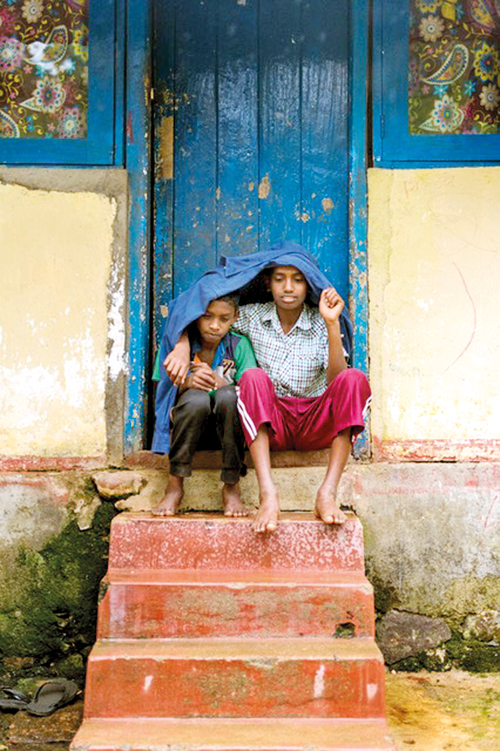 Sustaining poverty in Sri Lanka is not an accident of fate; it is heavily shaped by policy choices that make life in this country systematically expensive for the poor and comfortable for a protected few.
Pricey basic needs
After recalling last week’s column on “phasing out para-tariffs” we understand that Sri Lanka’s poor do not merely “fail” in the market. They are priced out of a decent life by a dense web of import controls, para-tariffs and domestic taxes that raise the cost of almost everything they need as their “basic needs”.
From food to building materials, protectionist policies push prices above what open competition would deliver. The price burden is heaviest on households that spend most of their income on basic needs.
Over three-fourths (75 per cent) of Sri Lankans still live in rural areas; over four-fifths (80 per cent) of the country’s poor are located there too. Moreover, one-fourth (25 per cent) of the Sri Lankan labour force is also in agriculture. Taken together, these numbers show that most of the country’s poor is just surviving largely on low-productive agriculture.
When the poor must pay inflated prices for food, clothing, construction materials and simple manufactured goods, the result is not just hardship but a permanent lowering of living standards with minimum rural facilities and services.
Expensive meals, expensive shelter
Protection on food imports, layered with levies such as CESS, PAL, Special Commodity Levy and VAT, has long kept the price of staples like rice, potatoes, onions, dairy, poultry and pulses above what they would be under a more open regime.
The poor cannot “switch” away from basic food; they can only eat less or eat worse. Recent surveys show how households have responded to crises: skipping meals, shifting to cheaper but less nutritious foods, and adults sacrificing their portions so that children can eat. This is not just a temporary coping strategy; it is how a policy-induced cost of living crisis translates into stunting, wasting and long-term loss of human capital.
Housing tells a similar story. In Colombo, a modest three-room apartment is priced at the equivalent of 25 years of income even for a relatively high-earning executive. It already puts formal urban housing beyond the reach of the upper-middle class, let alone the poor.
Construction costs are inflated by tariffs and para-tariffs on imported cement, steel, tiles, fittings and machinery, which then cascade through to rents and house prices.
Luxury condominiums mushroom in the city, financed by wealthy locals, diaspora and foreign buyers seeking investment returns rather than shelter. But the same policy and tax structure that makes these high-end properties profitable also makes even basic urban housing prohibitively expensive for ordinary workers.
Pushed to the periphery
When urban living becomes unaffordable, the poor are pushed – or kept – in remote and rural areas not only to struggle with life, but also to fight with elephants and leopards.
Sri Lanka’s population remains overwhelmingly rural despite decades of growth, with urbanisation lagging far behind countries at similar income levels.
This is not because people love rural isolation; it is because the door to the city is locked by the price of land, housing and services. Living in remote areas, however, means limited access to formal sector jobs, modern services and diversified sources of income. Young people who might have moved into industry and services remain tied to small-scale agriculture or informal work, earning low wages and facing seasonal volatility.
The geography of residence becomes the geography of opportunity – and policy determines both. In effect, trade and tax policies that raise the cost of urban life act as an invisible barrier to social mobility.
Those born into poor, rural households are more likely to stay in low-productivity work, far from the centres of economic dynamism, and to pass on the same constraints to their children.
Missing industrialisation
Sri Lanka’s persistent rural poverty is closely linked to its slow industrialisation and weak urban job creation as well. Agriculture employs about a quarter of the labour force but contributes a much smaller share of GDP, implying low productivity and low incomes for millions of workers.
At the same time, industry and modern services have not expanded fast enough – or widely enough – to absorb surplus labour from the villages. Protectionist policies have often been justified in the name of “supporting domestic production”, but they have done little to foster competitive industries that can grow, export and create decent jobs.
 Instead, they shield small domestic markets from competition, encouraging firms to profit from scarcity rather than productivity.
When imports of machinery, components and intermediate inputs are taxed heavily, it becomes more expensive to invest, to innovate and to scale up. The outcome is predictable: too few factories, too few service hubs, and too many young people stuck in subsistence agriculture or informal work.
Protection for whom?
High import controls, para-tariffs and licencing requirements are often defended as “protecting farmers” or “saving local industries”. In practice, they have protected and enriched a narrow layer of traders, politically-connected business groups and rent-seekers who thrive on restricted competition and opaque decision-making.
From motor vehicles to poultry feed, from onions and potatoes to construction materials, sudden changes in levies and quotas have repeatedly generated windfall gains for those holding the right stocks or licences at the right time.
Meanwhile, 22 million consumers pay the cost in higher prices – including millions who are poor, near-poor or just one shock away from falling into poverty.
A senior official once captured this logic bluntly: policy is used to protect a few thousand local family businesses, and the entire population is expected to pay for it.
This is the political economy of protectionism: it sustains a coalition of beneficiaries at the top while locking the bottom into expensive consumption and limited opportunity.
If we open up?
Imagine turning this model on its head. If para-tariffs and most import controls were phased out, prices of basic goods – food, clothing, building materials, simple household items – would fall, and the immediate gain would accrue to those who spend most of their budget on these items: the poor and lower middle class.
Lower border taxes would also reduce input costs for farmers, small manufacturers and service providers, making it easier for them to be competitive rather than merely protected. Over time, this could shift the business model from extracting rents in a captive domestic market to competing in larger regional and global markets.
What about government revenue? Trade taxes currently account for a significant share of fiscal receipts, but they are also among the most distortionary and regressive instruments available.
As Sri Lanka slowly broadens its domestic tax base – through better income tax, corporate tax and consumption tax administration – the state can maintain or even increase revenue without leaning so heavily on taxes that make food and shelter unaffordable.
The experience of other countries suggests that a gradual shift from trade taxes to efficient domestic taxes, combined with disciplined spending, is compatible with both fiscal health and lower consumer prices. The key is not the level of tax, but where and how it is collected.
Protecting people, not prices
Sri Lanka’s poverty problem is often described as a lack of income. But viewed through the lens of down-to-earth economics, it is equally a problem of policy-induced prices that keep necessities out of reach and opportunities out of sight.
If the country continues to tax and restrict the doorway to affordable food, housing and urban employment, it will continue to “protect” poverty more effectively than it protects production. If, instead, it chooses to open markets, cut para-tariffs, rationalise domestic taxes and invest in urban housing and industrial jobs, it can start to protect people rather than prices.
The question is not whether Sri Lanka can afford to liberalise. The question is how much longer it can afford a model that keeps the poor hungry, rural and excluded – all in the name of protection.
(The writer is Emeritus Professor at the University of Colombo and Executive Director of the Centre for Poverty Analysis (CEPA) and can be reached at sirimal@econ.cmb.ac.lk and follow on Twitter @SirimalAshoka).
Hitad.lk has you covered with quality used or brand new cars for sale that are budget friendly yet reliable! Now is the time to sell your old ride for something more attractive to today's modern automotive market demands. Browse through our selection of affordable options now on Hitad.lk before deciding on what will work best for you!