


The women who keep a nation’s children fed
View(s):In the quiet hours before sunrise in rural Sri Lanka, long before the school bell rings, a quiet rhythm begins in kitchens across the island. Vegetables are chopped, fires crackle to life and pots simmer. For thousands of women, this daily routine is more than the preparation of a meal. It is an act of resilience, and in many cases, the first step toward financial independence.
These are the women supported by the United Nations World Food Programme’s (WFP) Home-Grown School Feeding initiative, that is helping nourish more than one million schoolchildren through the national school meal programme, while creating new pathways for women in rural communities.
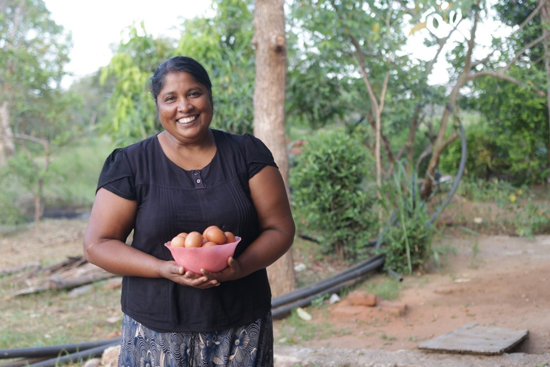
Standing tall: Indra Kumari, school meal caterer in Anuradhapura
For many schoolchildren, especially in remote and economically challenged districts, the meal they receive in school is the most nutritious food they will eat that day. But the impact goes beyond nutrition. By sourcing ingredients from local smallholder farmers and employing community-based women caterers, the initiative keeps money circulating within the villages. Schools become micro-markets. Women become entrepreneurs. Farmers, especially women gain a steady buyer.
What looks like a simple plate of food is part of a larger ecosystem of opportunity.
A partnership bringing new hope
A new USD 2.7 million investment from global fashion brand Michael Kors is strengthening this effort. Over the next two years, more than 250,000 students will receive nutritious daily meals through the national programme, supported with improved infrastructure and local procurement.
Thirty solar-powered kitchens will also be established, signaling an important shift toward sustainable, energy-efficient meal preparation–lowering costs for schools while reducing environmental impact.
And behind these numbers are women whose lives are changing in tangible ways.
But lasting impact is only possible through strong Government partnership. Together with the Ministry of Rural Development, Social Security and Community Empowerment and other institutions, WFP ensures the programme brings the greatest benefit to women, girls and children.
From debt to independence
In the small village of Mahapathana, tucked between fields and scrubland in Anuradhapura, Indra Kumari begins her morning with the familiar rustling of feathers. A single mother of four, Indra used to spend sleepless nights worrying about how she would repay her debts.
“On days when I had to serve eggs, I earned nothing,” she recalls. “Sometimes, I didn’t even have enough to settle what I owed the local shop.”
Rising food prices placed enormous pressure on caterers like her, who must prepare nutritious meals within a fixed allowance. The more diverse and nutrient-rich the meal, the slimmer the margin.
But through the Home-Grown School Feeding Programme, Indra received chicks, a coop, veterinary support, training and all the infrastructure she needs to set up here poultry farm. With guidance from WFP, she began to build a small poultry business of her own.
Today, she gathers nearly 250 eggs a week, while only 80 are needed for school meals. The rest she sells within her community.
“I am no longer in debt,” she says, her voice steady and proud. “I can stand on my own feet.”
Her story mirrors that of many women who are turning small opportunities into lasting change.
Women’s leadership
Across Sri Lanka, 97% of the 1,500 suppliers in the national school meals programme are women. Many juggle childcare, household responsibilities, and small-scale farming, while still ensuring that children in their communities are well-fed every school day.
Their work is not only sustaining their families but nurturing a healthier generation.
“Women’s labour force participation in Sri Lanka is only 32%,” says Heshani Ranasinghe, WFP’s Gender Officer. “But this programme is proving that when women are given the right tools and opportunities, they uplift entire communities.”
From agricultural to poultry farms and food preparation kitchens, women are expanding their income sources and learning practical business skills, budgeting, planning, record-keeping, and managing all financials.
WFP’s collaboration with Michael Kors began in 2013 with a shared commitment to ensure children receive nutritious meals, girls continue to stay in school and learn while empowering the women who prepare them. Over the last decade, this partnership has supported the delivery of more than 35 million school meals around the world.
“For many families in Sri Lanka, these meals are a lifeline,” says Philip Ward, WFP Representative and Country Director in Sri Lanka. “They are made possible by the dedication of caterers and farmers who work tirelessly every day.”
As Sri Lanka continues to navigate challenges, the need for strong, community-led food systems has become more important than ever. The Home-Grown School Feeding initiative is helping to build exactly that, linking schools, farmers, and women entrepreneurs in a cycle of shared benefit.
For the children, it is a meal. For the women who cook it, it is a livelihood. And for the communities they serve, it is a step toward a more resilient future.
Searching for an ideal partner? Find your soul mate on Hitad.lk, Sri Lanka's favourite marriage proposals page. With Hitad.lk matrimonial advertisements you have access to thousands of ads from potential suitors who are looking for someone just like you.