


The taste of home
There is a particular sound that never leaves you if you grew up in Sri Lanka.
It is the metallic rhythm of two cleavers striking a hot griddle at speed — tak-tak-tak-tak — as kottu roti is chopped into submission on a roadside stove. It is chaotic, percussive, unmistakable. For many of us, it is the soundtrack of home.
When I stood on Galle Road in Colombo last year, filming that sound at Pilawoos café for the first episode of Jayaflava, I realised something. I hadn’t come back simply to direct a food show.
I had come back to reclaim a narrative.
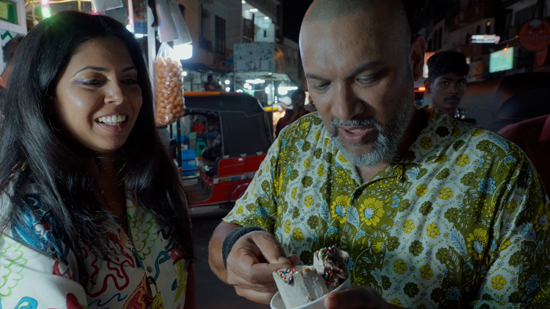
Aluthkade: Afdhel and Tasha in the Kottu episode
For too long, Sri Lanka has been framed through the lens of conflict, crisis or postcard exotica. Beautiful beaches, tragic headlines. Rarely the full, complicated, creative truth.
Jayaflava — the series I have produced and directed alongside my longtime friend, cookbook author and presenter Tasha Marikkar — is our attempt to tell that fuller story. Through food and stories of the people of the country who inspire us.
A love letter in six dishes
My dear friend Tasha and I were both born and raised in Sri Lanka. We’ve known each other for over thirty years. We left, as many do, to build lives in London, Los Angeles and beyond.
But Sri Lanka never really leaves you.
For Tasha — whose heritage spans Colombo Moor, Colombo Chetty and Sinhalese roots — food became a way of stitching together identity. She spent four years researching and rediscovering Sri Lankan recipes for her fantastic cookbook Jayaflava. The television series grew naturally from that labour of love.
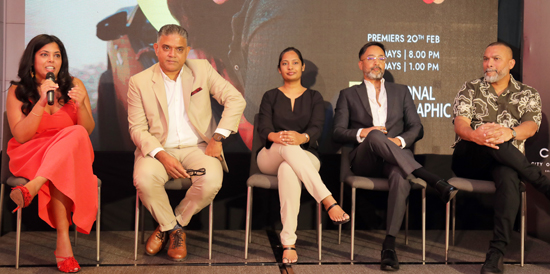
At the press conference: Tasha Marikkar, Kamal Munasinghe (GM, Cinnamon Life), Bakmee Perera (Dentsu Grant Group), Brandon Ingram ( Cinnamon Hotels) and Afdhel Aziz. Pic by M.A. Pushpa Kumara
“This isn’t just about recipes,” she told me early on. “It’s about teaching people to love Sri Lanka the way we do.”
That’s why I signed up to produce and direct this show with her, turning her incredible cookbook into a cinematic journey. We funded the whole thing from our own personal savings, hired an incredible crew of talented Sri Lankan filmmakers (many who worked on my prior documentary about Geoffrey Bawa ‘The Genius of the Place’) like Hasitha Warnasooriya, Pasidu Madushanka, Shaminda Attanayake and many others.
Together, we set out to show the REAL Sri Lanka – not the one showcased on Youtube travel shows, but the real Sri Lanka we know and love. I also wrote all the music for the show under my ‘Saint Royale’ artist alter ego.
Each episode centres on one iconic dish — kottu, hoppers, arrack, crab curry, coconut, lamprais — exploring its history, provenance, ingredients and a city that embodies its spirit: Colombo’s restless nightlife. Jaffna’s resilience. Hiriketiya’s barefoot cool. Galle’s layered colonial history. Puttalam’s quiet family kitchens.
Food becomes the doorway. Culture walks in behind it.
Rediscovering Colombo
In the first episode, we dive into kottu roti — Sri Lanka’s most beloved street food — and into Colombo itself.
We film in the Aluthkade night market, where smoke and spice cling to your clothes and take in the classic street food at the legendary Pilawoos. We wander through Slave Island, where murals bloom across walls and speak to artist and activist Vicky Shahjehan on how art is helping communities claim their place in society.We sit with BBC DJ Nihal Arthanayake and debate the mythical “dolphin kottu”.
It’s showing the city I grew up in its new light – as one of Asia’s most vibrant capitals.
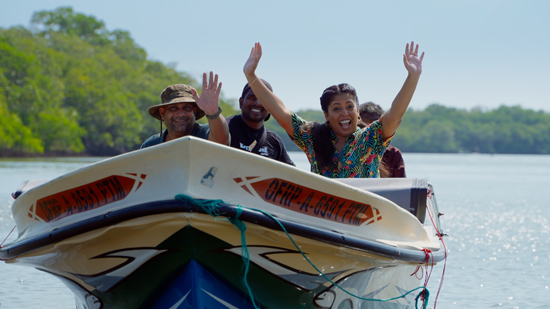
River journey: On a crab expedition at the Gange Wadiya
The global Sri Lankan culinary movement
One of the most powerful moments of filming came in London with Chef Karan Gokani at his restaurant, Hoppers.
There is something quietly radical about watching queues form in Soho for a dish that once lived mainly in Sri Lankan homes. It speaks to a broader shift: Sri Lankan cuisine is finally stepping onto the global stage.
Google Trends data shows UK searches for “Sri Lankan food” up dramatically over the past two years. Travel interest in the island has surged too. Sri Lanka is having a moment — and it feels different this time. Less hype, more depth.
That is partly why major Sri Lankan tourism and hospitality groups, from Cinnamon Life and MasterCard, to Sri Lankan Airlines and Flying Ravana Adventure Park supported the show’s initial run on National Geographic India. It will air on Friday nights at
8 p.m., (on Dialog TV channel 59, PEO Tv channel 50) reaching an estimated 17 million viewers across India, Sri Lanka, Bangladesh and the Maldives, with international sales now underway to reach audiences in the UK, US, Europe, Australia and beyond.
But the statistics matter less to me than the shift in perception. We are no longer asking to be discovered. We are telling our own story.
Jaffna and the Art of Healing
If Colombo is velocity, Jaffna is vibrant resilience.
In our crab curry episode, we travel north to a region once synonymous with war. But the heart of that episode lies elsewhere: in conversations about Tamil identity, in the quiet dignity of Thai Pongal celebrations at Fox Resorts, in electric tuk-tuk rides to meet Jaffna cheerleaders like Jeeva Pillai-Essex.
Food cannot erase history. But it can create a table where new conversations happen. Standing on Velvettithurai Beach witnessing the incredible Jaffna Kite Festival, cameras rolling, I felt the weight of the past – and the possibility of the future in equal measure.
We also meet our old friend Chef Dharshan Munidasa of Ministry of Crab — a restaurant that now ranks among Asia’s best — and talk about Sri Lanka’s prized export, and how he is carving out a uniquely Sri Lankan approach to fine dining.
Arrack at sunset
In the Arrack and Bites episode, we chase a different mood. We begin on a coconut plantation in Madampe, learning how toddy becomes arrack — Sri Lanka’s golden spirit — through generations of craft in conversation with Amal de Silva Wijeyratne from Rockland.
By night, we sit with Booker Prize winner Shehan Karunatilaka over cocktails at Uncle’s, talking about how the island’s dark humour and defiant imagination have inspired him.
Later, at Smoke and Bitters — ranked among Asia’s best bars —we watched young Sri Lankan bartenders and chefs redefine what “Lankan cool” looks like. It is barefoot, experimental, globally fluent, multicultural and magnetic.
Why I came back
I am often asked why I chose to direct this series. My company Good is the New Cool produces content with Time Magazine around business and social impact – for instance, my docuseries ‘The Solutionaries’ which featured game-changing climate entrepreneurs.
But this was special. This was about honouring and celebrating the country that shaped me. With Jayaflava, I wanted to explore its edible language. I truly believe Sri Lankan food is the best undiscovered cuisine in the world globally. But in making the show, I realized that food was the portal into something much bigger.
“This is not just a food show,” I’ve said more times than I can count. “It’s a story about identity, resilience and the joy of rediscovering home.”
Directing the series meant long days in humid kitchens, hunched over while we tried to get drone shots over ancient fort walls,and near-misses with killer wildlife during a mud crab hunt in the Gangewadiya.
But it also meant countless amazing conversations with artists, chefs, farmers and families. It meant confronting my own nostalgia and challenging it.
Sri Lanka is not perfect. No country is. But it is alive with possibility.
The banana leaf and the future
In our final episode in Galle, we unwrap lamprais — a banana-leaf parcel layered with rice, curry and history. The dish carries Dutch colonial influence, Muslim culinary traditions, Sinhalese adaptations. It is Sri Lanka in edible form: layered, complex, inseparable from its past.
As we filmed in the 500-year-old fort, I realised that lamprais is a metaphor for the island itself. Everything is wrapped together. Nothing exists in isolation.
Jayaflava is our attempt to unwrap it gently for the world.
When the first episode airs, millions will hear that familiar metallic rhythm of kottu being chopped on steel. I hope they feel what I felt standing there: that Sri Lanka is no longer waiting to be defined.
We are defining ourselves.
And sometimes, the most powerful stories begin with the taste of home.
Searching for an ideal partner? Find your soul mate on Hitad.lk, Sri Lanka's favourite marriage proposals page. With Hitad.lk matrimonial advertisements you have access to thousands of ads from potential suitors who are looking for someone just like you.