


Wormsley in Buckinghamshire: One of world’s most beautiful grounds could become ‘little brother’ to Lord’s
Marylebone Cricket Club (MCC) plans to turn Wormsley, one of the world’s most beautiful grounds, into the “little brother” of Lord’s as part of a drive to improve its pitches. MCC has been exploring ways to alleviate pressure on the ground at Lord’s, where the demand for fixtures presents a “currently unsolvable problem”, according to the club’s new cricket strategy.
The pitch at Lord’s, says Rob Lynch, MCC director of cricket and operations, is “arguably the most scrutinised 22 yards of grass in world sport”. It has faced criticism from teams and media in recent years for its lack of pace and bounce. The financial risk of £10m simply to re-lay the pitches, as MCC would have done in the past, is deemed unacceptable. The club has explored alternative options to ease pressure on the ground and allow staff longer to work on pitches.
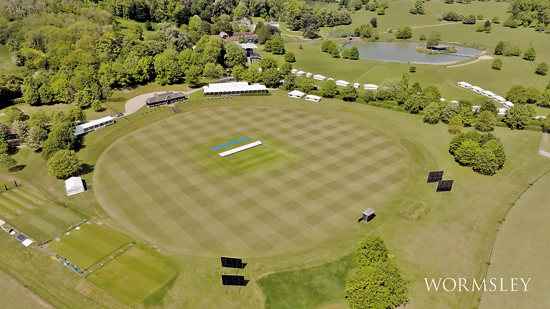
Wormsley cricket ground
The club has agreed a two-year pilot programme with Wormsley, in which 35 days of match action and 10 training days will take place as the beautiful Buckinghamshire ground becomes the “rural Lord’s” for 2026, 2027 and likely beyond.
“Rightly, because of our place in the game, Lord’s has the most scrutiny on the 22 yards in world sport, not just world cricket,” Lynch tells Telegraph Sport. “We feel that pressure. I sit here for the first 20 minutes of a match braced for what’s going to happen, how it will play, how it will be received. Also, crudely, there is huge financial pressure, as we saw in Australia recently [when two Ashes Tests finished in two days].
“Things have changed in recent years. We have the Hundred now, and in 2026 there will be more women’s cricket played at Lord’s than ever before, including a Test and a World Cup, which we are delighted about. But there is greater demand on the fixture list.
“When building the fixture list for this year, I got what I would describe as 78 legitimate requests for match days at Lord’s. The ideal number is 62, and some are immovable. We have managed to hit 62, by having around a dozen matches move from Lord’s to Wormsley. Rather just having a flat ‘no’ to requests we would love to accommodate, we have an alternative path, and can maybe look at rotations of matches. You could have a range of fixtures that do two years at Wormsley, one at Lord’s.”
Club and Recreational County Majors
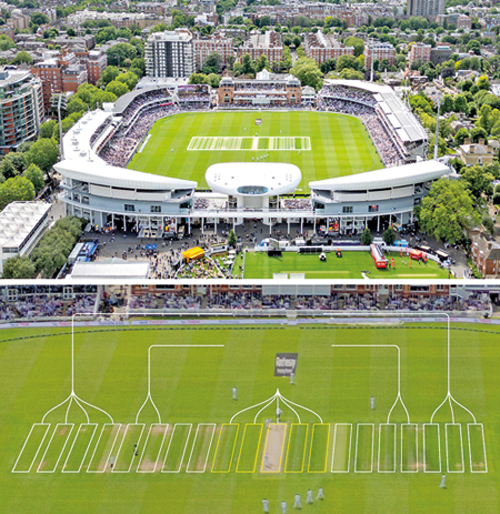
The Lord’s square has 20 pitches, but only the nine most central can be used for televised matches, and only the five in the very centre can be used for “major matches” such as Tests. This year, the schedule is so tight – with three Tests and the World Cup – that just two of Middlesex’s six home Vitality Blast matches are at Lord’s. The county are playing a single day of cricket at Lord’s between May 24 and September 24.
As well as 62 scheduled match days, there are training days that make life more difficult for the ground staff to roll and water pitches, which is also made more difficult by the eight-foot slope running across Lord’s. “All that preparation is for the major matches that we are judged on,” says Lynch, who hopes the Wormsley move will help.
“I was part of the MCC Young Cricketer scheme years ago, and have been going to Wormsley for a long time. I truly believe this is the only ground in the world where we can create a younger brother/sibling narrative to Lord’s. It’s an amazingly special place to play and watch cricket. It evokes something similar to Lord’s. It’s on one of the most beautiful estates in the world. It’s not just a cricket ground, there are other parts we will be able to access. It’s uniquely English and British.”
Wormsley sits in the Chiltern Hills near High Wycombe. It is owned by the Getty family, having been bought by the businessman and philanthropist Sir John Paul Getty Jnr in the 1980s. Getty was introduced to cricket by Sir Mick Jagger and, in 1992, built the ground, which was a replica of the playing arena at the Oval, on his estate.
Getty served as president of Surrey and provided funding to MCC for the Mound Stand. Since he died in 2003, Wormsley has hosted a range of cricket, from charity and corporate matches to England women’s internationals. Now it will host matches that Lord’s cannot squeeze in. Lynch wonders if it could “help Middlesex long term”, while it will host Women’s World Cup practice days and could be a training base in the new era of London Spirit.
Lynch believes up to 5,000 fans could attend matches there, watching from grass banks “Antipodean-style”. MCC members could enter for free, and shuttles buses could be put on from the Grace Gates (around 33 miles away) as the project grows. A few additions will be required to the facilities at Wormsley, but it is broadly ready to host professional cricket. Alongside this, MCC has been exploring what it can do to its current pitches. It has relaid the outfield this winter, and has been steaming pitches, including those in the middle of the square, which helps keep life in them.
MCC has also been looking at the concept of drop-in pitches for some time, and will move a step closer to them later this year. Drop-ins are common in Australia, where grounds host Aussie rules football and other sports through the winter. In England, and especially at a ground with a slope, they are an alien concept that provides an alternative to relaying pitches. If a central pitch is relaid, it takes it out of action for three years, which would mean MCC giving up a major match. That costs around £10m.
“There’s lots of challenges but we have to try this,” Lynch says. “The concept of re-laying pitches, like we did before, effectively means we have to take a major match pitch out of commission for a period of time. That wouldn’t enable us to have the fixture list as we know it today. The club won’t let that happen.
“If you look at it, MCC makes the majority of its revenue from a very small amount of those 62 days. Let’s say 15 of them. With these innovations in the coming years, if we had the ability to take that from 15 to 20, you have revolutionised the cricket business. We can’t do more than we do with the seven pitches we have. If this all goes well, we could develop a long-term pitch plan which helps safeguard against the increased volume in the schedule.”
At first, in a few years’ time, the Lord’s drop-ins would be used for domestic cricket and, if that went well, for the international game. “We have purchased plans from the people who own the IP [intellectual property] to understand what needs to be done; the engineering required,” Lynch says.
“We are in the stage of getting quotes from the manufacturers of the trays to grow the pitches. Ideally we would get two or three trays. This summer, we’d put them in at the Nursery Ground, and cultivate pitches over the next couple of years before putting them in the main ground.
“It’s a very nuanced process at every layer. The trays are about 26 yards long, so we would have to use a crane to get them over the media centre. The tray is flat, we are on an eight-foot slope. We then have to lay it at an angle. As you can see, there’s a lot of work to do.”
- The Telegraph UK