


“Ceylon is fortunate”
View(s):“Ceylon is in a fortunate position. Unlike other countries in Asia, we do not suffer from a foreign exchange problem. Our reserves are strong, thanks to the high demand for our exports.”
Export revolution
The World Bank mission of the early 1950s explained the roots of Ceylon’s strong reserves and thriving export earnings. Its landmark report, The Economic Development of Ceylon (1953), credited this prosperity to what it called a “virtual revolution” in export-oriented plantation agriculture:
“This advancement of the levels of national well-being has been achieved by a virtual revolution in Ceylon’s agriculture over the past century. The revolution has lain in organised large-scale production and processing of agricultural commodities for export – specifically tea, rubber, and coconut.”
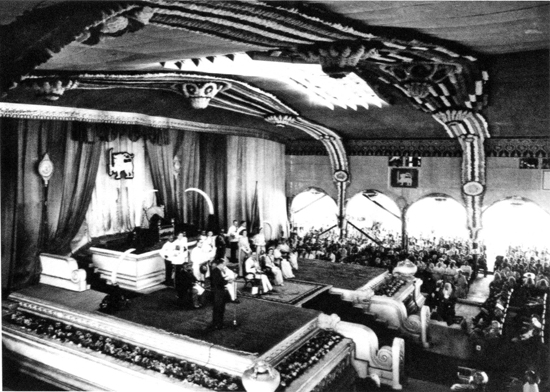
The 1948 Formal Declaration of Independence in Colombo.
Ceylon’s economy at the time was firmly export-driven, built on a market model and dominated by the plantation trio of tea, rubber, and coconut, which together accounted for over 90 per cent of export earnings. Rising world prices for tea and rubber in the early 1950s further boosted the country’s foreign exchange reserves.
In his 1952 Budget Speech, Finance Minister J. R. Jayewardene once again emphasised that Ceylon’s foreign exchange position remained secure—standing in sharp contrast to the mounting difficulties faced by neighbouring economies such as India and Pakistan.
Capital for industrialisation
The Central Bank’s Economic Survey of 1953 reinforced Jayewardene’s confidence, noting that Ceylon’s foreign exchange reserves had reached historically high levels. This lent institutional weight to his Parliamentary assertions and underscored a period of relative financial stability in the country’s external sector—marked by both political assurance and empirical validation.
Jayewardene seized on this strength to argue for capital imports and development spending aimed at industrialisation. With a foreign exchange surplus, he insisted that Ceylon faced “no problem of financing industrialisation” without resorting to external borrowing.
Globally, industrialisation was seen as the gateway to economic development, a lesson drawn from Britain’s own experience. Newly independent states across Asia and Africa, eager to shed the
label of “underdeveloped,” looked to Western-style industrialisation as the path forward.
Ceylon, too, had experienced a wartime boost in industry during the 1940s, when global trade disruptions created opportunities for local production. But with the war over, those temporary gains quickly faded. A fresh start was needed. Despite the optimism and extensive debate, however, the actual trajectory of Ceylon’s industrialisation turned out to be quite different.
Foreign investments
From the late 1950s, Ceylon’s foreign exchange surplus began to erode. While industrialisation remained a national aspiration, its focus shifted inward—toward serving the domestic market rather than competing internationally. This marked the beginning of Sri Lanka’s experiment with import substitution industrialisation (ISI), which deepened through the 1960s and 1970s.
The ISI drive was accompanied by heavy state intervention. Foreign trade, exchange allocations, and investment approvals were tightly controlled. Private enterprise faced layers of regulation, licensing hurdles, and restrictions on foreign ownership.
 The culmination was a sweeping nationalisation programme. Petroleum distribution, insurance, banking, and plantations were brought under state ownership. Foreign investors—mainly British and American—were forced to exit, handing over the businesses they had built to the government.
The results were stark. Between 1956 and 1977, economic growth stagnated at just 2–3 per cent, while unemployment soared above 20 per cent. Far from solving the foreign exchange shortage, the policies worsened it, forcing the government to slash imports and rely increasingly on foreign borrowing.
In 1972, the country’s name was changed from Ceylon to Sri Lanka. But, as (former Singapore Prime Minister) Lee Kuan Yew remarked, the name change did not improve the fortunes of Ceylon.
Americans versus British
On top of everything, Ceylon’s strategy stifled the rise of an entrepreneurial class at the very moment it needed nurturing – a fact that the nation still keeps lamenting. Foreign investors were expelled from doing business and plantations.
Many such business ventures, including plantations, became a political problem – politicians must compete each other and, coming to power they must struggle in finding new solutions which they never found.
Meanwhile, in Singapore, a very different story was unfolding. When the British government decided to withdraw its military forces from Southeast Asia in the mid-1960s, Lee Kuan Yew grew deeply concerned.
He flew to London in 1966 to plead with Cabinet Ministers, warning that the withdrawal would not only create security risks but also devastate Singapore’s economy—cutting GDP by as much as 20 per cent and wiping out thousands of jobs. He feared that British investments might follow the troops out of Singapore.
The British ultimately chose to phase out their withdrawal in stages, giving Singapore time to prepare. By the mid-1970s, the forces were gone. But Lee Kuan Yew had already pivoted, turning to the US to attract American investors. His efforts succeeded, laying the foundation for Singapore’s transformation into a global hub.
Credit goes to…
Whom should be credited most for the establishment of Sri Lanka’s open economy? It was done in 1977 after J. R. Jayewardene won the elections and came to power, declaring that he would make
Sri Lanka a Singapore.
Not many analysts have noted that the groundwork for the transition from 20-years long closed economy towards an open economy was prepared by the previous United Front (UF) government led by the Prime Minister Sirimavo Bandaranaike. The years 1970–1977 under the United Front government were marked by severe economic hardship. It was against this backdrop that the people delivered a sweeping mandate to J. R. Jayewardene in 1977, empowering him to open the economy.
But the mandate was wasted, and the reforms of 1977 were incomplete. The open economy resembled a half-baked cake: trade liberalisation was introduced, but deeper reforms in the public sector, state enterprises, the judiciary, and rule of law were neglected.
Compounding this, two insurgent movements—the LTTE in the North and the JVP in the South—sabotaged the reform process from the mid-1980s onward.
The consequences were severe. Trade liberalisation slowed down, fiscal constraints mounted, foreign investors withdrew, and economic stability faltered. By the mid-1990s, the reform momentum had stalled, and after the mid-2000s, policy direction virtually reversed. Sri Lanka, despite its early promise, lost the potential gains of liberalisation.
After three-quarters of a century
Over the past 75 years, Sri Lanka’s population has tripled. Globally, such growth has usually gone hand in hand with urbanisation, as people move into cities, take up more productive jobs in industry and services. And they also benefit from modern urban living environments comprising better infrastructure, supply of better services, and the availability of better facilities.
Sri Lanka’s experience has been different. Much of the expanding population has been absorbed into rural settlements—clearing forests, hilltops, riverbanks, mangroves, and coastal belts.
Urban life remains prohibitively expensive, with housing, food, and basic needs priced beyond the reach of average people. Industrialisation and service-sector growth have been too limited to provide adequate opportunities for urban living.
Official statistics reveal that 78.5 per cent of the population still lives in rural areas, while more than 26 per cent of employment remains tied to agriculture. These figures stand out as unusual compared with middle-income countries, where urbanisation and structural transformation have advanced much further.
This rural expansion has carried heavy costs. Environmental degradation and wildlife conflicts have multiplied, and it is often the poor who bear the brunt—living in risky areas, exposed to natural hazards, and trapped in unproductive agriculture. With few pathways out of rural poverty, they remain vulnerable both economically and environmentally.
Multiple challenges
As Sri Lanka prepares to celebrate its 78th Independence Anniversary, the nation stands at a crossroads, confronted by multiple challenges – economic, social, and environmental challenges.
The true message of Independence is not merely about recovering what was lost or repairing what was damaged. It is about building back better—turning adversity into opportunity and rising above the challenges that continue to test the country’s resilience.
Independence is not a memory, but a mandate to build better. The task before the nation is not to repeat the missteps of history focusing merely on recovery and rebuild, but to learn from them and build a better future on wiser choices.
(The writer is Emeritus Professor at the University of Colombo and Executive Director of the Centre for Poverty Analysis (CEPA) and can be reached at sirimal@econ.cmb.ac.lk and follow on Twitter @SirimalAshoka).
Hitad.lk has you covered with quality used or brand new cars for sale that are budget friendly yet reliable! Now is the time to sell your old ride for something more attractive to today's modern automotive market demands. Browse through our selection of affordable options now on Hitad.lk before deciding on what will work best for you!