


Memories and traditions in a changing world
View(s):- How today’s youth celebrate the Sinhala and Tamil New Year
By Kaveesha Fernando
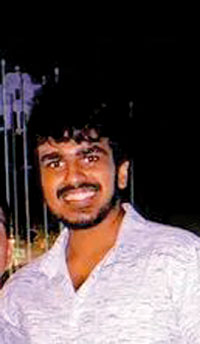
Damithu: Lost the spark of Avurudu celebrations
Every Sri Lankan knows that Avurudu/ Puththandu (the Sinhala and Tamil New Year) is a hallmark celebration. Almost all of us have also heard of the lavish celebrations of yesteryear from parents/grandparents, but let’s examine the scene in 2026. Amidst a changing landscape marked by increased social media use and less in-person interaction, increasing inflation and a frightening global war looming – how do today’s youth celebrate the Sinhala and Tamil New Year?
For Damithu, 21, the celebrations they enjoyed at a children’s park is his favourite childhood memory and he laments the fact that there aren’t too many youth-centric Avurudu activities that he enjoys the same way today. To that extent, he feels that he has lost the “spark” of celebrating Avurudu, but he still takes part in cleaning the house, the auspicious rituals and accompanying his parents to visit relatives along with his brother.
Elakya, 28, says that Puththandu has remained much the same for her. While she never really celebrated it in a grand fashion as a child, she still follows the rituals – they bathed, went to the kovil and received “kaivisesham” – blessings and money from elders.

Piyumi: Too caught up in work deadlines
In stark contrast, Tharunethu, 23, who grew up in Bandarawela, says that the holiday is as important to her now as it was when she was growing up. “The need for tradition is still there even if the means for it isn’t,” she says, explaining how growing up, Avurudu was a very grand celebration between her nuclear family (herself, her brother and parents) and extended family (her two aunts, uncle, and grandparents). She can still remember the taste of the kevili that was made at home. She also remembers polishing the floors with her father and cleaning cobwebs, and how they would follow every tradition “to a T” – wearing the auspicious colours, starting work at the auspicious time, staying inside the house until the auspicious time to go visit families – it was all special to her.
“Maybe I remember Avurudu with more colour than the reality because it was so colourful and bright,” she says. While she doesn’t consider herself religious or traditional, she loved Avurudu because she is very family-oriented. And as a feminist, she loved that in her family, her grandmother always lit the oil lamp first before even her grandfather!
Changing family circumstances have changed Avurudu for Tharunethu since childhood. Her father passed away when she was a preteen, her mother later remarried and the family moved to Kandy.
In Kandy, the celebrations were grand in a different way, and they also visited neighbours during Avurudu so the sense of community she lost in moving away from her relatives, she has gained in her new neighbours and their children in whom she found lasting friends.
She will be travelling home to Kandy this Avurudu too.
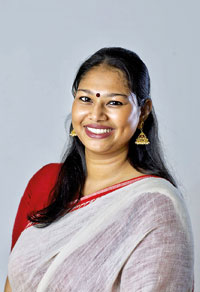
Sharanya: A taste of both celebrations
Tharushi, 30, who grew up in Colombo, says that Avurudu was a big celebration for her as well. She and her four sisters and parents would visit her grandmother in Ampara and it was a joyous time – she remembers a small hut where they used to make kevili, especially dodol. Because it was such a labour-intensive process, she, her siblings and cousins would take turns at stirring and talking to her grandmother, who would tell them stories.
They would follow all the traditions – from wearing the auspicious colours to cleaning the house to making sweets. “It has always been such a nice part of my life that I look forward to it every year,” she explains.
She loved the family togetherness during this time - if her parents had had a minor disagreement with a family member, all would be forgiven and they would go visit them during Avurudu. It was a new beginning. For her, her grandmothers made it special. “My grandmother taught me that the rest of the year depends on how you spend Avurudu – not in a superstitious way but that it’s such a positive celebration and if you put your heart and soul into it and celebrate that week, the rest of the year will be nice as well,” she explains.
For Tharushi now in faraway Canada, Avurudu will never be the same without her grandmothers, but she tries to keep their spirit alive through the Avurudu celebrations they loved.
It’s usually still snowing in Canada in April and almost all her family, save her sister and family are in Sri Lanka. Since “Podi Akki”, celebrates Avurudu, Tharushi first celebrates at home with her husband and then goes to her sister’s house to celebrate, aiming to be the “matriarchal powerhouse that make the lives of the children better” the way her grandmother was, for the next generation – her nieces and nephews. “We try to make it as warm and cosy as possible,” she says.
Sharanya, 35, who strongly values culture and heritage enthusiastically explains the many traditions during Thai Pongal and Puththandu and Sivarathri. She observes that for Tamil people in the North and the East celebrating Puththandu is important. For her, it was a time when she would go out of Colombo with her parents and siblings simply because it was a rare time when the parents and children all had holidays (unlike in August), but she has started celebrating Avurudu more now that she is married. Her husband who is Sinhalese celebrates all of the holidays she holds dear and she feels she should do the same for him. “The Sinhala tradition is a complex and significant celebration that has many parts and stretches over days, which is an incredible experience to immerse oneself in,” she says.

Avurudu far away from home: Tharushi with her Podi Akki and niece and nephew
Piyumi, 25, from Bandarawela, says that while her family didn’t celebrate every single tradition, one tradition that she cherishes is “hisa thel gaama” – which usually falls on her birthday (April 16). As they didn’t have relatives nearby, it was an intimate family celebration – a lady would come and make all the kevili over several days and they would celebrate the New Year as a nuclear family.
Now a graduate living in Colombo away from her parents, she struggles to celebrate Avurudu because it falls right around the end of the first quarter of the year when she has work deadlines. “Now it’s two random days in the middle of April that you celebrate and then you get back to work,” she says, adding that perhaps because she’s not a very spiritual or religious person, she doesn’t prioritise it as much as others might.
Searching for that next furry family member but couldn’t find one in your area? Hitad.lk has the solution with our extensive listings of dogs for sale in Sri Lanka!