

Sunday Times 2
The island that voted before Paris
View(s):By S. Y. Quraishi
Here’s a historical detail that not just Sri Lanka but the whole of South Asia should be proud of: In 1931, women in a small island colony in the Indian Ocean gained the right to vote—years before women in Paris, Brussels, or Geneva.
That colony was Ceylon, now Sri Lanka. Three years after Britain itself held what historian A.J.P. Taylor called its first truly democratic election, this distant outpost of empire was already experimenting with universal adult franchise.
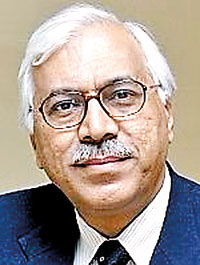
India’s former Chief Election Commissioner S. Y. Quraishi
By the time Europe was rebuilding from World War II, Ceylon had transformed democratic competition in Asia. Between 1946 and 1963, infant mortality plummeted from 141 per 1,000 to 56. Life expectancy jumped from forty-three to sixty-three years. Ceylon achieved welfare indicators matching nations with several times its income.
This is the Sri Lanka few remember: not just a country scarred by civil war and economic collapse, but a pioneer whose experiments—successful and failed—offer lessons the entire region desperately needs.
Witnessing democracy under siege
In January 2015, I led an observer delegation from the Association of Asian Election Authorities to watch what many feared would be a stolen presidential election. The Rajapaksa regime had hollowed out democratic checks, abolishing all independent commissions, including the Election Commission.
Yet the willingness to invite multiple observer groups was itself a sign of confidence. The trust opposition parties expressed in the election commissioner’s fairness was reassuring.
We heard constant warnings: the army would intimidate voters; hundreds of roadblocks would prevent people from reaching the polls. Three major civil society organizations—PAFFREL, CAFFE, and CMEV—were visibly active, documenting violence and state abuse. That civic freedom was proof that Sri Lankan democracy, however battered, still breathed.
I travelled through the war-affected north. Either the allegations were exaggerated, or observers’ presence deterred misconduct. Polling was remarkably peaceful. Nearly all officers posted in Tamil districts were themselves Tamil, which was critical for voter confidence.
Voter enthusiasm was extraordinary: 81.52 per cent turnout among about 15 million eligible voters. Minorities proved decisive: Tamils, Muslims, and Christians united behind change.
The authoritarian regime fell. President Mahinda Rajapaksa—who had used the 18th Amendment to abolish term limits, concentrate power over judiciary and bureaucracy, and install relatives in crucial positions—was voted out. A constitutional provision allowing him to seek an early mandate while extending his existing term particularly angered voters. Corruption allegations outweighed even gratitude for ending the civil war in 2009.
For a moment, it felt as if Sri Lanka’s democracy had matured.
The pendulum swings back
Five years later, Sri Lanka again became a test case for democracy—this time under a pandemic.
After the 2019 Easter bombings, voters chose Gotabaya Rajapaksa promising strong leadership. The 19th Amendment’s democratic reforms—restored term limits, independent commissions—began to unravel. Parliament was dissolved at the earliest moment. Elections scheduled for April 2020 were postponed to June, then August, citing COVID-19. Each delay effectively extended the caretaker government’s power beyond constitutional limits.
The Election Commission tried admirably—mock elections to test safety measures, restricted campaigning, and PPE kits for poll staff. But postal voting was not extended to vulnerable groups, a safeguard adopted in several other democracies.
Campaigning shifted online, where fake news flourished. With no campaign finance laws, the playing field tilted heavily. Pandemic management dominated the narrative, giving the incumbents a natural advantage. In September 2020, the 20th Amendment followed, reversing most of the 2015 reforms and re-concentrating power in the presidency.
Crisis and renewal
By 2022, disastrous policies—sudden tax cuts, a nationwide fertiliser ban—triggered Sri Lanka’s first sovereign default. Food, fuel and medicine shortages sparked the Aragalaya movement. Protesters occupied government buildings. President Gotabaya fled. The seemingly immovable Rajapaksa dynasty collapsed in weeks.
In September 2024, Anura Kumara Dissanayake won the presidency on a transparency and anti-corruption platform. His National People’s Power coalition secured a commanding parliamentary majority. He appointed Harini Amarasuriya as Prime Minister—one of the few women to hold the office in the region.
What the region should learn
Sri Lanka’s story contains South Asia’s democratic dilemmas in concentrated form: early franchise enabling social progress; electoral competition channelling ethno-nationalism into conflict; the temptations of executive power; reforms reversed in the name of security; economic mismanagement destroying governments; and popular uprising forcing renewal.
I have spent years observing South Asian elections. Sri Lanka has tried nearly everything: proportional representation to give minorities a voice, reserved seats to ensure inclusion, an executive presidency to promise stability, constitutional councils for oversight, and finally, a popular uprising demanding accountability. Some reforms worked. Some failed spectacularly. But each offers lessons.
India should study how Sri Lanka’s proportional representation has made democracy more representative. Pakistan should examine how constitutional gains erode without institutional safeguards. Bangladesh should note that competent COVID management cannot save a government from economic collapse. Nepal should observe the consequences of delaying devolution and ignoring minority grievances.
The failures matter as much as the successes. The Sinhala Only Act showed how majoritarian politics fractures nations. The 18th and 20th Amendments revealed how easily reforms are reversed under the banner of national security.
The regional pattern
South Asian democracies do not fail because people reject democracy. That 81.52 per cent turnout I witnessed in 2015—in a war-torn country under semi-authoritarian rule—proves otherwise. They fail when institutions cannot bear the weight of public expectations. Sri Lanka’s cycle—innovation, consolidation, overreach, crisis, reform—is South Asia’s cycle. President Dissanayake now has to deliver relief while navigating an IMF programme, balancing pressures from China, India and the United States, and rebuilding weakened institutions.
These are not uniquely Sri Lankan challenges. They are regional. Until we treat each other as a community of democratic practice—learning from successes, studying failures, sharing institutional knowledge—we will keep repeating the same mistakes.
The island that gave women the vote before Paris deserves better. So does the rest of the region.
(S. Y. Quraishi is former Chief Election Commissioner of India and
author of Democracy’s Heartland: Inside
the Battle for Power in South Asia.)