

Sunday Times 2
Climate-smart Sri Lanka tourism: Adaptation, mitigation and resilience
View(s):By Prof. D.A.C. Suranga Silva
Tourism is highly sensitive to climate change, as it threatens infrastructure, natural attractions, recreational opportunities and destination accessibility. This sensitivity reveals itself critically across the diverse tourism landscape of Sri Lanka in several interconnected ways.
Direct physical impacts
Sri Lanka’s tourism demonstrates extreme climate sensitivity through direct physical impacts. It is directly affecting the country’s coastal belt during the peak heat months, while hill country destinations like Nuwara Eliya and Ella, traditionally marketed as cool retreats, are experiencing rising temperatures that diminish their comparative advantage. On the other hand, the Cultural Triangle sites—Anuradhapura, Polonnaruwa and Sigiriya—face increasing heat stress that affects visitor comfort and site preservation.
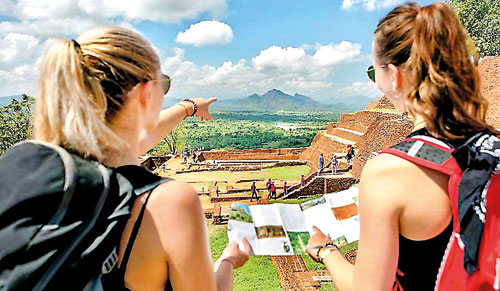
Sri Lanka faces serious, measurable climate risks to its tourism sector
Economic vulnerability
Owing to climate change impact, the tourism industry’s economic vulnerability is becoming severe. It is threatening to cause major tourism system disruptions, affect revenue streams, destabilise employment, and potentially collapse entire destination economies without immediate scaled-up mitigation efforts.
Tourism is highly sensitive to climate change, as it is a climate-dependent economic sector. This sensitivity is revealed in several ways:
- Sensitivity of direct impact: Climate change directly affects tourism operations across all sectors, eroding beaches in coastal tourism, bleaching coral reefs and destroying biodiversity in nature-based tourism, and flooding or heat-damaging cultural heritage sites.
- Sensitivity of indirect impact: Climate change affects the supporting ecosystems (e.g., water security, agricultural products for food), increases insurance costs, and damages infrastructure (airports, roads).
- Regulatory sensitivity: The global shift towards a low-carbon economy may lead to policies like carbon taxes on aviation, changing the cost and structure of travel.
- Market sensitivity: Tourist perceptions and demand shift as certain destinations become associated with climate risks.
Impact on inclusive and sustainable tourism development
Climate change poses a fundamental challenge to the progress of inclusive and sustainable tourism development. It weakens sustainable tourism by destroying natural and cultural heritage. It exacerbates inequalities, as vulnerable low-income, indigenous or informal communities are suffering from a lack of adaptation capacity, leading to livelihood losses and displacement that contradict social inclusion goals.
Conversely, addressing climate change fosters synergies through mitigation and adaptation processes.
- Mitigation encourages more renewables and efficient uses of natural resources, reducing pollution and costs.
- Adaptation such as cultivation of mangroves and water management strategies bolsters ecosystems, and green transition generates local jobs in restoration and construction while promoting community resource ownership for greater inclusion.
Without effective climate adaptation and mitigation actions, inclusive sustainable tourism remains unattainable.
It necessitates the integrated policies to harmonise the climate change impact on sustainability, equity and fairness of tourism development, more specifically through greener tourism models addressing the rising traveller awareness and demand that boost low-carbon tourism while directing tourism destinations toward more climate change resilience building and community-centred strategic development initiations.
Promotion of inclusive tourism plays a crucial role in alleviating and mitigating climate change impacts by embedding climate justice into investments, ensuring climate-resilient tourism products through diverse stakeholder engagement.
It addresses disproportionate vulnerabilities faced by Small Island Developing States, SMEs, micro-enterprises and informal sectors, which often lack resources for adaptation. Strengthening community-based adaptations and indigenous knowledge, inclusive tourism builds collective capacity to withstand climate shocks, reduces inequalities and promotes sustainable resilience building.
Impact on tourist
demand and behaviour
Several research findings reveal a clear shift in tourist demand and behaviour due to climate change awareness and direct experience:
- Temporal shifting: “Seasonal shifts” are prominent. Tourists are increasingly travelling during off-peak seasons to avoid extreme summer heat in Mediterranean or Asian destinations (e.g., European Travel Commission reports, 2022).
- Spatial shifting: “Geography of tourism” is changing. Demand is shifting away from vulnerable, hot destinations toward cooler, higher-latitude or lower-altitude regions.
- Adaptive behaviours: At destinations, tourists adapt by seeking shade, air-conditioned spaces, shifting activities to cooler times of day and consuming more water.
- Growing “Climate-Awareness”: A growing segment of travellers, particularly younger demographics, prioritises minimising carbon footprints through responsible choices. This manifests in preferences for low-emission transport like trains over flights and selections of destinations and accommodations boasting strong sustainability credentials.
- Risk perception: Increased media coverage of wildfires, floods, and heatwaves is making tourists more risk-averse, leading to last-minute cancellations and demand volatility for perceived “high-risk” zones.
Climate Vulnerability Index
Sri Lanka is ranked 124th out of 192 countries in 2023 on the Global Climate Vulnerability Index developed by the ND-GAIN (Notre Dame Global Adaptation Initiative).
“Rank 124th (High Vulnerability)” is a warning signal. It means that Sri Lanka faces serious, measurable climate risks to its tourism sector as well, but the country has the capacity to adapt if urgent, comprehensive action is taken.
The ranking places Sri Lanka at a critical juncture: act now to build resilience, or slide toward climate-induced tourism decline.
Without immediate mitigation and adaptation, tourism faces severe disruptions in the coming decades, threatening infrastructure, natural assets, and the livelihoods of vulnerable communities across Sri Lanka’s beaches, cultural sites, and national parks.
Key implications for Sri Lanka
- Higher investment risk and insurance costs
- Negative destination reputation from climate risk perception
- Urgent need for adaptation strategies
- Potential access to international climate funds based on vulnerability status
- Critical importance of transitioning from “climate-vulnerable to climate-resilient destination
Key recommendations
Mitigation Strategies:
Sri Lanka must implement comprehensive mitigation strategies to decarbonise its tourism industry through:
- Transportation transformation (promoting sustainable aviation fuel, electric vehicles, train travel, and regional tourism while reducing long-haul flights),
- Accommodation transitions (renewable energy adoption via solar and wind, energy-efficient retrofitting, green building certifications like LEED and BREEAM),
- Adhering to circular economy principles for waste and water management and establishing rigorous accountability mechanisms by joining the Glasgow Declaration to commit to halving emissions by 2030 and achieving Net Zero by 2050,
- Implementing UN Tourism’s 2024 Policy Guidance and creating robust GHG measurement and reporting systems with science-based targets to track progress and ensure transparency.
Adaptation strategies for building resilience:
- Build climate-resilient infrastructure with disaster preparedness plans, coastal protection, flood management systems, and climate-smart urban planning; implement nature-based solutions (contributing 30-37% of cost-effective mitigation) through mangrove and coral reef restoration, reforestation, watershed protection, and blue-green coastal defence infrastructure;
- Diversify the tourism economy by developing all-season products and alternative attractions less dependent on climate-sensitive resources while integrating climate risk assessments into planning;
- Engage communities through participatory planning, conservation initiatives, climate education programmes, and ensuring local benefit from adaptation investments;
- Establish financial mechanisms, including climate finance schemes, green bonds, parametric insurance, revenue-sharing programmes linking conservation to community development, and accessing international climate funds (Green Climate Fund, GEF) to support vulnerable SMEs and communities in their green transition.
Decisive factors
- Strong governance and political commitment
- Multi-stakeholder collaboration
- Community ownership and benefit-sharing
- Innovative financing mechanisms
- Nature-based Solutions integration
- Transparent measurement and reporting
- Cultural authenticity and pride
- Long-term vision with short-term action
(The writer is a professor in tourism economics at the
University of Colombo.)