

Sunday Times 2
Vesak thoughts: Self, Kamma and Anatta
View(s):By Dr Channa Ratnatunga
Human beings belong to the animal kingdom, whose primordial imperative – shaped over millions of years through the process of natural selection – is survival and reproduction, ensuring the continuation of the species. While exceptions such as altruistic behaviour exist, in certain insect communities, the dominant drive remains self-preservation.
Strategies adopted by ‘self’ for security (psychological) needs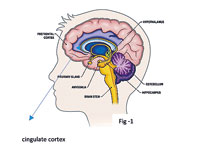
Within an ecological context, survival often necessitates behaviours that, from a moral or social standpoint, may be considered unwholesome. These include emotional responses such as irritation, anger, rage, hatred, revenge, greed, jealousy, and slander – reactions that arise, when one’s personal or tribal space (boundaries) are perceived to be threatened.
In homo sapiens, the need for security extends beyond immediate physical survival. It manifests as a drive to establish identity and status within a social hierarchy, often through attachment to a constructed sense of “self” –the narrative of “me” and “I.” This psychological structuring provides a sense of stability and belonging within the group.
At a further level, the same need for security appears to give rise to the search for protection or meaning beyond the individual and the tribe. This may have contributed to the emergence of spirituality, where humans posit higher orders of being or transcendent frameworks to alleviate existential uncertainty and vulnerability.
Early insights on these realities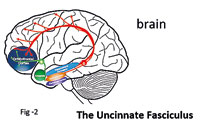
In the 5th Century BCE, the Vedas-Brahmanism, a diverse, evolving ritualistic-philosophical tradition, as enunciated by sages of that era, were the doctrinal beliefs of people living in the Gangetic Valley in North -Eastern India. To this milieu was born Siddhartha Gautama – the Buddha, who gains insights on these realities, by meditative practice. He professes that life is ‘unsatisfactory’, the reason for, how to end it, and the path leading to end it, ie the four noble truths. He enunciates the reality of Samsara and it’s Kammic basis consequent to the Natural law of Dependent-Origination – Paticca Samuppada.
Neuroscientific insights
Nearly two and a half millennia later, in the latter decades of the 20th century, neuroscientists had realised the brain was not the immutable organ that it was thought to be, but adapted its neuronal networks with experience and learning, throughout life. This ability, called neuroplasticity, conferred an added survival dimension to the being and an inkling of what we consider as ‘self’ (1983-’87-Merzenich).
In the first decade of the 21st century, the neuronal networks of the brain were deciphered. The introspective ruminative thoughts, emanated from the Default Mode Network (DMN). A contrasting Task Based Network- the Central Executive Network (CEN) of focused attention, are what are pertinent to this essay (2001 Raichle, 2006 Dosenbach)
Both these realities helped establish and propel the field of contemplative neuroscience, demonstrating that mental training can measurably alter brain structure and function. A central insight emerging from this research is that well-being is a skill that can be cultivated through systematic practice. The neuroscientific basis of meditation in Buddhist philosophy came into being.
In the early 1990s, as brain-imaging technologies advanced, the 14th Dalai Lama engaged in dialogue with neuroscientists such as Richard J Davidson of the Waisman Center at the University of Wisconsin–Madison. This collaboration led to pioneering research using functional Magnetic Resonance Imaging (fMRI) to study the brains of highly experienced Buddhist monks, many with 20,000–40,000 hours of open monitoring (vipassana) meditation practice. Studying the fMRI scans of brains of the non-meditative controls versus those of expert meditative monks, have yielded profound differences in the brains, which are scientifically significant.
The changes in structure and function seen
The monks showed structural and functional neuroplasticitic changes, increased gray matter in key brain regions associated with attention (prefrontal cortex), empathy (anterior cingulate cortex), and emotion regulation (insula) (See Fig-1), proving that the mind is highly trainable through long-term meditational practice.
Scans also showed reduced amygdala reactivity, leading to lower emotional reactivity, decreased activity in the DMN—the area associated with self-referential thought, rumination, and “mind-wandering”, suggests a diminished tendency towards narrative self-focus and an enhanced capacity for present-moment awareness – CEN. Adoption of a persistent meditative state, altered the mere ‘state’ of mind to a ‘trait’. Self – Atta had become no-self- Anatta. Structurally – a connection the Uncinnate Fasciculus (Fig-2) had developed between the pre-frontal cortex of the brain and the Amygdala – the emotional brain.
This resulted in profound calmness and increased emotional balance. The training in-equanimity appeared to make cognitive and emotional processes more efficient, flexible, and responsive rather than reactive. They offered a greater sensory clarity, and concentration. These changes allowed the mind to be more responsive and efficient.
Response of the
‘conditioned mind’
In Buddhist philosophy, the cognitive cycle plays an active role. Sensations, including that of the ‘mind sense’, bombard us throughout the day. Information from the five senses and the ‘mind-sense’, are received, stored, retrieved, interpreted, with the brain acting like a biological computer. The ‘conditioned self’, carries the brunt of the response. Survival overlays all responses in the untrained mind. Buddhist text describes the same as vedana, phassa, sanna, sankhara. If the mind remains in the primordial ‘survival mode’ (bhava tanha, the craving that follows, is said to create unwholesome kamma. Be it thought, word or action; though it seems mostly thought (cetana), that soils the mind.
The Abhidamma – Pitaka expands on the Madhupindika Sutta, postulating 17 thought-moments that follow on a sensory impulse (citta-vithi). The first 8 are related to the stimulus, the next 2 link the next 7, which are called ‘Javana Citta’. They are Kammically active. Commentaries suggest, millions of such moments pass in the blink of an eye. What’s been shown by neuroscience is that, the retinal (eye), cochlear (hearing) etc pathways have minimum synapses (2-4) and therefore synaptic delays. Hence transmission time to the appropriate sensory cortex is quick. Action potentials in neurons last about 1 millisecond each, so the fastest rate for a train of action potentials is limited to about a thousand action potentials per second – an insight of 2500 years ago!
Diving deeper, the transience of the consciousness, the external reality is sensed as a series of ‘stills’ like watching a film, the brain is responsible for coalescing all into a virtual reality! The conditioned brain of the individual, by proliferation of thought-biases (papañca), depicts its version of reality.
Buddhist philosophy and neuroscience
Some of the subjects discussed in this article are detailed in my 150 page book Buddhist Philosophy and Neuroscience, sold at Sarasavi Bookshop outlets and BPS outlets at Rs 800 a copy. The money so accrued is entirely used to fund the Migara Trust, which funds in-need medical students of the University of Peradeniya. A companion volume The Conditioned Self -170 Pg: Bk is due out soon.