


Fit-less Hasaranga in hot water
After the scheduled series against Afghanistan was postponed due to the ongoing conflict in the Middle East, Sri Lanka Cricket, on the advice of the national selectors and the Ministry of Sports, came up with an eight-week physical training programme to build the physical endurance, speed and strength of the cricketers. Meeting optimal fitness levels is now a mandatory requirement for national selection.
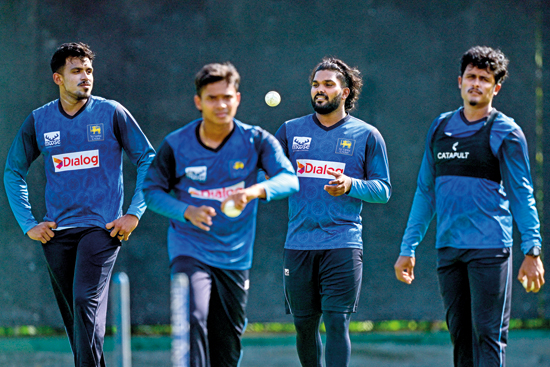
However, several players who missed the T20 World Cup in entirety or midway due to injuries were allowed to complete their rehabilitation programmes before joining the camp, while those in line to join franchise duty either in the IPL or PSL were asked to complete a mandatory physical performance test to obtain their required No Objection Certificates (NOCs).
Players have been asked to achieve a pass score of 17 points out of a total 29 points on offer across five different tests, including the 2km time trial and skin-fold test.
“We have asked the High Performance Centre to conduct an inquiry against Hasaranga as to how he skipped the fitness programme and attended skill training,” said chief selector Pramodya Wickremasinghe.
However, Hasaranga did not turn up for the fitness programme on Friday too, much to the disappointment of the selectors, who are working on improving the overall level of fitness in order to lift the cricketing standards of the team.
Accordingly, the chief selectors have informed Ashley de Silva, the CEO of Sri Lanka Cricket, that they will not entertain any request for an NOC from Hasaranga until he joins the ongoing fitness programme and meets the required benchmarks, sending a clear message to the star spinner that fitness is nonnegotiable. Hasaranga, the 28-year-old with 266 international white-ball wickets, is part of the Lucknow Super Giants in the IPL, but his participation, in part or in full, is in serious doubt given his lack of compliance with the requirements.
“We have made it very clear that those requiring NOCs for foreign leagues must meet the minimum physical fitness standards, and we will not make exceptions for anyone. We do this for the greater good of the game, and when the new coach joins the team, he will have a good squad of players to begin training,” Wickremasinghe explained.
The decision is also in line with the coaching philosophy of newly appointed Sri Lanka Head Coach Gary Kirsten, who believes in fit and strong players.
“The modern game asks a lot of you physically. If you don’t have a basic level of fitness and you’re falling down with injuries and your skill sets are compromised because you don’t have the physical capabilities on the field, that’s a problem. It’s going to affect the performance of the team. So I’ll be quite firm in that space,” Kirsten said during a recent podcast.
Apart from Hasaranga, Nuwan Thushara’s participation in the IPL hangs in doubt after he failed the test for the second time. Thushara, part of the defending IPL champions RCB, could still join the team by successfully meeting the fitness requirements. With regard to Matheesha Pathirana, who was bought by KKR for a hefty USD 2 million, he has not yet received clearance from the physios to resume training. His return-to-play timeline falls after mid-April, which means the slinger will miss part of the IPL.
The latest fitness figures from Sri Lanka Cricket paint a worrying picture. Out of 46 players who underwent physical performance tests in February, only 27 achieved the minimum benchmark of 17 points across five assessments. That leaves a failure rate of 41.3 percent. In elite sport, nearly half of the player pool falling short of basic standards is not a minor concern but points to a deep structural problem.
This reflects a system that has, for too long, allowed professionalism to feel optional. The injuries during the recent T20 World Cup exposed the fragility of
Sri Lanka’s preparation. Four players broke down at critical moments– one before the tournament and three during it, significantly impacting the team’s performance. In a tournament where they had a better chance of qualifying for the knockout stage, they crashed out, ending their campaign in frustration.
Dasun Shanaka, Kamindu Mendis, Pathum Nissanka, Dunith Wellalage and Dushmantha Chameera have been granted NOCs based on previous results in February. Kusal Mendis and Eshan Malinga passed the new tests as both were returning from injuries, while Kusal Janith Perera received clearance because he is no longer part of the long-term plans. Sources said Maheesh Theekshana achieved a score of 22 after shedding nearly five kilos to join the Pakistan Super League.
The recent programme is a response to the poor athleticism shown by the players. Chief selector Wickremasinghe has stressed this repeatedly. Even during his first stint as chief selector, he emphasised fitness, but back then he lacked the full backing of SLC. This time, however, the board and the Ministry of Sports are standing behind the line the selectors are drawing.
Expectedly, the backlash was swift. Wanindu Hasaranga shared a photograph of his ICC accolades after being denied an NOC, with the message, “Look what I found today. These are awards I received from ICC for my franchise performances.” The sarcasm in his tone was clear. But the reaction did not land as he may have hoped. Fans and pundits questioned whether rankings matter if a player’s availability remains uncertain.
Former great Chaminda Vaas offered a more measured view. He stressed the importance of fitness but questioned the timing, arguing that players already contracted to franchise sides were placed in a difficult spot.
“Sri Lanka Cricket has largely ignored fitness standards in international cricket over the past four years. As I have mentioned numerous times, fitness is extremely important when it comes to cricket; there is no doubt about that. But you can’t ignore it for years and then suddenly enforce strict standards just before the IPL,” he wrote on his Facebook page.
His point is reasonable. Yet debates over timing should not be allowed to overshadow the core issue: if Sri Lanka wants to compete at the highest level, its professional standards must match international expectations. For too long, standards were flexible depending on reputation. Established stars received leeway. Consistency was missing. This time, the board appears determined to draw a clear line.