


APPRECIATIONS
View(s):A pioneer linking engineering, ecology, and human habitats
D. L. O. Mendis
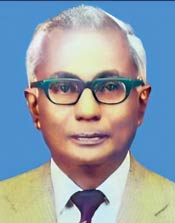 Eng. D. L. O. Mendis, affectionately known as ‘LO’ to his friends and colleagues, was a rare kind of engineer, one who visualized far beyond design, concrete structures, and calculations to the deeper relationships, binding human life to its natural habitats. At a time when the engineering profession often prioritized industrial expansion with little regard for ecological consequences, he championed a more integrated vision: that the true economic progress of a nation must harmonize with ecological balance and the well-being of its communities.
I first met Eng. Mendis on an August evening in 1984 at the Institution of Engineers, Sri Lanka (IESL), introduced by his close friend, the late Prof. A. Thurairajah. What began as a cheeky corridor introduction after an Education and Training committee meeting, being presented as a ‘Kandyan great-grandson’ to Uncle LO, and his quick, mischievous response: ‘So he was our boy’, soon grew into a profound intellectual companionship. This write-up is penned from the bottom of my heart, drawn from countless evenings spent in deep conversation at his Kandy home (where his wife Agnes Aunty would often join), our many Friday afternoon journeys together on the Colombo–Kandy intercity train, and our spirited discussions in the corridors of the Faculty of Engineering at Peradeniya and the auditorium of the IESL.
Our discourses spanned a wide range of themes: from the core responsibilities of the engineering profession to the intricacies of irrigation and ecological systems and his working experience in the Ministry of Planning and Economic Affairs; from the visionary ‘River for Jaffna’ concept to the establishment of NERDC; and from his reflections on the 1970–1977 United Front government to the rise of Tamil militancy. Even our debates on Kandy soil versus Vadamarachchi soil revealed his unique ability to connect technical insight with cultural and environmental understanding.
In the early years of his professional journey, Eng. Mendis entered the field of irrigation engineering with the quiet confidence of a young man who already understood the weight of public service. After graduating from the University of Ceylon’s home-grown engineering degree programme, he worked on the Kantalai and Allai schemes in the late 1950s, immersing himself in the practical realities of water management and rural development. It was in these early field postings that he began to cultivate the blend of analytical clarity, ecological sensitivity, and caring public-minded purpose that would later define his national contributions.
In 1967–1968, he famously critiqued the Uda Walawe reservoir project (a major post-independence project in Ceylon), advocating for alternative, better-located upstream sites for water management.
He was perhaps the most formidable and consistent critic of the Accelerated Mahaweli Development Programme undertaken by the J.R. Jayewardene-led UNP government in 1977. While the nation looked toward the project for rapid modernization, he cautioned that ‘accelerated’ engineering often bypassed ‘deliberate’ ecological wisdom. He argued that the project’s emphasis on large, centralized reservoirs and concrete canals threatened to submerge and destroy the ancient, time-tested ‘Small Tank Cascade Systems’, a heritage he considered the pinnacle of ecological and sustainable water management. In his view, the Mahaweli project represented a Western hydraulic model that ignored the nuanced flow of local landscapes.
From 1970 to 1977, within the ‘Super Ministry’ of Planning and Economic Affairs under the United Front Government, led by Prime Minister Sirimavo Bandaranaike, and under the administrative guidance of the Secretary, Prof. H. A. de S. Gunasekara, he played a pivotal role in elevating the strategic importance of the engineering profession within the public service. Positioned as a key technical advisor within this ministry, he was one of the few officials who had the ear of the Prime Minister Sirimavo Bandaranaike and the influential Secretary, Prof. H. A. de S. Gunasekara.
The creation of the Ceylon Engineering Service (CES), now the Sri Lanka Engineering Service (SLES), on October 1, 1971, was a landmark achievement for which Eng. Mendis, alongside other like-minded persons such as Prof. E.O.E. Pereira, Dr. Nath Amarakone, Dr. A.N.S. Kulasinghe, Eng. D.J. Wimalasurendra, and then IESL President Eng. P. H. Perera, served as a vital catalyst.
He was a vocal proponent of the idea that engineers should not merely be ‘executors’ of plans, but the ‘planners’ themselves. He famously argued that a ‘contented engineering service’ was the only way to arrest the ‘brain drain’ and ensure the success of the United Front Government’s Five-Year Plan, leveraging his influence within both the Ministry and the IESL to solidify this structured state service.
Eng. Mendis was the primary architect behind the establishment of the National Engineering Research and Development Centre (NERDC) of Sri Lanka. In 1974, while serving as the Ministry of Planning’s representative to the Industrial Development Board (IDB), he was tasked by Hector Abayawardana with designing an institution that could bridge the critical gap between industrial extension services and pure scientific research. He personally drafted the landmark Cabinet Paper that secured the approval of the Minister of Industries and Scientific Affairs, T.B. Subasinghe. His efforts culminated in the gazetting of NERDC on August 14, 1974, creating a unique institutional mechanism dedicated to the progressive development of indigenous technology.
Perhaps no project better illuminated his devotion to a united Sri Lanka than his tireless advocacy for the ‘River for Jaffna’. Building upon the original 1950s concept by Eng. S. Arumugam, Eng. Mendis transformed the proposal from a purely hydraulic scheme into a profound vision for regional transformation. He saw the conversion of the Elephant Pass and Uppu Aru lagoons into freshwater lakes not merely as an engineering feat of desalination, but as a vital ‘ecological restoration’ that would replenish the Jaffna peninsula’s groundwater, revitalize its agriculture, and heal its social fabric.
Even through the darkest years of the ethnic conflict, he remained its most vocal and honest champion, presenting detailed technical papers at the IESL and international forums to prove its viability. Although the full vision is yet to be realized, his persistent campaigning ensured that this ‘silent’ revolution remained alive in the national consciousness.
Beyond the technical borders of his profession, Eng. Mendis was a founding pillar of the Sri Lanka Pugwash Group, the local chapter of the Nobel Peace Prize-winning international movement, collaborating with a circle of intellectuals that included Prof. C.R. Panabokke, Prof. Valentine Joseph, Eng. Ray Wijewardene, Dr. S. Gnanalingam, diplomat Jayantha Dhanapala and Eng. (Dr.) K. Tharmaratnam. He worked tirelessly to apply the ‘Pugwash spirit’—the belief that professionals have a moral duty to advocate for peace. In a country deeply scarred by civil strife, he championed the idea that engineering solutions, such as the equitable distribution of water and resources, were fundamental to resolving conflict and fostering national harmony. Through his leadership within this group, he provided a rare, neutral space for dialogue, proving that the true calling of an engineer extends far beyond construction, it is to build the very foundations of a stable and peaceful society.
A defining hallmark of Eng. Mendis’s legacy was his tireless defence of Sri Lanka’s ancient hydraulic wisdom. He saw the village tank cascades and community-based irrigation systems not as relics of the past, but as sophisticated models of ecological water management that the modern world had yet to fully grasp. This deep-rooted reverence for our heritage fuelled his courageous involvement in the Eppawala Phosphate controversy. When a proposed multinational mining project threatened to destroy the ecological and social fabric of the North Central Province, Eng. Mendis stood as a formidable wall of resistance. He provided the technical and ethical backbone for the opposition, arguing that the true wealth of Eppawala lay in its sustainable agricultural heritage rather than a short-term mineral extraction. His role was instrumental in the historic Supreme Court victory (Bulankulama v. Secretary, Ministry of Industrial Development), a landmark judgment that enshrined the ‘Public Trust Doctrine’ in Sri Lankan law. He proved legally the gifts of nature belong to all generations, not just the highest bidder.
Eng. Mendis’s professional life was inextricably linked to the IESL, where he remained a towering presence for over 50 years. His journey within the IESL culminated in his Presidency, a tenure marked by an unwavering drive to align engineering practice with national policy and heritage. However, his influence was never confined to a single silo; he was a bridge-builder between all branches of knowledge. This was exemplified by his leadership as President of Section C (Engineering, Surveying, and Architecture) of the Sri Lanka Association for the Advancement of Science (SLAAS), where he championed the integration of technical disciplines with broader scientific inquiry.
He was also instrumental in the creation of the Organization of Professional Associations (OPA), recognizing that for the nation to truly prosper, engineers, doctors, and lawyers needed a unified platform. To him, the IESL, SLAAS, and OPA were the ‘think-tanks’ of the nation, where the intellectual rigour of diverse fields could be harnessed serving the public.
Sadly, I will miss LO Uncle, a decent, caring, cheeky, friendly, and brilliant intellectual friend who will remain in my heart. While he is no longer with us, his pioneering vision linking engineering, ecology, and human habitats will continue to live in the hearts and minds of generations of engineers. His practical and implementable philosophy is now deeply rooted in the Sri Lankan engineering profession.
-Kidnapillai Selvarajah (Selva)
| Visionary engineer, philosopher and mentor | |
| This tribute is to honour the life and legacy of D.L.O. Mendis, a visionary engineer and philosopher whose contributions defined the standards of our profession. D.L.O. possessed a rare combination of analytical rigour and creative foresight. His numerous technical papers presented here and abroad related to water resources development stand as enduring monuments to his brilliance. Beyond creating blueprints and technical specifications, D.L.O. presented bold ideas that challenged and strengthened our professional communities. He was a dedicated mentor to junior engineers, and a leader who firmly believed that engineering was, above all, a service to humanity. While we mourn this great loss, we take solace in knowing that his radical influence shaped our careers and the ethical code that governs our profession. Throughout his career spanning more than 70 years, D.L.O. embodied the highest standards of integrity and technical excellence. He was particularly instrumental in advancing our understanding of ancient irrigation systems, bridging the gap between historical wisdom and modern development. D.L.O.’s educational journey began at Ladies’ College(which accepted boys in lower grades at the time) before he moved to Royal College. He later entered the University of Ceylon as a member of the pioneering first batch of engineering students in 1950, graduating in 1954in a class of nearly 25 students. His professional path was distinguished and diverse: • Irrigation Department: Served for nearly 10 years. • River Valleys Development Board (RVDB):Contributed during the construction of the Uda Walawe reservoir. • Ministry of Plan Implementation: Served as Deputy Director under Director M. S. M. De Silva, where his main contribution was the promotion of appropriate technology, particularly the advancement of historical Kotmale ironwork which has existed since the era of Parakrama Bahu the Great, and the South Eastern Dry Zone Project. (SEDZ). • Consultancy: Served as a freelance consultant. • Leadership: A prolific contributor of a large number of technical papers to the Institution of Engineers, Sri Lanka (IESL), eventually serving as its President. My association with D.L.O. spanned more than 50 years. I first saw him riding a bicycle past Akbar Hall while I was an engineering student. I later learned his family was residing at Prof. Paul’s residence nearby while he was serving at Uda Walawe reservoir project as a senior engineer for the RVDB. Through D.L.O., I had the privilege of meeting legendary professionals outside the Irrigation Department, including the exceptionally bright M.S.M. De Silva and the international economist, Dr. Lal Jayawardena. Our sincerest condolences to his family and colleagues. His monumental work and numerous publications remain a lasting gift to future generations of engineers. May he attain the supreme bliss of Nibbana. -G.T. Dharmasena
|
Hulftsdorp has lost another gentleman par excellence
DAYA PELPOLA, PC
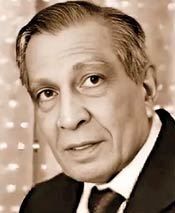 It is with great regret that I write this appreciation of a great gentleman who passed away on December 13. I was very much disturbed when I read the text message on my phone from my friend Maxie Bastiansz, informing me of his death.
I came to know Daya through Premakumar Niles also an attorney-at-law who made me join the UNP National Lawyers Association as far back as 1972 while I was practising in Hatton. Daya was the General Secretary Legal of the Association. Since then I worked closely with him to assist the association in the 1977 election and thereafter in the following elections in the country as either polling agent or counting agent on behalf of the UNP.
When I married in 1982 and came to Hulftsdorp, it was Daya and Maxie who welcomed me with their wedding gift which I will never forget. Daya never failed to send me and my wife a greeting card every year and I would promptly send a card to him and his beloved wife Kanthie.
Daya was an active practitioner dealing with election petitions in the Supreme Court as well as corporate cases. He was Chairman of Air Lanka, Ambassador to Rome, Chairman National Lotteries Board at various times.
Hulftsdorp has lost another gentleman par excellence in his career, conduct and character. He always maintained the etiquette of the Bar which is now slowly lacking in the profession.
He leaves behind his wife Kanthie, son Naomal and daughter Niloo, both lawyers along with his son-in-law Riad Ameen who is also a leading lawyer and former State Counsel, to carry on the mantle of his profession.
Goodbye Daya. I hope and pray for a safe place for you in heaven to rest in peace at the feet of the Lord Almighty.
Your memory is a keepsake
With which we will never part
God has you in His keeping
We have you in our hearts.
K. Kaneshayogan
Her service extended beyond education
Christine Edirisinha
Christine Edirisinha, a distinguished educator who inspired generations of students and guided countless teachers of English, entered her eternal rest with God on the night of December 25 at the age of 88.
Hailing from Kalahe, Galle, she received her early education at Little Flower Convent and Christ Church College, Tangalla, and later at Southlands College, Galle. These formative years laid the foundation for a lifelong commitment to education, discipline and service. In her later years, she resided at her ancestral home Wasala Walawwa, Tangalla, where she continued to influence the educational and social life of the area. Her teaching career commenced on September 5, 1956 and spanned nearly four decades. During this period, she served a number of schools, including Southlands College, Galle, and Thurstan College, Colombo, before her appointment to Tangalla Primary School, where she worked from 1979 until her retirement in 1992.
During her tenure at Tangalla Primary School, her innovative teaching methods and unwavering commitment to excellence earned wide recognition. Under her guidance, the school was selected by the Curriculum Development Centre (CDC), prior to the establishment of the National Institute of Education (NIE), Maharagama, as a model school for the teaching of English. This recognition led to the provision of improved facilities and essential resources, greatly enhancing English language education at the school.
In addition to her school duties, Ms. Edirisinha served as the Coordinator of Tangalla DELIC from 1984 until her retirement. Through her leadership, the centre played a vital role in producing capable and confident English language teachers for state schools across the country.
She was widely admired for her pleasant disposition, fairness, and impartiality. Gentle and calm, she was never seen in anger and treated all with equal respect. Despite her aristocratic background, she led a simple and disciplined life, shunning outward adornment and personal display and exemplifying dignity through conduct and values.
Her service extended beyond education. A lady of deep compassion, she devoted herself to charitable work, particularly at Nawajeewana, Tangalla, where she served from 1994 to 2017. Even after retirement, her commitment to the welfare of others remained unwavering. Even in her advanced years, she remained a teacher at heart, ever eager to guide, encourage and educate those around her. She found true joy in witnessing the progress and success of others.
To me, Madam Christine Edirisinha was more than an eminent educator – she was my mentor and the greatest inspiration in my teaching career. Her guidance, values, and example continue to shape my professional life.
She will be remembered not only for her outstanding contribution to English language education, but also for her moral strength, simplicity of life, and selfless service to humanity. Her legacy will live on in the lives she touched.
May her soul rest in eternal peace.
-Lanka Chandani Ranatunge
Searching for an ideal partner? Find your soul mate on Hitad.lk, Sri Lanka's favourite marriage proposals page. With Hitad.lk matrimonial advertisements you have access to thousands of ads from potential suitors who are looking for someone just like you.