

By Eng. Thushara Dissanayake
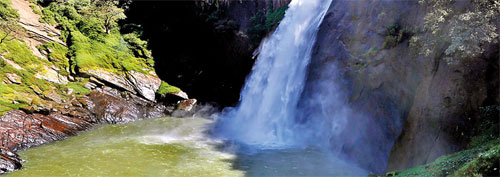
Sri Lanka is blessed with a large number of scenic waterfalls, mainly concentrated in the central highlands. These natural features substantially enhance the country’s attractiveness to tourists. Further, these famous waterfalls equally attract thousands of local visitors throughout the year.
While waterfalls offer aesthetic appeal, a serene environment, and recreational opportunities, they also pose a range of significant hazards. Unfortunately, the visitors are often unable to identify these different types of risks, as site-specific safety information and proper warning signs are largely absent. In most locations, only general warnings are displayed, often limited to the number of past fatalities. This can lead visitors to assume that bathing is the sole hazard, which is not the case. Therefore, understanding the full range of waterfall-related risks and implementing appropriate safety measures is essential for preventing loss of life. This article highlights site-specific hazards to raise public awareness and prevent people from putting their lives at risk due to these hidden dangers.
Flash floods and resultant water surges
Flash floods are a significant hazard in hill-country waterfalls. According to the country’s topography, most of the streams originate from the catchments in the hilly areas upstream of the waterfalls. When these catchments receive intense rainfalls, the subsequent runoff will flow down as flash floods. This will lead to an unexpected rise in the flow of the waterfall, increasing the risk of drowning and even sweeping away people. Therefore, bathing at such locations is extremely dangerous, and those who are even at the riverbanks have to be vigilant and should stay away from the stream as much as possible. The Bopath Ella, Ravana Ella, and a few waterfalls located in the Belihul Oya area, closer to the A99 road, are classic examples of this scenario.
Water currents
The behaviour of water in the natural pool associated with the waterfall is complex and unpredictable. Although the water surface may appear calm, strong subsurface currents and hydraulic forces exist that even a skilled swimmer cannot overcome. Hence, a person who immerses confidently may get trapped inside and disappear. Water from a high fall accelerates rapidly, forming hydraulic jumps and vortices that can trap swimmers or cause panic. Hence, bathing in these natural pools should be totally avoided unless there is clear evidence that they are safe.
Slipping risks
Slipping is a common hazard around waterfalls. Sudden loss of footing can lead to serious injuries or fatal falls into deep pools or onto rock surfaces. The area around many waterfalls consists of steep, slippery rocks due to moisture and the growth of algae. Sometimes, people are overconfident and try to climb these rocks for the thrill of it and to get a better view of the area. Further, due to the presence of submerged rocks, water depths vary in the natural pool area, and there is a chance of sliding down along slippery rocks into deep water. Waterfalls such as Diyaluma, Bambarakanda, and Ravana Falls are likely locations for such hazards, and caution around these sites is a must.
Rockfalls
Rockfalls are a significant hazard around waterfalls in steep terrains. Falling rocks can cause serious injuries or fatalities, and smaller stones may also be carried by fast-flowing water. People bathing directly beneath waterfalls, especially smaller ones, are therefore exposed to a high risk of injury. Accordingly, regardless of the height of the waterfall, bathing under the falling water should be avoided.
Hypothermia and cold shock
Hypothermia is a drop in body temperature below 35°C due to cold exposure. This leads to mental confusion, a slowed heartbeat, muscle stiffening, and even cardiac arrest may follow. Waterfalls in the Nuwara Eliya district often have very low water temperatures. Hence, immersing oneself in these waters is dangerous, particularly for an extended period.
Human negligence
Additional hazards also arise from visitors’ own negligence. Overcrowding at popular waterfalls significantly increases the risk of accidents, including slips and falls from cliffs. Sometimes, visitors like to take adventurous photographs in dangerous positions. Reckless behaviour, such as climbing over barriers, ignoring warning signs, or swimming in prohibited zones, amplifies the risk.
Mitigation and safety measures
Mitigation of waterfall-related hazards requires a combination of public awareness, engineering solutions, and policy enforcement. Clear warning signs that indicate the specific hazards associated with the waterfall, rather than general hazard warnings, must be fixed. Educating visitors verbally and distributing bills that include necessary guidelines at ticket counters, where applicable, will be worth considering. Furthermore, certain restrictions should vary depending on the circumstances, especially seasonal variation of water flow, existing weather, etc.
Physical barriers should be installed to prevent access to dangerous areas by fencing. A viewing platform can protect people from many hazards discussed above. For bathing purposes, safer zones can be demarcated with access facilities.
Installing an early warning system for heavily crowded waterfalls like Bopath Ella, which is prone to flash floods, is worth implementing. Through a proper mechanism, a warning system can alert visitors when the upstream area receives rainfall that may lead to flash floods in the stream.
At present, there are hardly any officials to monitor activities around waterfalls. The local authorities that issue tickets and collect revenue have to deploy field officers to these waterfall sites for monitoring the activities of visitors. This will help reduce not only accidents but also activities that cause environmental pollution and damage. We must ensure that these natural treasures remain a source of wonder rather than danger.
(The writer is a chartered civil engineer specialising in water resources engineering.)


An Attorney at law and his wife was shot dead in the car park of a super market in Akuregoda today evening.




Read this week’s Sunday Times for your interesting articles







Leave Comments